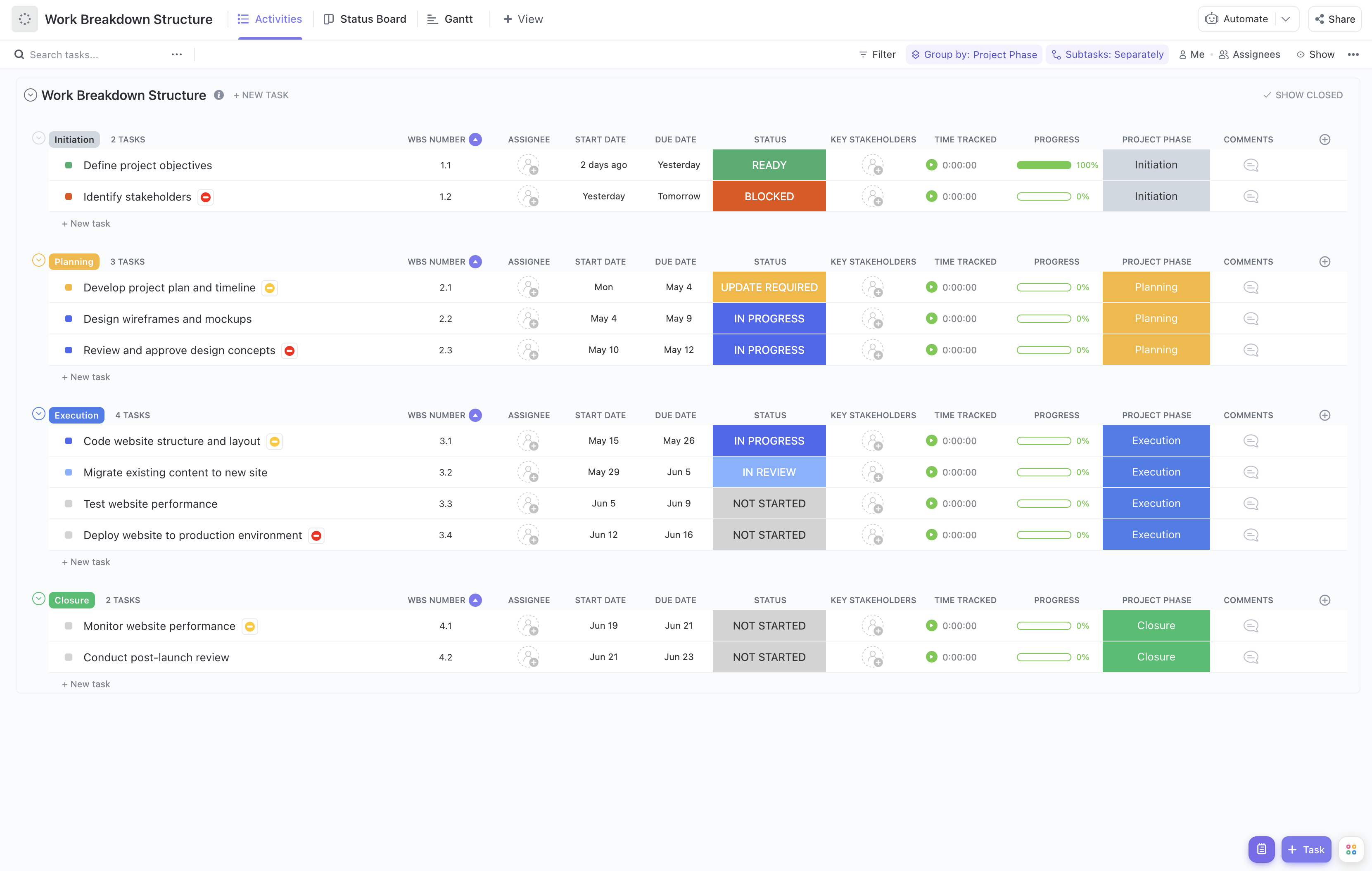
Managing compliance reporting can be complex, involving multiple regulations, deadlines, and stakeholders. This Compliance Reporting Work Breakdown Structure Template is designed to help compliance teams break down the reporting process into manageable components, ensuring nothing is overlooked and all requirements are met efficiently.
This specialized template enables you to:
- Segment compliance reporting tasks by regulation, reporting period, and submission type for clear organization
- Assign specific responsibilities to compliance officers, legal teams, and external auditors to streamline accountability
- Monitor progress with real-time updates to stay ahead of reporting deadlines and regulatory changes
Best of all, no technical expertise is required to implement this template. Simply use ClickUp to structure your compliance reporting workflows and maintain control over your regulatory obligations.
Benefits of a Compliance Reporting Work Breakdown Structure Template
Using a work breakdown structure tailored for compliance reporting offers numerous advantages, including:
- Clearly defining and organizing all compliance deliverables, from data collection to final report submission
- Providing transparency for team members and stakeholders on roles, deadlines, and dependencies
- Enhancing communication between compliance, legal, finance, and audit teams to reduce errors and omissions
- Improving efficiency and reducing risk by systematically tracking each reporting component
Main Elements of the Compliance Reporting Work Breakdown Structure Template
This template breaks down compliance reporting into key structural elements to facilitate thorough management:
- Regulatory Requirements:
Categorize tasks by specific laws, standards, or frameworks (e.g., SOX, GDPR, HIPAA)
- Reporting Periods:
Organize activities by monthly, quarterly, or annual reporting cycles
- Data Collection:
Define steps for gathering necessary data from internal systems and external sources
- Review and Validation:
Assign responsibilities for data verification, risk assessments, and audit preparations
- Report Compilation:
Outline the process for drafting, reviewing, and finalizing compliance reports
- Submission and Follow-up:
Track report delivery to regulatory bodies and any required corrective actions
By utilizing this structured approach, compliance teams can maintain control over complex reporting requirements, reduce the risk of non-compliance, and ensure timely submissions.