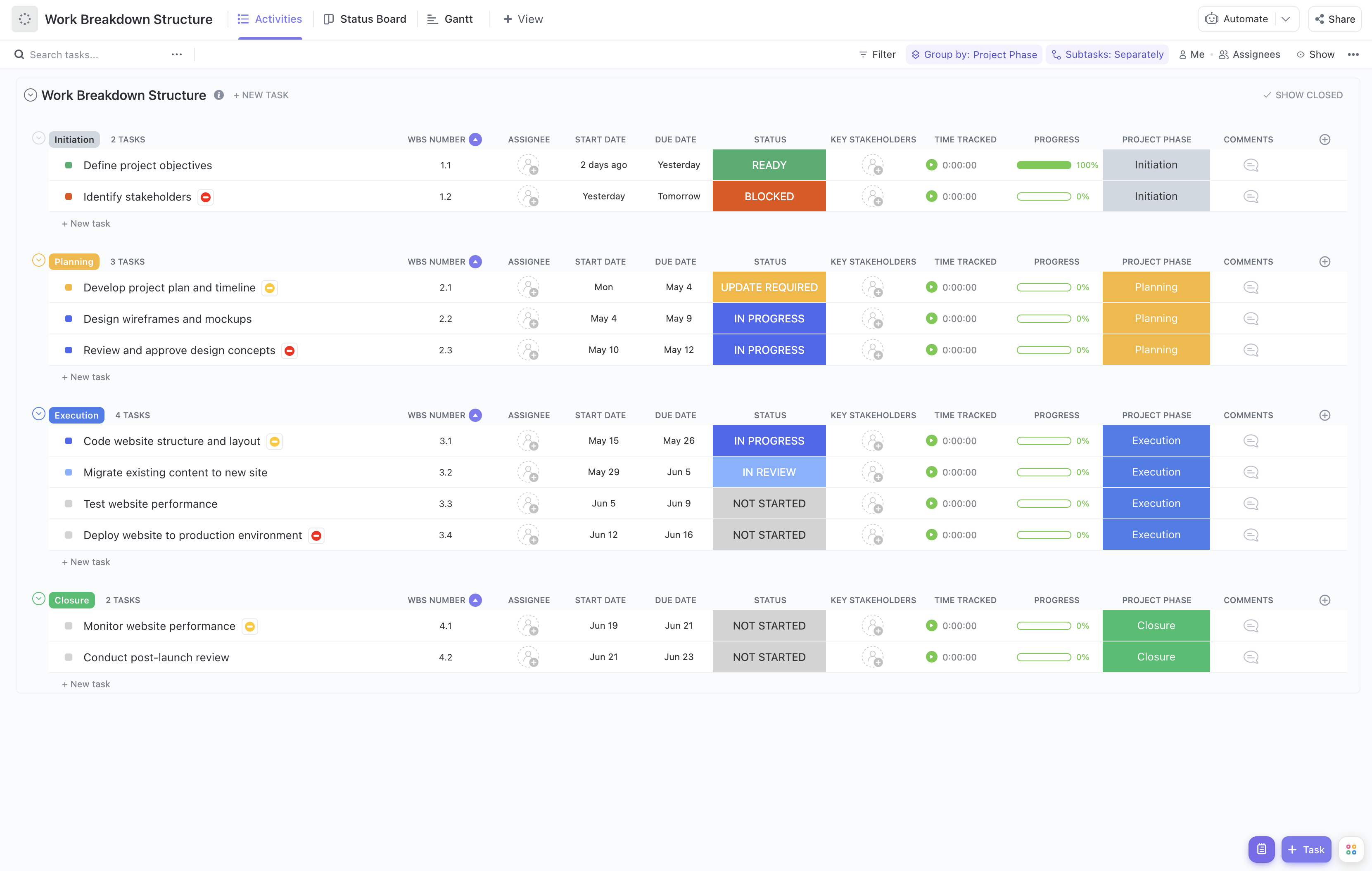
Managing agricultural projects involves coordinating numerous activities such as land preparation, planting, irrigation, pest control, harvesting, and distribution. Breaking down these complex operations into manageable tasks is essential for success. This Agricultural Project Work Breakdown Structure Template provides a structured approach to help you oversee your farm projects with clarity and precision.
This template enables you to:
- Organize agricultural activities into clear, manageable sections for better oversight
- Assign farm workers and specialists to specific tasks quickly and efficiently
- Monitor progress in real-time, ensuring timely completion of planting, maintenance, and harvesting phases
Best of all, this template requires no coding or specialized software—just use ClickUp to streamline your agricultural project management from start to finish.
Benefits of an Agricultural Work Breakdown Structure Template
Utilizing a WBS template tailored for agriculture offers several advantages:
- Clearly defines and organizes project deliverables such as soil preparation, seed selection, irrigation scheduling, pest management, and crop harvesting
- Provides farm teams with clarity on their roles and responsibilities, reducing overlaps and gaps in task execution
- Enhances communication among farm managers, agronomists, laborers, and stakeholders to coordinate activities effectively
- Improves overall project efficiency by enabling proactive identification of bottlenecks and resource allocation
Main Elements of the Agricultural Work Breakdown Structure Template
This template breaks down your agricultural project into the following key components:
- Project Initiation:
Site assessment, soil testing, and resource planning
- Land Preparation:
Clearing, plowing, fertilizing, and irrigation setup
- Planting:
Seed selection, sowing schedules, and nursery management
- Crop Maintenance:
Irrigation management, pest and disease control, fertilization, and pruning
- Harvesting:
Scheduling, labor allocation, equipment preparation, and crop collection
- Post-Harvest Management:
Sorting, storage, packaging, and distribution logistics
- Monitoring and Reporting:
Progress tracking, quality control, and stakeholder updates
By following this structured approach, agricultural project managers can ensure that every critical task is accounted for and executed efficiently, leading to successful harvests and optimized farm operations.