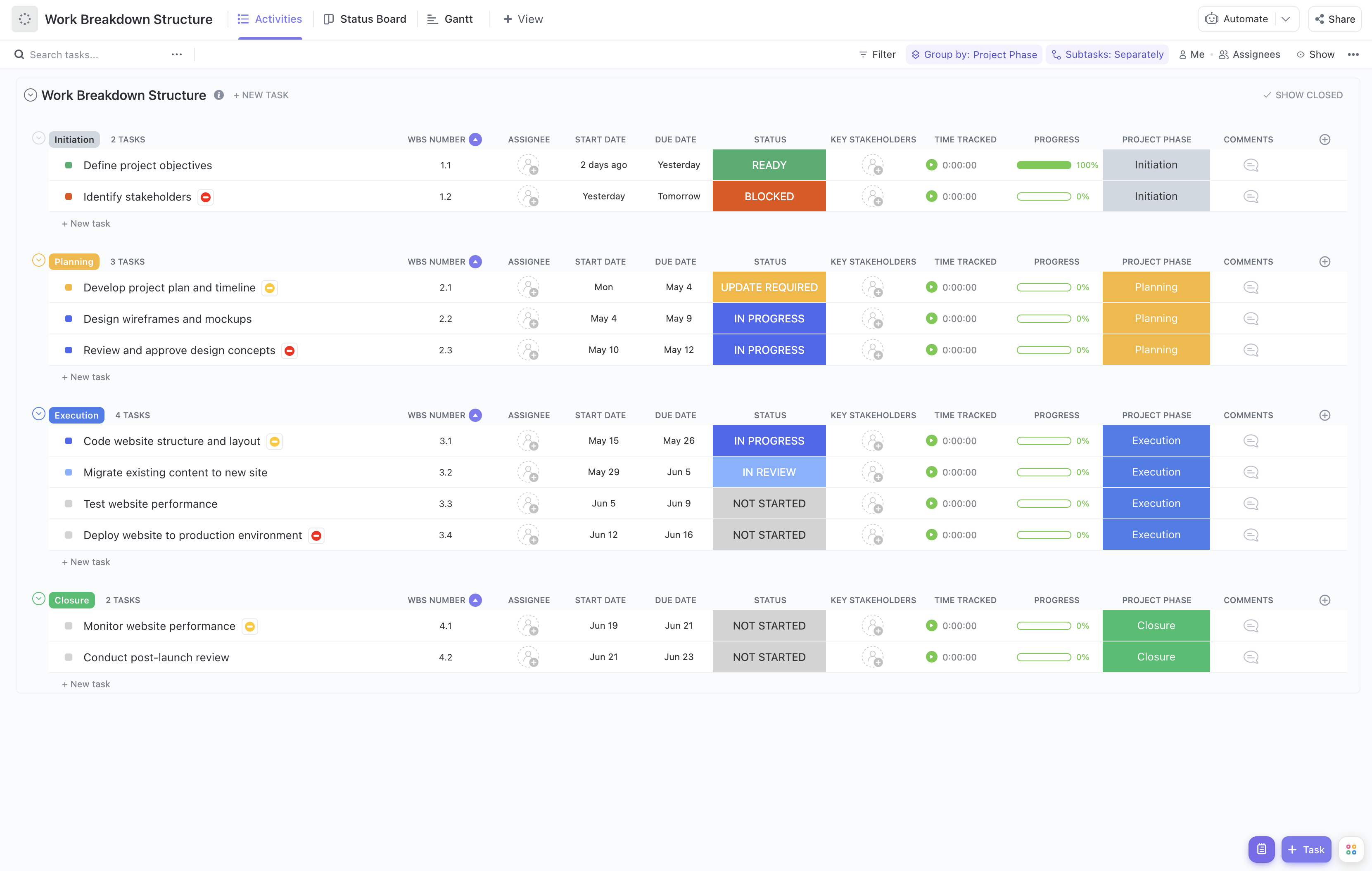
Coordinating field service operations involves juggling multiple technicians, service calls, and logistical challenges. This Field Service Scheduling Work Breakdown Structure Template is designed to simplify that complexity by breaking down service projects into clear, manageable components.
With this template, you can:
- Organize service tasks by location, priority, and technician assignment for enhanced clarity
- Align field teams quickly with specific job details and schedules
- Monitor service progress and completion status in real-time to optimize customer satisfaction
Best of all, this template requires no specialized software or coding skills—just ClickUp to get started and streamline your field service scheduling.
Benefits of a Field Service Scheduling Work Breakdown Structure Template
Using a structured approach to field service scheduling brings numerous advantages:
- Clearly defines and organizes service deliverables, from initial call to job completion
- Provides field technicians and dispatchers with precise roles and responsibilities, reducing confusion
- Enhances communication between field teams, dispatch, and customers through centralized updates
- Improves operational efficiency by enabling proactive scheduling and resource allocation
Main Elements of the Field Service Scheduling Work Breakdown Structure Template
This template breaks down your field service project into key components:
- Service Request Intake: Captures customer information, service requirements, and priority levels.
- Job Scheduling: Assigns technicians based on availability, skill set, and location, with time slots and travel considerations.
- Task Breakdown: Details individual service tasks such as diagnostics, repairs, and follow-ups.
- Resource Management: Tracks tools, parts, and equipment needed for each job to ensure readiness.
- Progress Tracking: Monitors job status from dispatch through completion, including real-time updates and issue escalation.
- Customer Communication: Logs interactions, appointment confirmations, and feedback to maintain transparency and satisfaction.
By leveraging this comprehensive structure, field service managers can ensure that every aspect of service delivery is planned, executed, and monitored effectively, leading to improved operational outcomes and customer experiences.