Project Management Software Designed to Prevent Overcommitment Across Teams
A project management platform that helps you balance workloads and avoid overcommitment — keeping your teams productive and stress-free. Gain visibility, manage priorities, and streamline decisions without endless meetings.
 25,000+ reviews from
Understanding the Hidden Challenges of Overcommitment in Teams
Teams often struggle with juggling multiple projects and deadlines, leading to burnout and missed targets. Common pitfalls include:
- Lack of clear workload visibility across team members
- Uncoordinated task assignments causing overlapping responsibilities
- Difficulty tracking task progress and bottlenecks
- Frequent last-minute schedule changes and urgent requests
- Reliance on meetings to clarify priorities instead of proactive planning
Without a unified system, your projects risk delays and decreased team morale.
Why Manual Planning Can't Match ClickUp’s Approach to Overcommitment
Transform fragmented task management into transparent, balanced workloads with ClickUp
Traditional Methods
- Dispersed task lists across emails, spreadsheets, and chats
- No clear view of individual workload capacity
- Manual tracking of deadlines and dependencies
- Reactive adjustments leading to last-minute overloads
- Frequent meetings to realign priorities
- Limited automation or real-time updates
- Knowledge spread thin across platforms
ClickUp
- Unified task and project management with workload views
- Visual indicators for resource allocation and capacity
- Automated alerts on over-assigned tasks
- Dynamic timelines and dependency tracking
- Async collaboration reducing unnecessary meetings
- AI-powered insights via ClickUp Brain to predict bottlenecks
- Centralized docs and dashboards for complete transparency
Where Does Overcommitment Most Disrupt Your Team’s Flow?
Are Product Teams Overloaded with Too Many Concurrent Tasks?
Are Marketing Teams Struggling to Meet Campaign Deadlines?
Coordinate asset approvals and timelines without last-minute rushes or constant status checks.
Are Engineering Teams Facing Interruptions from Overlapping Priorities?
Protect deep work by managing task assignments and dependencies proactively.
Is Leadership Struggling to Get Accurate Project Status?
Dashboards provide real-time updates, reducing the need for frequent check-in meetings.
Are Customer Success Teams Overwhelmed by Handoff Confusion?
Centralize client information and handoff notes to streamline transitions without extra calls.
Are Operations Teams Caught in Endless Coordination Loops?
Automate workflows to keep projects on track and prevent overload from constant follow-ups.
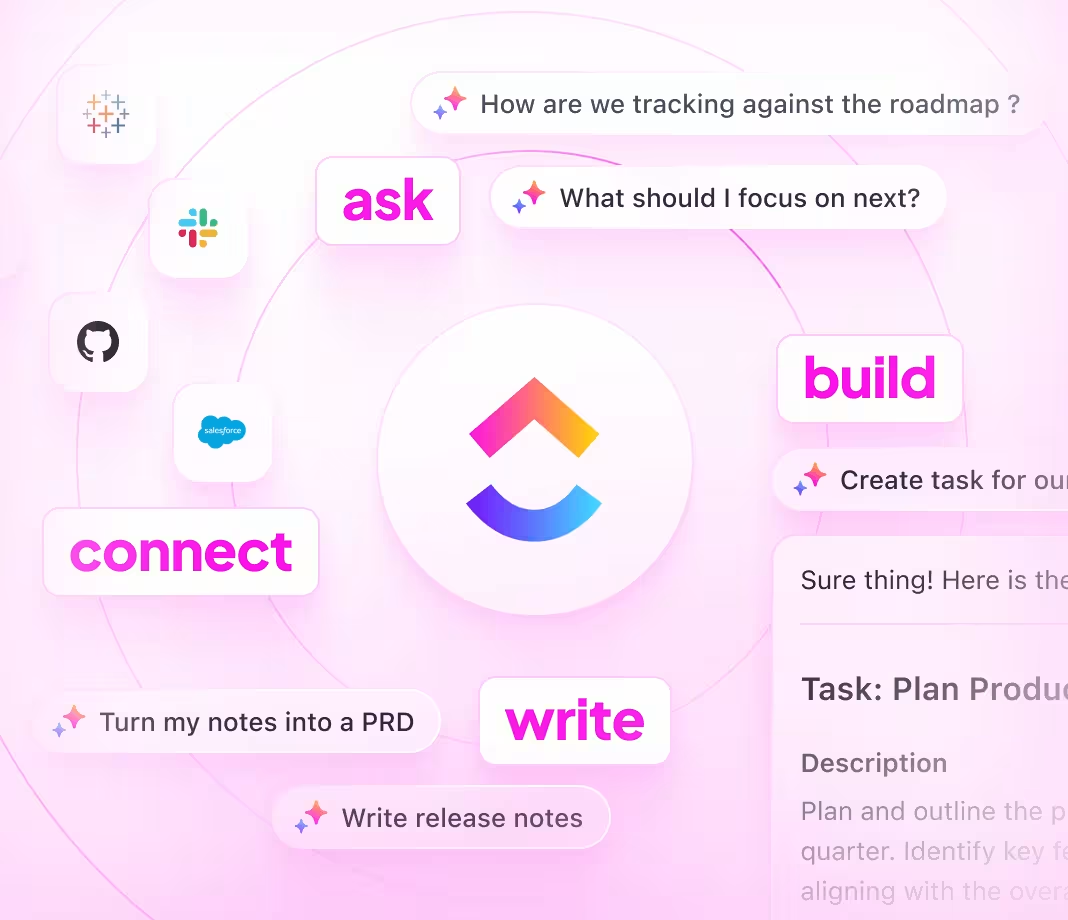
How ClickUp Brain Prevents Team Overcommitment Before It Happens
For Team Leaders
ClickUp Brain handles workload insights — you focus on guiding your team.
- AI Workload Analysis highlights over-assigned team members
- AI Project Forecasts predict potential bottlenecks and delays
- AI Task Summaries provide concise progress updates without meetings
- AI Alerts notify you of emerging risks early
The ClickUp Brain Advantage: Stay ahead of overcommitment and keep projects on track effortlessly.

For Agencies
Keep clients and teams aligned with smart, AI-driven updates.
- AI Client Dashboards offer transparent progress reports
- AI Task Summaries simplify complex project statuses
- AI Feedback Aggregation consolidates client input efficiently
- AI Meeting Recaps transform discussions into actionable tasks
The ClickUp Brain Advantage: Deliver clarity and confidence to clients without adding to your meeting load.

Your First 30 Days in ClickUp: Prevent Overcommitment Across Teams
Week 1: Organize Your Workspace and Visualize Capacity
- Configure Spaces, Lists, and workflows to reflect team structure
- Import existing tasks and assign clear owners
- Set up workload and capacity views to identify overcommitments
- Create transparent dashboards to track progress
Outcome: You gain a real-time picture of who is handling what—no guesswork involved.
Week 2: Shift to Asynchronous Updates and Clear Prioritization
- Use ClickUp Clips for quick status updates
- Build auto-updating Dashboards to reduce status meetings
- Encourage comments and @mentions for clarifications
- Leverage real-time task updates to avoid redundant check-ins
Outcome: Team members focus on work, not meetings, improving productivity and reducing overload.
Week 3: Automate Assignment Balancing and Task Progression
- Set up automations for task assignments and due date adjustments
- Manage dependencies to prevent task pileups
- Automate reminders and status updates
- Standardize processes with templates to reduce planning time
Outcome: Workflows run smoothly with minimal manual intervention, reducing risk of overcommitment.
Week 4: Build an Async-First Collaboration Culture
- Implement Whiteboards for ideation without live meetings
- Use Docs for collaborative planning and knowledge sharing
- Convert ideas directly into action items
- Develop reusable templates for consistent project execution
Outcome: Teams collaborate efficiently with clear visibility and reduced overload.
FAQs on Preventing Overcommitment with PM Software




