Web Accessibility Standards Knowledge Base
Build a Comprehensive Knowledge Base for Web Accessibility Standards
Create a centralized, searchable repository for guidelines, compliance criteria, testing methods, and best practices—empowering your team to uphold accessibility with confidence.
 25,000+ reviews from
Trusted by the best
ClickUp vs Traditional Tools
Why ClickUp Transforms Web Accessibility Knowledge Management
Unify standards and compliance tasks in one scalable platform.
Using traditional methods
- Accessibility guidelines scattered across multiple platforms
- Manual updates that risk outdated or inconsistent information
- Lack of integration between documentation and remediation tasks
- Difficulty managing permissions for diverse stakeholders
- Time-consuming coordination and review processes
With ClickUp
- Centralize standards, guidelines, and compliance workflows
- Convert documentation gaps into actionable tasks with ClickUp Brain
- Link accessibility docs directly to remediation and testing efforts
- Fine-tune access controls for internal teams, partners, and public stakeholders
- Accelerate updates and insights using ClickUp 4.0 and Brain Max AI capabilities
Steps to build your knowledge base
How to create a knowledge base for web accessibility standards
Follow this 6-step framework to maintain clear, compliant, and actionable accessibility documentation.
1. Identify your audience and compliance objectives
- Define users such as developers, designers, QA, and compliance officers
- Map key standards (WCAG, ADA, Section 508) relevant to your projects
- Assign ownership to ensure accountability and consistency
2. Establish a clear structure for your accessibility knowledge base
- Create a centralized hub with easy navigation for guidelines, tools, and policies
- Include sections for principles, technical criteria, testing protocols, and remediation steps
- Maintain a clear changelog for updates and revisions
3. Standardize page templates for consistent documentation
- Use uniform formats for each guideline or compliance requirement
- Detail purpose, criteria, implementation examples, and common pitfalls
- Incorporate accessibility testing methods and error handling advice
4. Add practical guides and troubleshooting resources
- Develop how-to guides for assistive technologies and accessible design
- Document common accessibility issues and their remediation
- Centralize tools, scripts, and resources for testing and validation
5. Synchronize documentation with ongoing accessibility audits and releases
- Link knowledge base updates to audit findings, remediation tasks, and release cycles
- Integrate feedback loops from testing and user reports
- Treat accessibility documentation as a living resource
6. Manage access and maintain your knowledge base over time
- Implement permissions for internal teams, partners, and external stakeholders
- Schedule regular reviews and updates
- Collect feedback to continuously improve content and compliance
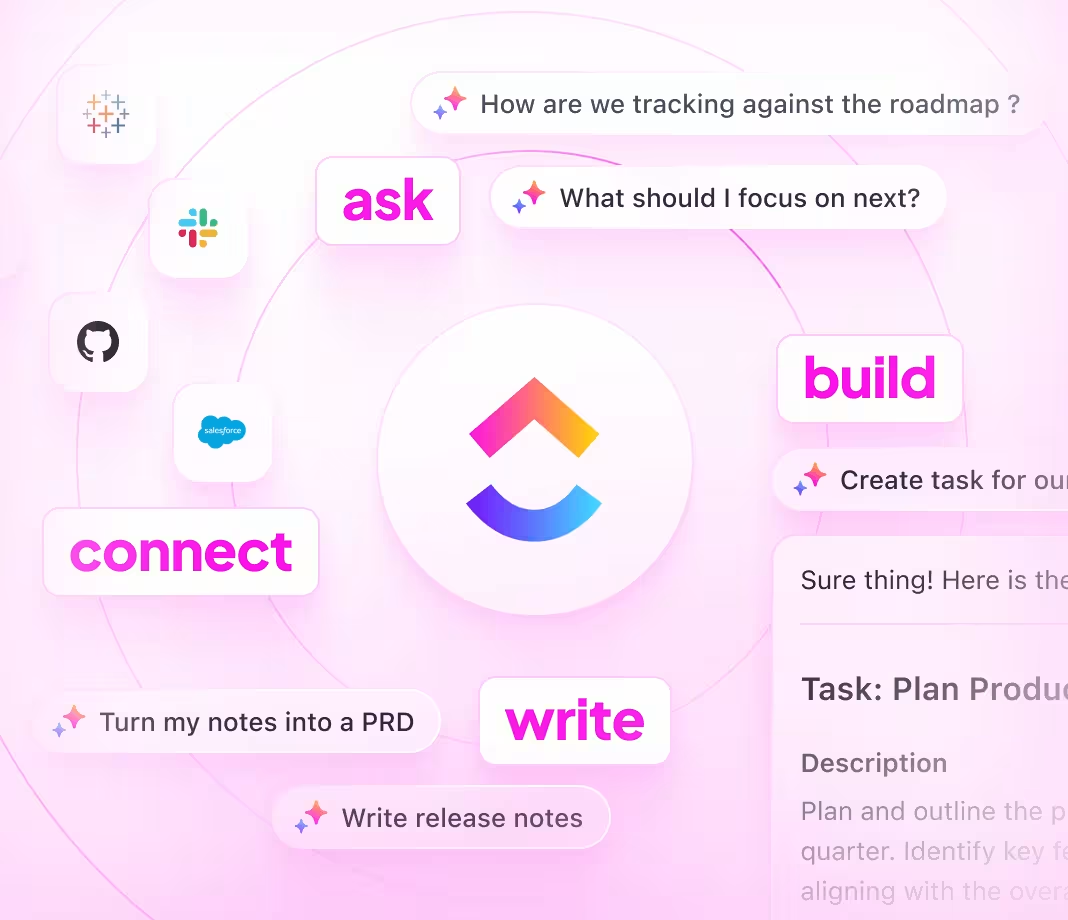
Leverage ClickUp's capabilities
How ClickUp supports building your accessibility knowledge base
Integrate documentation, task management, and AI assistance to stay compliant and proactive.
Organize
Structured accessibility documentation with ClickUp Docs
- Sections for guidelines, testing methods, remediation, and policies
- Table of contents with nested pages for easy navigation
- Consistent formatting across all accessibility standards
Why it matters: Teams find accurate information quickly, reducing compliance risks.

Assign & Track
Clear ownership and progress tracking
- Convert documentation gaps into actionable tasks with ClickUp Brain
- Assign responsible owners, set deadlines, and schedule reviews
- Monitor progress as part of your accessibility workflow
Why it matters: Documentation stays up to date because responsibility is clear and integrated.

Integrate
Connect documentation to audits and remediation
- Link docs directly to audit reports, remediation tickets, and release plans
- Incorporate user feedback and testing results
- Keep your knowledge base aligned with real-world compliance status
Why it matters: Accessibility documentation evolves alongside your projects, ensuring accuracy and effectiveness.

Web accessibility knowledge base FAQs
Your questions about ClickUp for accessibility documentation answered


SOC 2
CERTIFIED

ISO 27001
CERTIFIED

GDPR
COMPLIANT

HIPAA
COMPLIANT