Build a Comprehensive Knowledge Base for User Acceptance Testing
Create a centralized, searchable repository for test cases, acceptance criteria, feedback, and issue resolution—so your team always accesses the definitive source for UAT knowledge.
 25,000+ reviews from
Why Choose ClickUp for Your UAT Knowledge Base?
Unify testing knowledge and execution in one scalable platform.
Traditional UAT Documentation
- Testing information scattered across tools causing inconsistency
- Manual updates cause delays and outdated data
- Test cases disconnected from actual development progress
- Access controls often lead to duplicated documents
- Entirely manual effort extends test cycle durations
Using ClickUp for UAT
- Integrates documentation, tasks, and feedback in one workspace
- Automatically convert documentation gaps into actionable tasks
- Link test cases to development releases and bug reports
- Granular permission settings for internal and external stakeholders
- AI-powered features streamline content creation and review
How to Create a User Acceptance Testing Knowledge Base
Follow this 6-step approach to keep your UAT documentation organized, accessible, and always up to date.
1. Identify stakeholders and define UAT objectives
- Determine who will use the knowledge base (testers, product owners, clients)
- Clarify goals: test coverage, acceptance criteria clarity, feedback tracking
- Assign responsibility for content accuracy and upkeep
2. Design a logical UAT documentation framework
- Establish main sections like test plans, scenarios, acceptance criteria, and results
- Use clear navigation with tables of contents and subpages
- Prepare for ongoing updates aligned with releases
3. Standardize test case templates for uniformity
- Use consistent formats outlining objectives, steps, expected results, and pass/fail criteria
- Include fields for comments, attachments, and related issues
- Ensure clarity to reduce misinterpretation and repeated queries
4. Enrich content with real-world usage and troubleshooting
- Document common user workflows and edge case scenarios
- Capture typical issues encountered during testing and resolutions
- Link to support tickets and developer notes for context
5. Integrate documentation updates with development cycles
- Connect knowledge base changes to release schedules, bug fixes, and feature rollouts
- Treat documentation as an integral part of the testing and deployment process
- Maintain synchronization between testing knowledge and product evolution
6. Manage access and continuously improve the knowledge base
- Define access for internal teams, external testers, and stakeholders
- Regularly review and refresh content based on feedback and test outcomes
- Use analytics and AI to identify knowledge gaps and prioritize updates
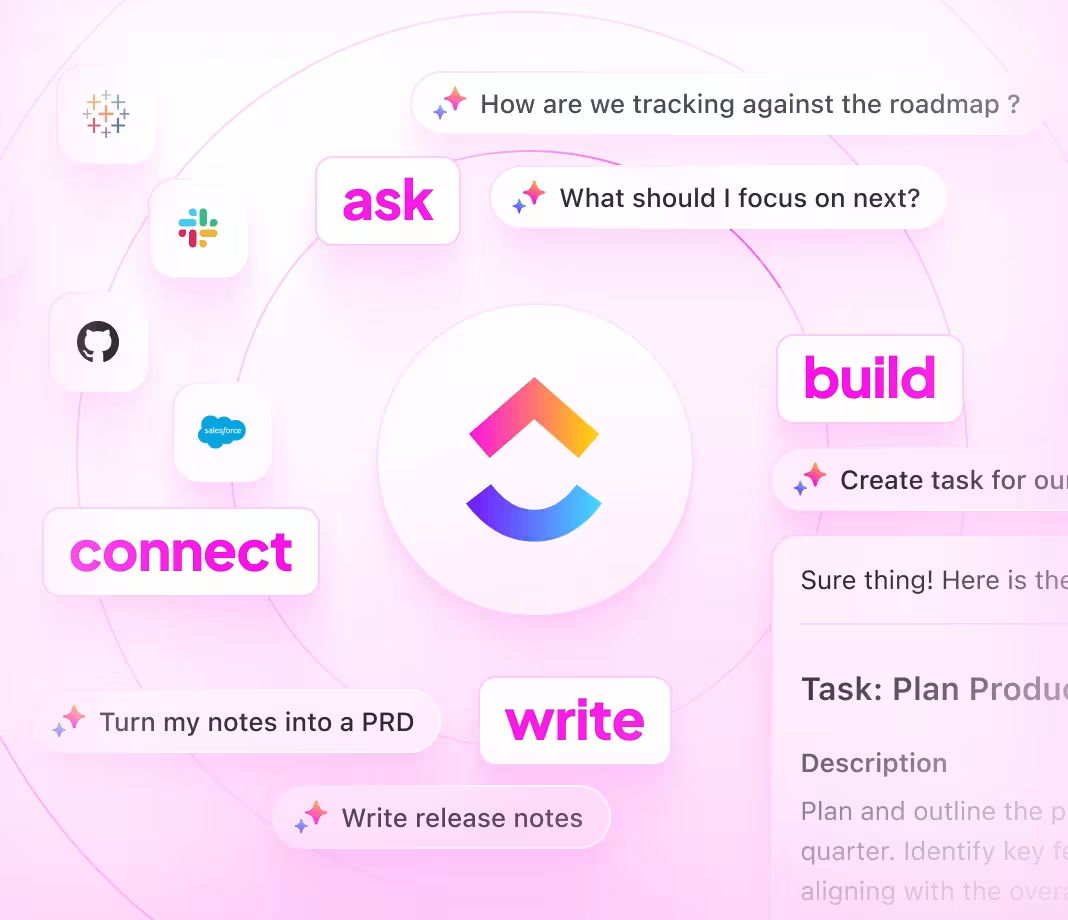
Unlock Effortless UAT Knowledge Management with ClickUp
Ensure your user acceptance testing documentation is structured, consistently updated, and tightly integrated with every product release.
Structured UAT Documentation Using ClickUp Docs
- Test plans, scenarios, acceptance criteria, results
- Intuitive table of contents and nested subpages
- Uniform test case templates for clarity
Why it matters: Testers and stakeholders find what they need quickly, reducing confusion and rework.

Ownership and Accountability for UAT Content
- Convert documentation gaps into tasks automatically
- Assign owners, set deadlines, and plan review cycles
- Manage documentation as part of your testing workflow
Why it matters: Your knowledge base stays accurate and reliable because responsibility is clear and tracked.

Link Documentation to Releases and Feedback
- Associate test cases and acceptance criteria with release milestones
- Tie defects, user feedback, and support issues back to documentation
- Integrate postmortems and retrospectives for continuous improvement
Why it matters: Your testing knowledge evolves alongside your product, ensuring relevance and completeness.

Frequently Asked Questions




