
Unified Modeling Language Knowledge Hub
Streamline Your UML Knowledge Base with ClickUp
Develop a centralized, searchable repository for UML standards, diagrams, methodologies, and best practices—ensuring your team accesses the most current, unified source of truth.
 25,000+ reviews from
Trusted by the best
ClickUp vs Legacy UML Tools
Why ClickUp transforms how you build a UML knowledge base
Create a dynamic hub that grows with your modeling needs.
Using traditional UML tools
- UML documentation isolated from modeling workflows, leading to outdated diagrams
- Manual updates dependent on recall and inconsistent follow-up
- Disconnected from development cycles and version control
- Permission barriers causing redundant documentation versions
- Entirely manual processes slow down knowledge sharing
Leveraging ClickUp for UML knowledge
- Integrate modeling docs, tasks, and discussions in one workspace
- Automatically transform knowledge gaps into actionable tasks
- Link UML docs directly to project milestones and iterations
- Granular permissions tailored for internal teams, partners, and stakeholders
- AI-powered drafting, summarization, and troubleshooting accelerate maintenance
Building your UML knowledge base
Step-by-step guide to structuring your UML knowledge hub
Follow these 6 strategic steps to keep UML resources organized, accessible, and current.
1. Identify your UML knowledge consumers and objectives
- Define user roles from business analysts to software architects
- Outline key use cases from diagram creation to standard compliance
- Assign documentation stewards to maintain accuracy
2. Establish a clear UML knowledge base framework
- Create a unified hub with intuitive navigation for diagrams, notations, and standards
- Segment core areas: Use Case, Class, Sequence, Activity diagrams, and glossary
- Maintain changelogs and version histories prominently
3. Standardize UML documentation templates for consistency
- Develop reusable templates covering diagram purpose, elements, relationships, and constraints
- Include annotations, modeling conventions, and error conditions
- Reduce ambiguities and improve cross-team understanding
4. Incorporate practical modeling guides and troubleshooting tips
- Document step-by-step modeling workflows for complex scenarios
- Provide error detection and resolution guidance
- Centralize best practices for tool integration and versioning
5. Synchronize UML documentation with project workflows
- Connect documentation updates to sprints, releases, and design reviews
- Treat UML knowledge as a living artifact within development cycles
- Ensure diagrams evolve alongside system architecture changes
6. Manage access controls and sustain knowledge quality
- Configure role-based permissions for internal teams and external collaborators
- Regularly audit content for relevance and accuracy
- Gather feedback to continuously refine the knowledge base
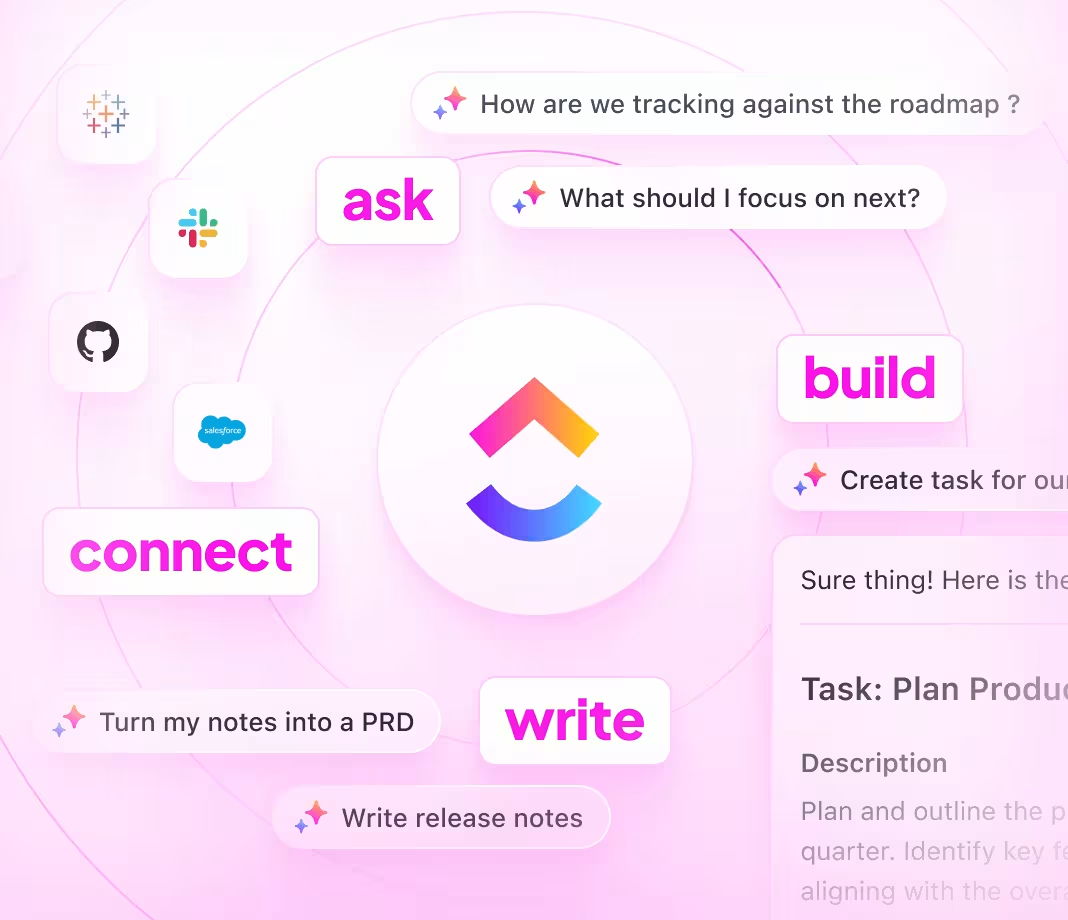
Empowering Your UML Knowledge Base
Unlock precise UML knowledge management with ClickUp
Keep your UML diagrams and documentation structured, assigned, and synchronized with project milestones.
Organize
Comprehensive UML documentation with ClickUp Docs
- Use Case, Class, Sequence, Activity diagrams, and glossary
- Table of contents plus nested pages for easy navigation
- Uniform diagram documentation format throughout
Why it matters: Team members locate modeling standards swiftly, reducing confusion and errors.

Assign
Clear ownership and accountability for UML content
- Convert documentation discrepancies into actionable tasks
- Assign responsible owners, set deadlines, and establish review schedules
- Manage UML documentation workflows alongside project tasks
Why it matters: Ensures UML knowledge is continuously refined and remains reliable.

Integrate
Link UML documentation to development cycles
- Associate docs with project sprints, releases, and change requests
- Connect modeling updates to defect tracking and postmortems
- Incorporate feedback from design reviews and stakeholder inputs
Why it matters: Keeps UML knowledge aligned with evolving system designs.

ClickUp for Unified Modeling Language
Frequently Asked Questions


SOC 2
CERTIFIED

ISO 27001
CERTIFIED

GDPR
COMPLIANT

HIPAA
COMPLIANT