Build a Centralized Knowledge Base for Security Incident Response
Create a unified, searchable repository for incident protocols, playbooks, threat intelligence, postmortems, and remediation workflows—empowering your team to respond swiftly and confidently.
 25,000+ reviews from
Why ClickUp Outperforms Conventional Incident Response Knowledge Bases
Unify knowledge and action in one scalable platform designed for security teams.
With traditional tools
- Incident knowledge scattered across emails, docs, and spreadsheets
- Manual updates cause outdated or conflicting procedures
- No direct link between playbooks and incident tasks
- Access controls lead to fragmented document copies
- Incident documentation is reactive, not integrated with workflows
With ClickUp
- Combine documentation, tasks, and communication in one workspace
- Use ClickUp Brain and Brain Max to draft, summarize, & update knowledge quickly
- Link knowledge base entries directly to incident tickets and workflows
- Granular permission settings for internal teams and external partners
- AI-powered automation accelerates response and keeps docs current
How to create an effective security incident response knowledge base
Follow this 6-step framework to develop a living knowledge hub that scales with your security program.
1. Identify stakeholders and define incident response objectives
- Clarify who uses the knowledge base: analysts, responders, management
- Outline key incident types and response goals
- Assign ownership for ongoing knowledge maintenance
2. Design a clear, intuitive knowledge base structure
- Organize content by incident phases: detection, containment, eradication, recovery
- Include sections for playbooks, threat intelligence, communication protocols, and tools
- Use nested pages and tables of contents for easy navigation
3. Standardize incident playbook templates for consistency
- Develop uniform playbook formats covering scope, steps, tools, roles, and escalation paths
- Incorporate checklists, decision trees, and response metrics
- Ensure clarity to minimize response time and errors
4. Incorporate real-world case studies and troubleshooting guides
- Document past incidents with timelines, lessons learned, and remediation steps
- Provide troubleshooting workflows for common alerts and false positives
- Centralize communication templates and reporting formats
5. Integrate knowledge base updates with incident management workflows
- Link documentation updates directly to incident tickets and postmortems
- Automate reminders for review cycles and playbook revisions
- Treat documentation as an integral part of the response lifecycle
6. Implement access controls and continuous improvement processes
- Define permissions for internal teams, partners, and auditors
- Track feedback and usage analytics to refine content
- Schedule regular audits to ensure accuracy and relevance
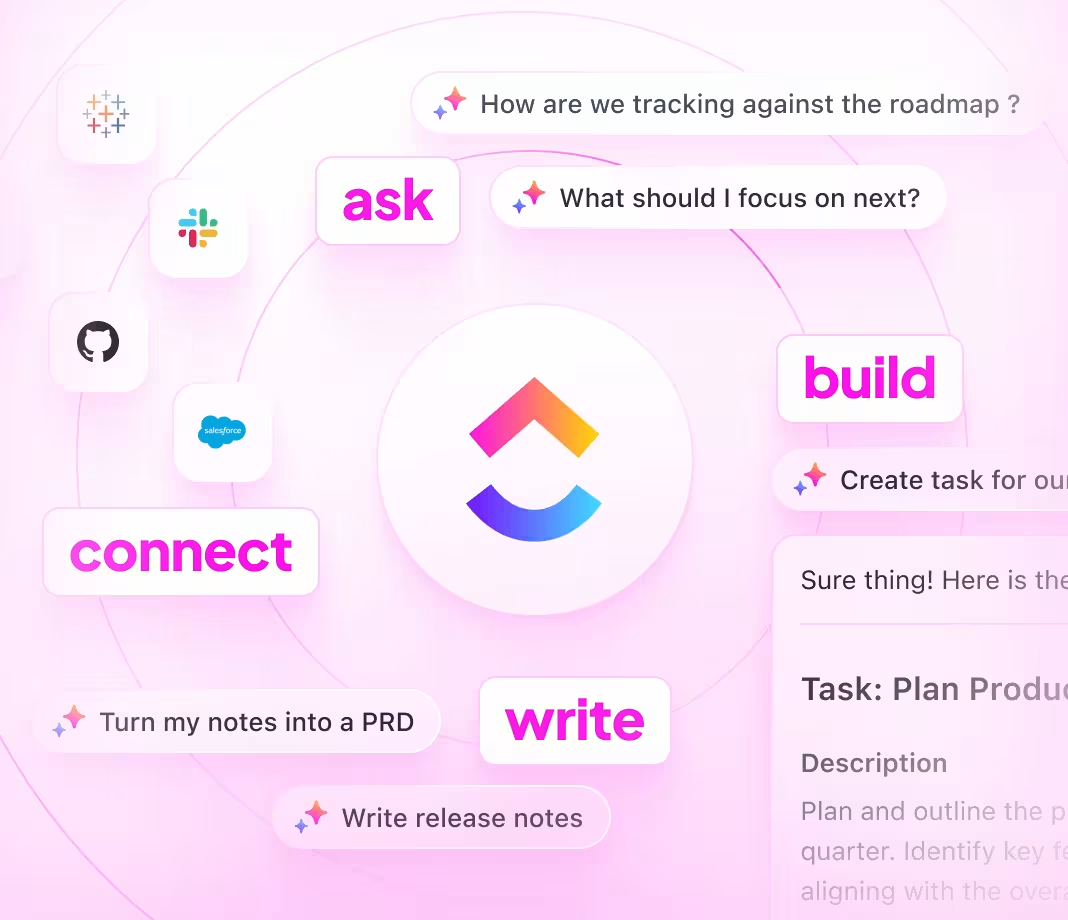
How ClickUp empowers your security incident knowledge management
Centralize response plans, automate updates with ClickUp Brain and Brain Max, and keep your team coordinated through every incident.
Structured incident response documentation with ClickUp Docs
- Incident phases, playbooks, threat intelligence, communication templates
- Nested docs with table of contents and intuitive navigation
- Consistent playbook templates and checklists
Why it matters: Enables rapid access to critical information and reduces response errors.

Accountable knowledge ownership and tracking
- Turn documentation gaps into actionable tasks
- Assign owners, deadlines, and review cycles
- Track updates alongside incident tickets and workflows
Why it matters: Keeps your knowledge base accurate and aligned with evolving threats.

Link documentation directly to incidents and postmortems
- Associate playbooks with active incidents and change requests
- Document lessons learned and remediation steps
- Tie feedback and support queries back to knowledge base updates
Why it matters: Ensures continuous improvement and synchronized response efforts.

Frequently Asked Questions




