ClickUp Pull Request Standards Knowledge Hub
Streamline Your Pull Request Standards Knowledge Base
Develop a centralized, searchable resource for guidelines, best practices, review checklists, and workflow protocols—empowering your team with a single source of truth for pull request quality and consistency.
 25,000+ reviews from
Trusted by the best
ClickUp vs Conventional Solutions
Why ClickUp Elevates Your Pull Request Standards Documentation
Unify knowledge and execution in one adaptable platform.
Traditional Tools Limitations
- Documentation scattered from actual development work, leading to outdated standards
- Manual updates prone to human error and delays
- Disconnected from real-time code changes and review cycles
- Access controls complicate sharing and version management
- Time-consuming manual creation and maintenance processes
Advantages with ClickUp
- Integrates documentation with pull request workflows (Docs, Tasks, Comments)
- Automatically convert documentation gaps into actionable tasks
- Links standards directly to code reviews, branches, and merge events
- Granular permissions for internal teams, external collaborators, and stakeholders
- AI-powered assistance accelerates drafting, summarizing, and troubleshooting
Constructing Your Knowledge Base
How to Build a Pull Request Standards Knowledge Base
Follow this 6-step framework to maintain structured, accessible, and current pull request guidelines.
1. Identify your team’s pull request process and compliance goals
- Define roles, responsibilities, and review criteria
- Map out workflows from branch creation to merge approval
- Assign ownership for continuous content accuracy
2. Design a cohesive knowledge base layout
- Create a centralized hub with intuitive navigation
- Include sections like overview, code review checklist, merge policies, and escalation paths
- Ensure changelogs and updates are easy to locate
3. Standardize pull request templates and documentation pages
- Use uniform templates for PR descriptions and review guidelines
- Detail expectations for commit messages, code style, and testing
- Document common pitfalls and remediation steps
4. Incorporate practical guides and troubleshooting resources
- Develop how-to articles for common scenarios and tool integrations
- Centralize troubleshooting workflows for failed checks or conflicts
- Share best practices and tips to accelerate reviews
5. Synchronize documentation updates with development cycles
- Link knowledge base changes to sprint releases, bug fixes, and feature rollouts
- Treat documentation as a live artifact aligned with code evolution
- Keep standards relevant as workflows adapt
6. Implement controlled access and ongoing maintenance
- Manage permissions for engineering teams, QA, and external contributors
- Maintain update logs and feedback channels
- Schedule periodic reviews to prevent knowledge decay
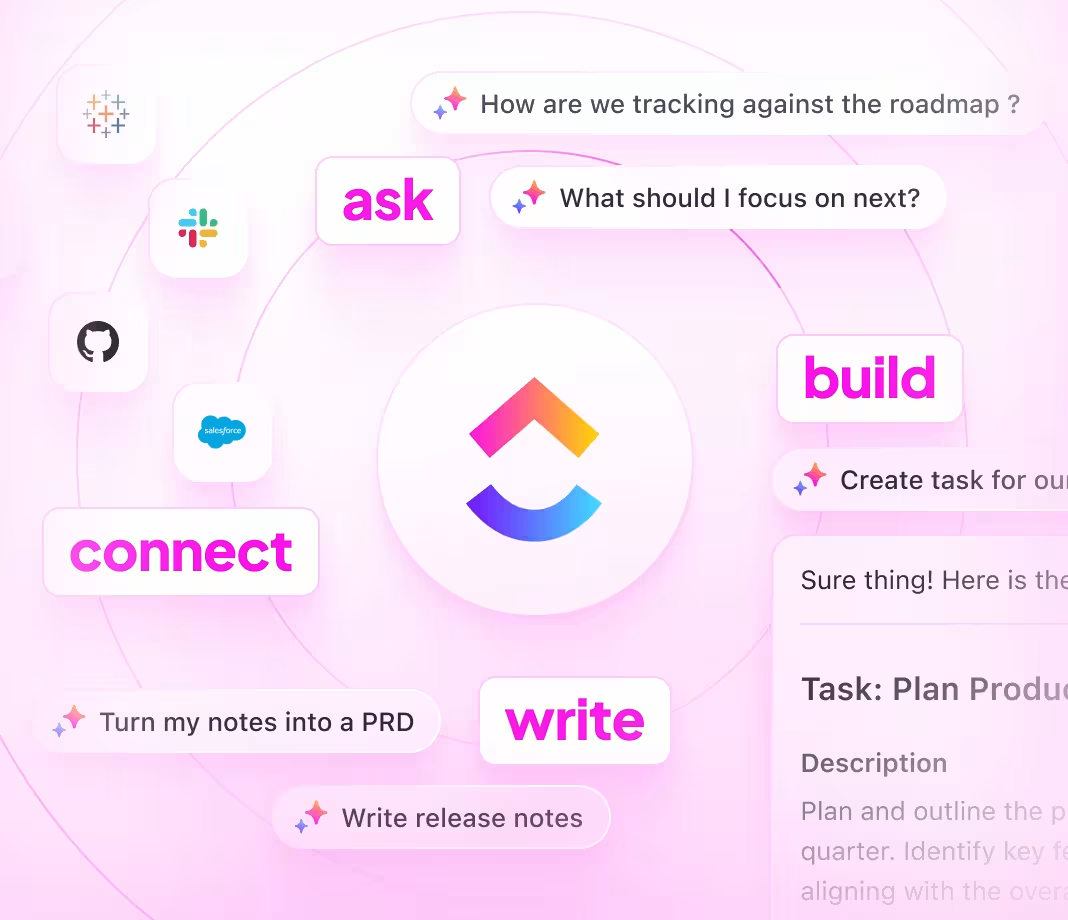
ClickUp’s Role in Your Pull Request Knowledge Management
Unlock Efficiency with ClickUp Knowledge Base
Ensure your pull request standards stay clear, accountable, and aligned with every code iteration.
Organize
Structure Pull Request Guidelines Using ClickUp Docs
- Branching strategies, review criteria, merge requirements, conflict resolution
- Table of contents with nested subpages for easy navigation
- Consistent PR template formats
Why it matters: Developers and reviewers find answers quickly, reducing review cycles and errors.

Manage
Track Ownership of Pull Request Standards
- Identify documentation gaps and convert them into actionable tasks
- Assign owners, set deadlines, and establish regular review cadences
- Monitor documentation progress alongside development work
Why it matters: Accountability ensures your knowledge base remains accurate and trustworthy.

Connect
Link Documentation to Development Events
- Associate docs with code reviews, merge requests, and deployment milestones
- Connect bugs, incidents, and postmortem analyses to relevant standards
- Integrate feedback and support tickets into documentation updates
Why it matters: Your pull request guidelines evolve with your codebase and team practices.

ClickUp Knowledge Base for Pull Request Standards
Common Questions Answered




SOC 2
CERTIFIED

ISO 27001
CERTIFIED

GDPR
COMPLIANT

HIPAA
COMPLIANT