ClickUp Object-Oriented Programming Knowledge Base
Build a Robust Knowledge Hub for Object-Oriented Programming
Create a unified, searchable repository for concepts, design patterns, code examples, and troubleshooting—ensuring developers access accurate, up-to-date OOP knowledge effortlessly.
 25,000+ reviews from
Trusted by the best
ClickUp vs Traditional Tools
Discover Why ClickUp Excels in OOP Knowledge Management
Develop a centralized resource that evolves with your team’s needs.
Traditional knowledge bases
- Information scattered across multiple platforms, leading to inconsistencies
- Manual updates prone to delays and errors
- Disconnected from development workflows and code changes
- Access controls often complicate sharing and collaboration
- Documentation maintenance demands significant manual effort
ClickUp Advantages
- Integrates documentation with tasks, comments, and workflows for seamless updates
- Automatically converts documentation gaps into actionable tasks
- Links knowledge to development cycles, releases, and bug fixes
- Granular permissions for internal teams, partners, and public access
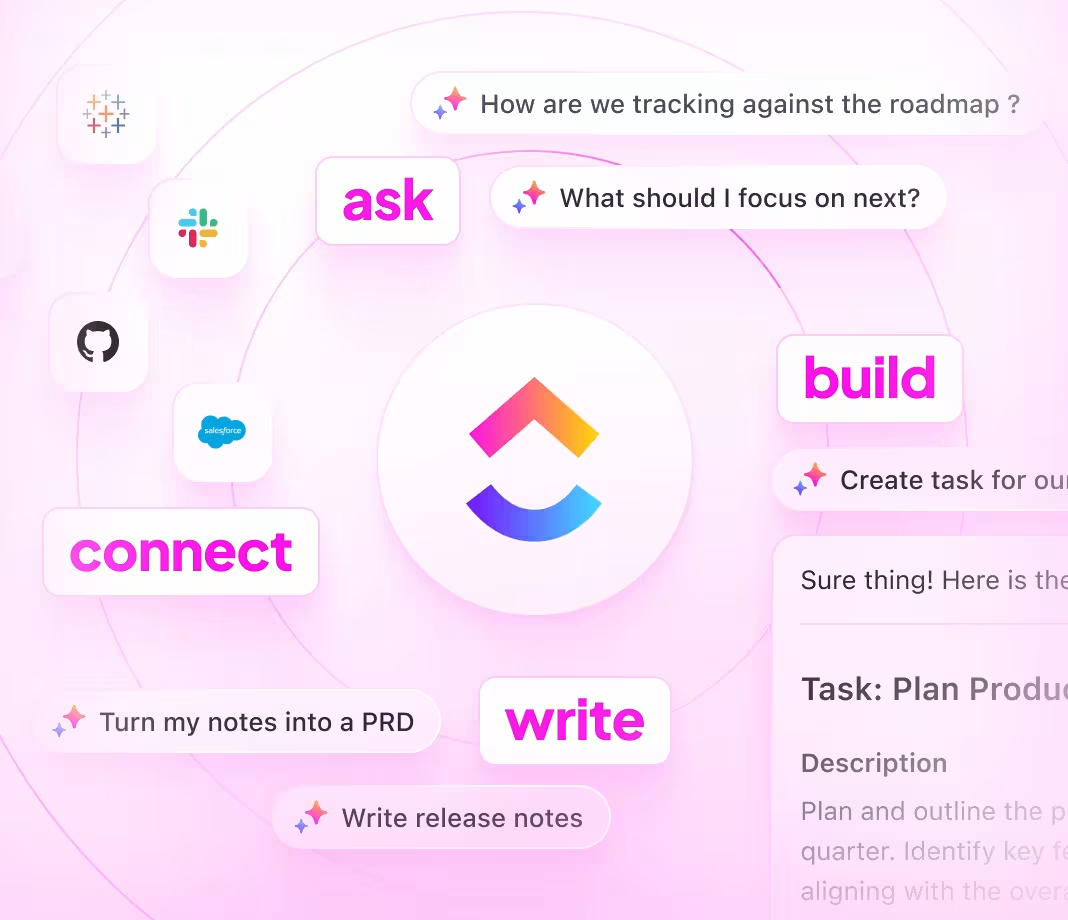
- Harnesses AI with ClickUp Brain and Brain Max to accelerate content creation and maintenance
Essential Steps
How to Build an OOP Knowledge Base with ClickUp
Follow this 6-step approach to keep your OOP documentation clear, organized, and always current.
1. Identify your audience and define knowledge objectives
- Understand developer experience levels and learning goals
- Outline core OOP topics: classes, inheritance, polymorphism, encapsulation
- Assign documentation ownership to ensure consistency
2. Design a clear structure for your OOP knowledge base
- Organize content into modules like Fundamentals, Design Patterns, Code Samples, and Debugging
- Use intuitive navigation with tables of contents and nested subpages
- Keep terminology and formatting consistent across topics
3. Standardize page templates for uniform documentation
- Apply consistent formats covering concept definitions, code snippets, and best practices
- Include sections for common pitfalls and troubleshooting
- Ensure reusable templates for similar topics to streamline creation
4. Enrich content with practical guides and debugging tips
- Provide step-by-step tutorials for implementing OOP principles
- Add troubleshooting advice for common errors and design issues
- Include examples demonstrating real-world application scenarios
5. Link documentation updates to development milestones
- Connect knowledge updates to code releases, refactors, and bug resolutions
- Integrate documentation tasks into sprint planning to maintain accuracy
- Use Brain Max to automate changelog generation and content summaries
6. Manage access and maintain ongoing quality
- Set permissions for internal teams, collaborators, and external audiences
- Schedule regular reviews and updates to prevent knowledge decay
- Collect feedback to continuously refine your knowledge base
Maximize Your Knowledge Base Impact
Unlock the Potential of ClickUp for OOP Knowledge Management
Maintain structured, owned, and synchronized OOP documentation that evolves alongside your codebase.
Organize
Structured OOP Documentation with ClickUp Docs
- Cover core OOP topics: Classes, Inheritance, Polymorphism, Encapsulation
- Use tables of contents and nested pages for smooth navigation
- Maintain consistent page layouts and terminology
Why it matters: Developers locate answers quickly, reducing context switching and improving code quality.

Manage
Accountable Documentation Ownership
- Convert knowledge gaps into assigned tasks
- Assign owners, set deadlines, and schedule review cycles
- Track documentation efforts like development work
Why it matters: Documentation stays reliable and up to date through clear responsibility.

Synchronize
Documentation Aligned with Development Releases
- Link docs to code releases, refactors, and bug fixes
- Connect issues, incidents, and postmortem analyses
- Incorporate user feedback and support queries into documentation
Why it matters: Keeps your knowledge base relevant and reflective of your evolving code.

ClickUp Knowledge Base for OOP
Answers to Common Questions




SOC 2
CERTIFIED

ISO 27001
CERTIFIED

GDPR
COMPLIANT

HIPAA
COMPLIANT