Litigation Support Knowledge Hub
Construct a Robust Knowledge Base Tailored for Litigation Support
Centralize case files, precedents, deposition summaries, and legal protocols in one searchable platform—ensuring your litigation team accesses critical insights instantly.
 25,000+ reviews from
Trusted by the best
ClickUp vs Traditional Legal Tools
Why ClickUp Transforms Litigation Support Knowledge Management
Unify your legal insights with a platform built to evolve with your cases.
With conventional litigation tools
- Case information scattered across disparate systems leading to errors
- Manual updates slow down access to latest evidence or rulings
- Limited integration between legal documents and case management
- Restrictive permissions cause duplicated files and version confusion
- Entirely manual workflows extend preparation and review timelines
With ClickUp
- Litigation knowledge and case tasks coexist in one workspace
- Instantly convert document gaps into actionable assignments
- Seamlessly link briefs, depositions, and case updates
- Granular access controls for internal teams, external counsel, and clients
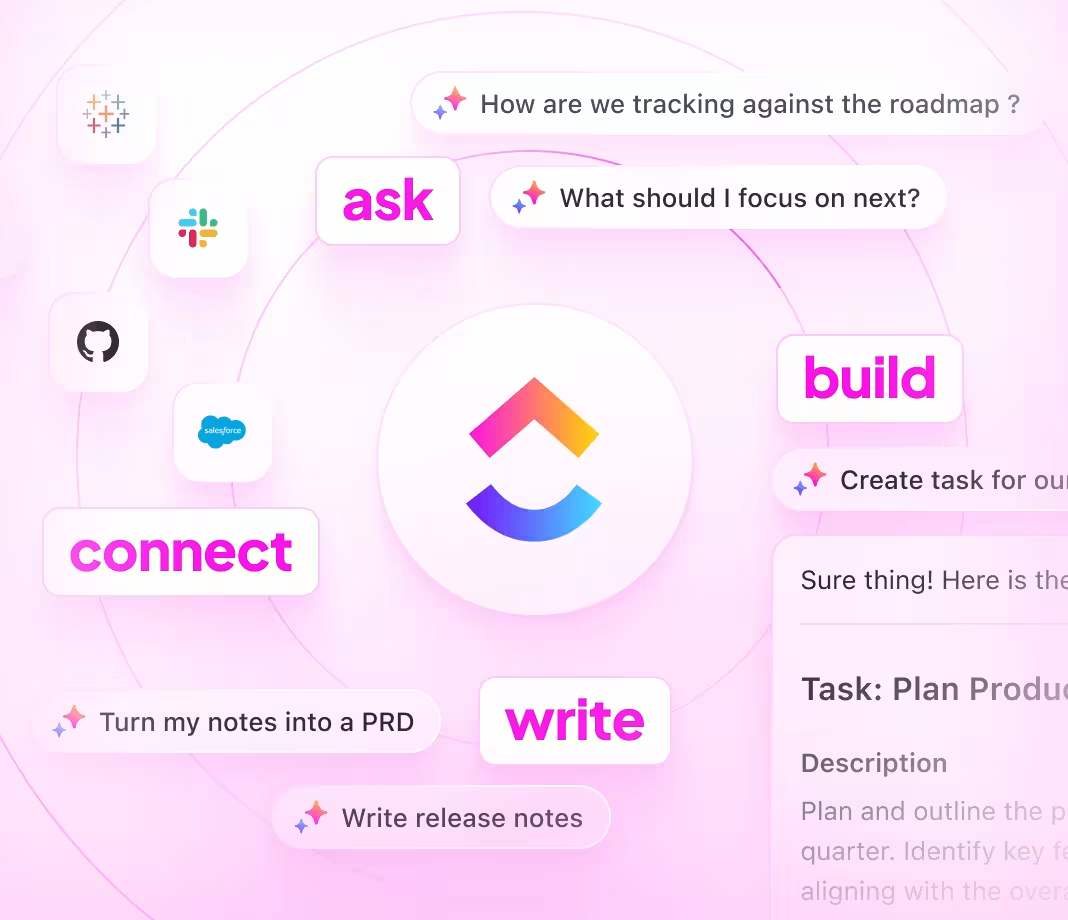
- AI-powered drafting, summarization, and issue spotting accelerates work
Blueprint to Build Your Litigation Knowledge Base
Step-by-Step Guide to Creating a Litigation Support Knowledge Repository
Follow these 6 focused steps to maintain organized, accessible, and up-to-date legal knowledge.
1. Identify your litigation team’s needs and documentation objectives
- Determine key users: attorneys, paralegals, consultants
- Outline workflows from evidence gathering to trial preparation
- Assign roles to maintain content accuracy and relevance
2. Design a clear, logical knowledge base framework
- Establish folders for case law, pleadings, motions, and discovery
- Include sections for statutes, deposition transcripts, and expert reports
- Ensure quick navigation with a comprehensive table of contents
3. Standardize document templates for consistency and clarity
- Use uniform formats for briefs, memos, and affidavits
- Detail sections like facts, legal arguments, citations, and exhibits
- Incorporate checklists for completeness and compliance
4. Incorporate practical litigation guides and troubleshooting aids
- Develop how-to guides for filing procedures and court protocols
- Add troubleshooting FAQs for common procedural issues
- Centralize expert witness preparation and deposition strategies
5. Keep your knowledge base aligned with case updates and rulings
- Link knowledge updates to court orders, motions, and evidence submissions
- Treat documentation as an ongoing part of case management
- Maintain accuracy as litigation progresses and new information arises
6. Manage permissions and continuously refine your knowledge base
- Control access levels for attorneys, clients, and external partners
- Update legal precedents, rulings, and procedural changes regularly
- Collect feedback and audit content to preserve integrity
The Advantage of ClickUp's Legal Knowledge Base
How ClickUp Powers Litigation Knowledge Management
Keep your litigation knowledge structured, accountable, and synchronized across every case phase.
Organization
Structured Litigation Knowledge with ClickUp Docs
- Case summaries, motions, discovery, rulings, and expert reports
- Table of contents and nested pages for effortless navigation
- Standardized document templates for consistency
Why it matters: Legal teams locate critical information faster, enhancing case strategy and collaboration.

Accountability
Clear Ownership and Tracking for Legal Documentation
- Convert knowledge gaps into assigned tasks
- Assign document owners, set deadlines, and schedule review cycles
- Manage documentation progress like case milestones
Why it matters: Ensures your knowledge base remains accurate and litigation-ready.

Integration
Linking Litigation Docs to Case Milestones
- Connect documentation to court filings, motions, and evidence updates
- Associate notes with depositions, hearings, and rulings
- Capture feedback and issues within case context
Why it matters: Documentation evolves alongside litigation, reducing risk of outdated info.

ClickUp for Litigation Knowledge Management
Your Litigation Knowledge Base Questions Answered


SOC 2
CERTIFIED

ISO 27001
CERTIFIED

GDPR
COMPLIANT

HIPAA
COMPLIANT