Financial Forecasting Knowledge Base with ClickUp
Establish a Robust Knowledge Base for Financial Forecasting
Centralize your forecasting models, assumptions, scenarios, and analysis in one searchable hub—empowering your finance team to access accurate insights anytime.
 25,000+ reviews from
Trusted by the best
ClickUp vs Traditional Financial Tools
Why ClickUp Transforms Financial Forecasting Knowledge Management
Create a unified source that evolves with your finance team.
With traditional financial tools
- Forecast data and assumptions scattered across spreadsheets and emails
- Manual updates lead to outdated models and misaligned insights
- Lack of integration with actual financial operations and decisions
- Difficult version control causes confusion and errors
- Time-consuming collaboration with limited transparency
With ClickUp
- Combine forecasting models, documentation, and tasks in one platform
- Automate updates and track changes seamlessly with ClickUp Brain and Brain Max
- Link forecasts directly to budgeting, reporting, and scenario planning workflows
- Manage permissions for finance teams, stakeholders, and external advisors
- AI-powered assistance accelerates data synthesis, scenario analysis, and documentation
Building Your Financial Forecasting Knowledge Base
Step-by-Step Guide to Crafting a Financial Forecasting Knowledge Hub
Follow this 6-step framework to keep your forecasting knowledge organized, accurate, and actionable.
1. Identify your financial forecasting users and objectives
- Define stakeholders: finance analysts, executives, and external partners
- Clarify forecasting goals: revenue projections, expense tracking, cash flow analysis
- Assign knowledge ownership to ensure accountability and updates
2. Design a clear structure tailored to forecasting knowledge
- Organize sections: assumptions, models, scenario analyses, historical data, and reports
- Implement navigation with subpages and linked Docs for quick access
- Include changelogs and version histories for transparency
3. Standardize forecasting templates and documentation
- Develop consistent models for various forecast types (e.g., rolling forecasts, zero-based budgeting)
- Document methodologies, data sources, and calculation logic
- Address error checks and validation processes to ensure reliability
4. Incorporate practical forecasting guides and troubleshooting
- Create step-by-step guides for common forecasting tasks
- Document common pitfalls and how to resolve discrepancies
- Centralize best practices and scenario planning techniques
5. Keep your knowledge base synchronized with financial updates
- Link documentation to budget cycles, financial reviews, and audit trails
- Integrate change requests and incident reports for dynamic updates
- Treat forecasting documentation as an ongoing part of financial operations
6. Manage access and continuously refine your knowledge base
- Assign roles and permissions for internal teams and external consultants
- Collect feedback and schedule regular reviews to maintain accuracy
- Use analytics to monitor usage and identify knowledge gaps
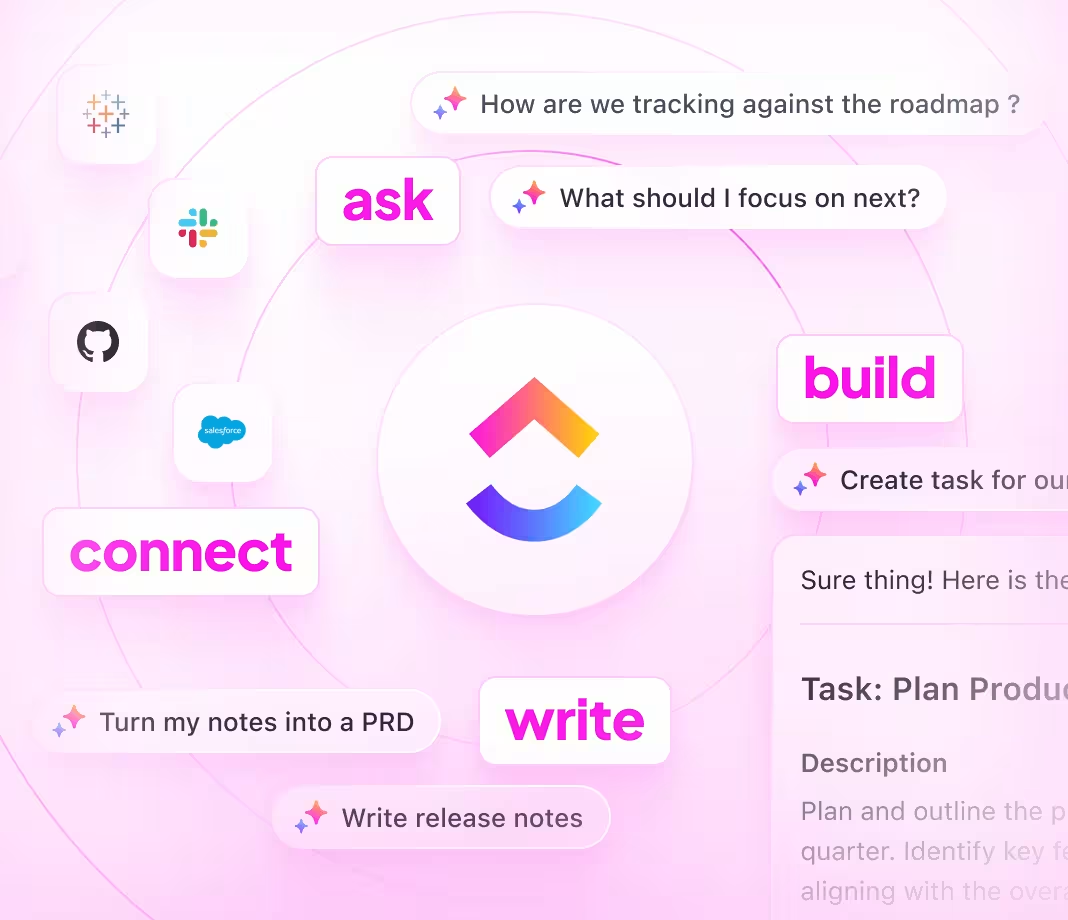
Empowering Finance Teams
Unlock Comprehensive Financial Forecasting with ClickUp
Harness ClickUp to centralize, automate, and elevate your financial forecasting knowledge—integrating insights with execution.
Organize
Structured Forecast Documentation Using ClickUp Docs
- Sections for assumptions, models, scenarios, and reports
- Intuitive table of contents with nested subpages
- Uniform templates for forecast types
Why it matters: Finance professionals locate critical data and methodologies swiftly, reducing errors and delays.

Manage
Transparent Ownership and Accountability
- Convert documentation gaps into assigned tasks
- Designate owners, deadlines, and review periods
- Monitor documentation progress alongside financial workflows
Why it matters: Your knowledge base remains accurate as responsibilities and processes evolve.

Synchronize
Dynamic Links Between Knowledge and Financial Processes
- Connect documentation to budgeting cycles, forecasts, and audit logs
- Associate change requests and financial incident reports
- Feedback loops enhance documentation relevance
Why it matters: Your forecasting knowledge stays updated with real-world financial changes.

ClickUp for Financial Forecasting Knowledge
Common Questions Answered


SOC 2
CERTIFIED

ISO 27001
CERTIFIED

GDPR
COMPLIANT

HIPAA
COMPLIANT