Customer Advocacy Eligibility Rules Knowledge Base
Streamline Your Knowledge Base for Customer Advocacy Eligibility
Create a centralized, searchable resource for eligibility criteria, policy nuances, exceptions, and updates—empowering your team to deliver consistent advocacy decisions every time.
 25,000+ reviews from
Trusted by the best
ClickUp vs Traditional Solutions
Elevate Customer Advocacy with ClickUp Over Traditional Knowledge Tools
Build a unified resource that scales seamlessly with your advocacy team.
Traditional Tools Limitations
- Eligibility rules scattered across emails and spreadsheets, causing confusion
- Manual updates prone to errors and delays
- Lack of integration with advocacy workflows
- Duplicated content for different teams due to rigid permissions
- Time-consuming documentation creation and maintenance
ClickUp Advantages
- Centralize eligibility rules alongside tasks and discussions
- Convert knowledge gaps into actionable tasks automatically
- Link rules directly to advocacy cases and policy updates
- Flexible access controls for internal and partner teams
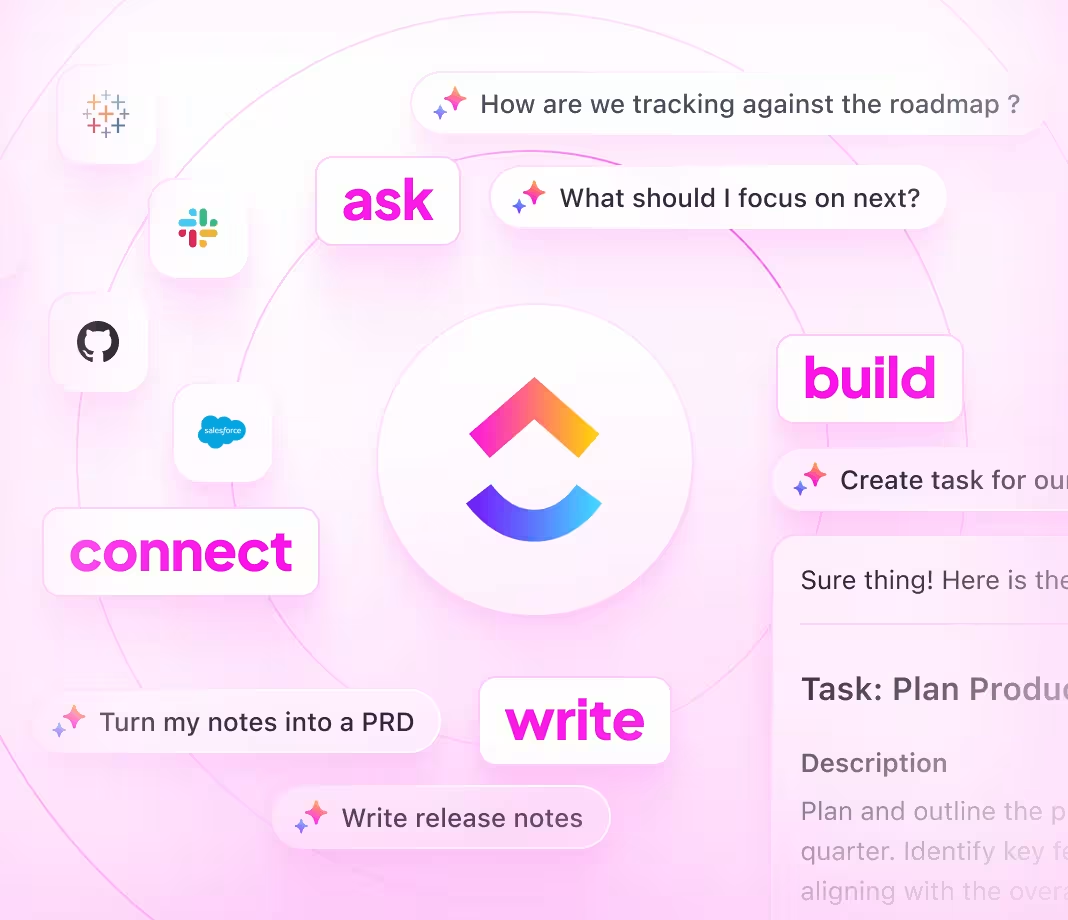
- Leverage ClickUp Brain and AI to automate drafting, summarizing, and troubleshooting
Building Your Knowledge Base
Transform How You Create a Customer Advocacy Eligibility Rules Knowledge Base
Follow this 6-step approach to ensure clarity, accuracy, and accessibility.
1. Identify stakeholders and advocacy objectives
- Define who will use the knowledge base (agents, partners, managers)
- Outline eligibility criteria and decision pathways
- Assign ownership for ongoing accuracy and updates
2. Design a clear, navigable knowledge base framework
- Organize content into sections: rules overview, exceptions, FAQs, case studies
- Use nested pages for complex rule sets and policy details
- Ensure easy access to recent updates and change logs
3. Standardize rule documentation for consistent interpretation
- Use uniform templates for each eligibility criterion
- Include definitions, conditions, exceptions, and examples
- Document escalation and approval processes clearly
4. Incorporate real-life scenarios and troubleshooting guides
- Develop step-by-step guides for common eligibility challenges
- Add resolution workflows for exceptions and disputes
- Centralize best practices and lessons learned
5. Keep the knowledge base current by linking it to policy changes
- Connect documentation updates with advocacy policy revisions and training
- Treat knowledge management as an integral part of policy deployment
- Automate notifications for rule changes to relevant teams
6. Manage permissions and continuous improvement
- Set role-based access for internal teams, partners, and stakeholders
- Collect feedback and schedule periodic reviews
- Use ClickUp Brain Max for data-driven insights and content optimization
Maximizing Impact with ClickUp
Unlock Efficiency with ClickUp’s Customer Advocacy Knowledge Base
Ensure your eligibility rules are structured, transparent, and updated alongside every policy change.
Organize
Structured Eligibility Rules with ClickUp Docs
- Clear sections for criteria, exceptions, and approvals
- Intuitive navigation with table of contents and subpages
- Consistent templates for each eligibility rule
Why it matters: Advocacy teams find precise information faster, reducing errors and decision delays.

Manage
Trackable Ownership and Updates
- Convert knowledge gaps into actionable tasks
- Assign accountability with owners and deadlines
- Monitor documentation progress like advocacy workflows
Why it matters: Keeps your knowledge base reliable and current through clear responsibility.

Integrate
Knowledge Connected to Policy and Case Management
- Link rules to policy updates, training, and advocacy cases
- Connect feedback and dispute resolutions back to documentation
- Maintain alignment between knowledge and real-world application
Why it matters: Ensures your team operates with up-to-date and relevant information.

ClickUp for Customer Advocacy Knowledge
Frequently Asked Questions




SOC 2
CERTIFIED

ISO 27001
CERTIFIED

GDPR
COMPLIANT

HIPAA
COMPLIANT