Circular Economy Knowledge Hub
Build a Dynamic Knowledge Base for Circular Economy Insights
Create a centralized, searchable resource for sustainability strategies, material flows, reuse guidelines, and innovation case studies—empowering your team to drive circular impact effectively.
 25,000+ reviews from
Trusted by the best
ClickUp vs Traditional Solutions
Why ClickUp Excels for Circular Economy Knowledge Management
Unify knowledge and action in a scalable platform designed for sustainability teams.
Traditional Approaches
- Information scattered across disconnected tools leading to outdated insights
- Manual updates rely on memory and fragmented communication
- Documentation disconnected from ongoing circular projects
- Limited permission controls cause duplicate or outdated copies
- Entirely manual processes slow down knowledge sharing and adoption
Using ClickUp
- Integrates knowledge with project execution (Docs, tasks, and comments in one place)
- Converts knowledge gaps into actionable tasks with ownership
- Links documentation directly to circular economy initiatives and impact tracking
- Granular access controls for internal teams, partners, and public stakeholders
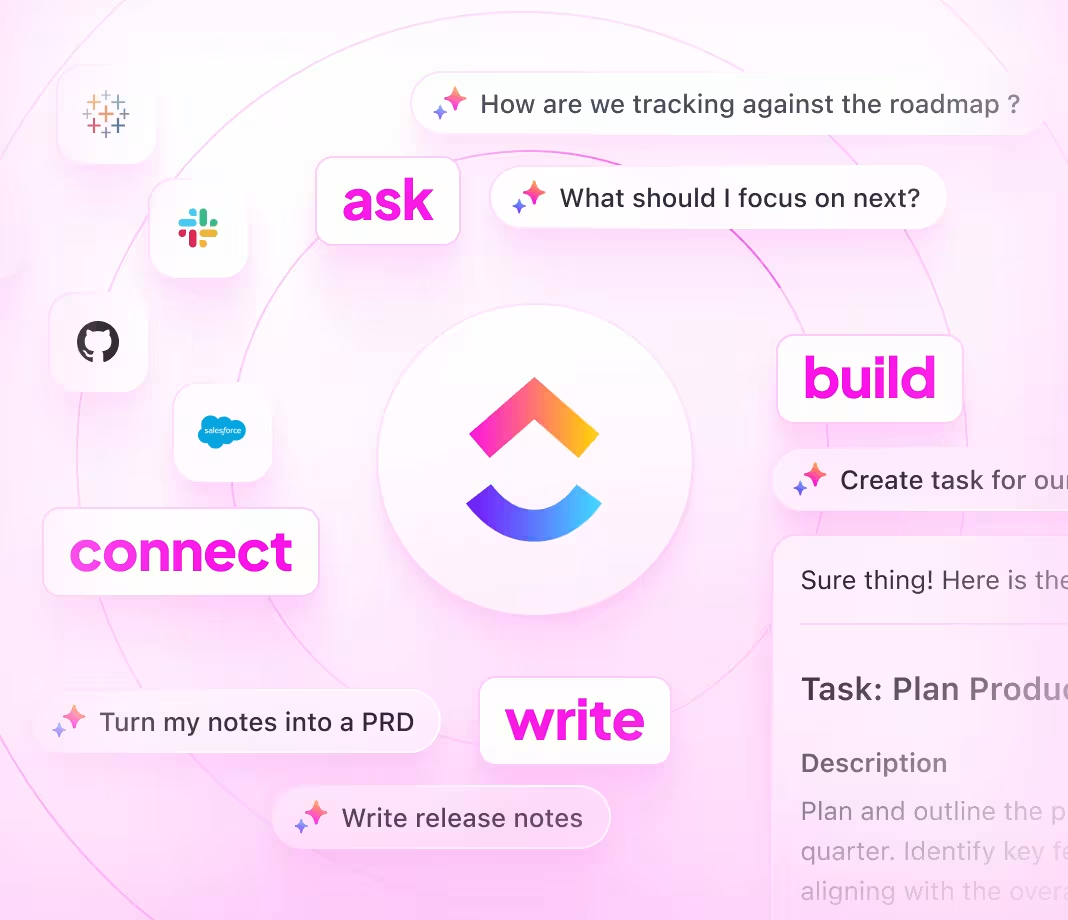
- AI-powered features accelerate content creation, summarization, and troubleshooting
Building Your Circular Economy Knowledge Base
How to Develop an Effective Circular Economy Knowledge Base
Follow this 6-step framework to organize, maintain, and scale your sustainability insights.
1. Identify your audience and sustainability objectives
- Define key stakeholders such as designers, supply chain, and sustainability managers
- Outline goals from material reuse to waste reduction and regulatory compliance
- Assign clear ownership to maintain consistent knowledge quality
2. Design a clear knowledge base structure
- Establish a centralized hub with intuitive navigation for materials, processes, and policies
- Include essential sections like lifecycle analysis, circular business models, and case studies
- Make updates and deprecations easy to track and access
3. Standardize content templates for consistency
- Use uniform formats for topics like material flows, design guidelines, and reuse protocols
- Detail purpose, applications, benefits, and challenges to reduce ambiguity
- Incorporate troubleshooting and best practices to support implementation
4. Incorporate practical guides and problem-solving resources
- Develop how-to documents for circular design and reverse logistics
- Add troubleshooting for common material recovery or recycling issues
- Centralize knowledge on partnerships, certifications, and compliance
5. Keep knowledge up to date by linking to ongoing projects
- Connect documentation updates to project milestones, audits, and innovation pilots
- Treat the knowledge base as a living system aligned with circular initiatives
- Ensure accuracy as strategies evolve and new insights emerge
6. Manage access and continuously improve the knowledge base
- Set permissions for internal teams, external partners, and public transparency
- Maintain version control, feedback loops, and regular reviews
- Foster collaboration to keep the knowledge base relevant and actionable
Leveraging ClickUp Features
Unlock the Power of ClickUp for Circular Economy Knowledge
Maintain structured, accountable, and connected knowledge that grows with your circular economy goals.
Organize
Structured Circular Economy Documentation with ClickUp Docs
- Central sections: Material Flows, Reuse Guidelines, Regulatory Compliance, Case Studies
- Table of contents plus nested pages for seamless navigation
- Consistent templates for processes and strategies
Why it matters: Teams find critical information quickly, reducing delays and miscommunication.

Assign
Clear Ownership with Trackable Documentation Tasks
- Convert knowledge gaps into actionable tasks
- Assign owners, set deadlines, and schedule review cycles
- Manage documentation work alongside project tasks
Why it matters: Accountability ensures your knowledge base stays current and reliable.

Integrate
Connect Documentation to Circular Economy Projects
- Link knowledge updates to project milestones, audits, and innovation cycles
- Tie insights to metrics, feedback, and impact assessments
- Ensure documentation evolves with your sustainability journey
Why it matters: Knowledge stays relevant and reflects real-world progress.

ClickUp Knowledge Base for Circular Economy
Common Questions About Building a Circular Economy Knowledge Base




SOC 2
CERTIFIED

ISO 27001
CERTIFIED

GDPR
COMPLIANT

HIPAA
COMPLIANT