Playbook

How to Scale Your Small Business Playbook

Learn how AI-powered small businesses centralize operations, reduce handoff friction, and scale growth without adding chaos.

Watch the Webinar

Watch the full webinar where our hosts show the playbook to:

  • Consolidate multiple tools into ClickUp’s Small Business Suite to save time and money.
  • Run a simple weekly rhythm in one Workspace so everyone knows what matters and what is at risk.
  • Set up Agents that handle admin work so you can focus on growth.
Video cover

Why scaling gets messy so fast

Most small businesses do not suffer from a lack of effort. They suffer from Work Sprawl.

Work Sprawl shows up when your tasks live in one tool, your docs in another, your conversations somewhere else, and your updates stay trapped in meetings or DMs. At first, that setup feels manageable.

Then the business grows. More customers come in. More projects overlap. More people need answers. What used to feel flexible starts to feel fragile.

That creates the same set of problems over and over:

  • Teams lose time switching between tools.
  • Leaders cannot tell what is actually on track and what is slipping.
  • Handoffs depend on people remembering to copy, paste, recap, and remind.
  • New process changes feel like more overhead instead of actual progress.
old way of working is broken

What changes when your work lives in one place

The fastest way to create capacity is not to pile on another tool. It's to reduce the amount of context your team has to carry around in their heads.

When projects, docs, chat, notes, and reporting live in one connected workspace, a few things start to change at once. Your team spends less time hunting for information. Ownership becomes easier to see. Status updates stop depending on side conversations. And when something goes wrong, you can trace it back to the real issue instead of guessing.

That is the promise behind a Converged Workspace. Not novelty. Not hype. Just a simpler operating model for growing teams.

In practice, that means you can:

  • Keep intake, planning, execution, and reporting in the same system
  • Tie decisions and conversations directly to the work they affect
  • Cut down the number of subscriptions and duplicate tools you are paying for
  • Give every person on the team one place to check priorities, deadlines, and blockers
AI native companies are powered by converged context

The small business scaling blueprint

You don't need a huge transformation program to get value here. You need a clear order of operations.

1. Start with the work that keeps the business moving

Do not begin with every workflow in the company. Begin with the work that creates revenue, delivers value to customers, or keeps the team aligned week to week.

For most small businesses, that means starting with a short list:

  • Lead intake and follow-up
  • Client onboarding
  • Active delivery work
  • Weekly reporting and check-ins

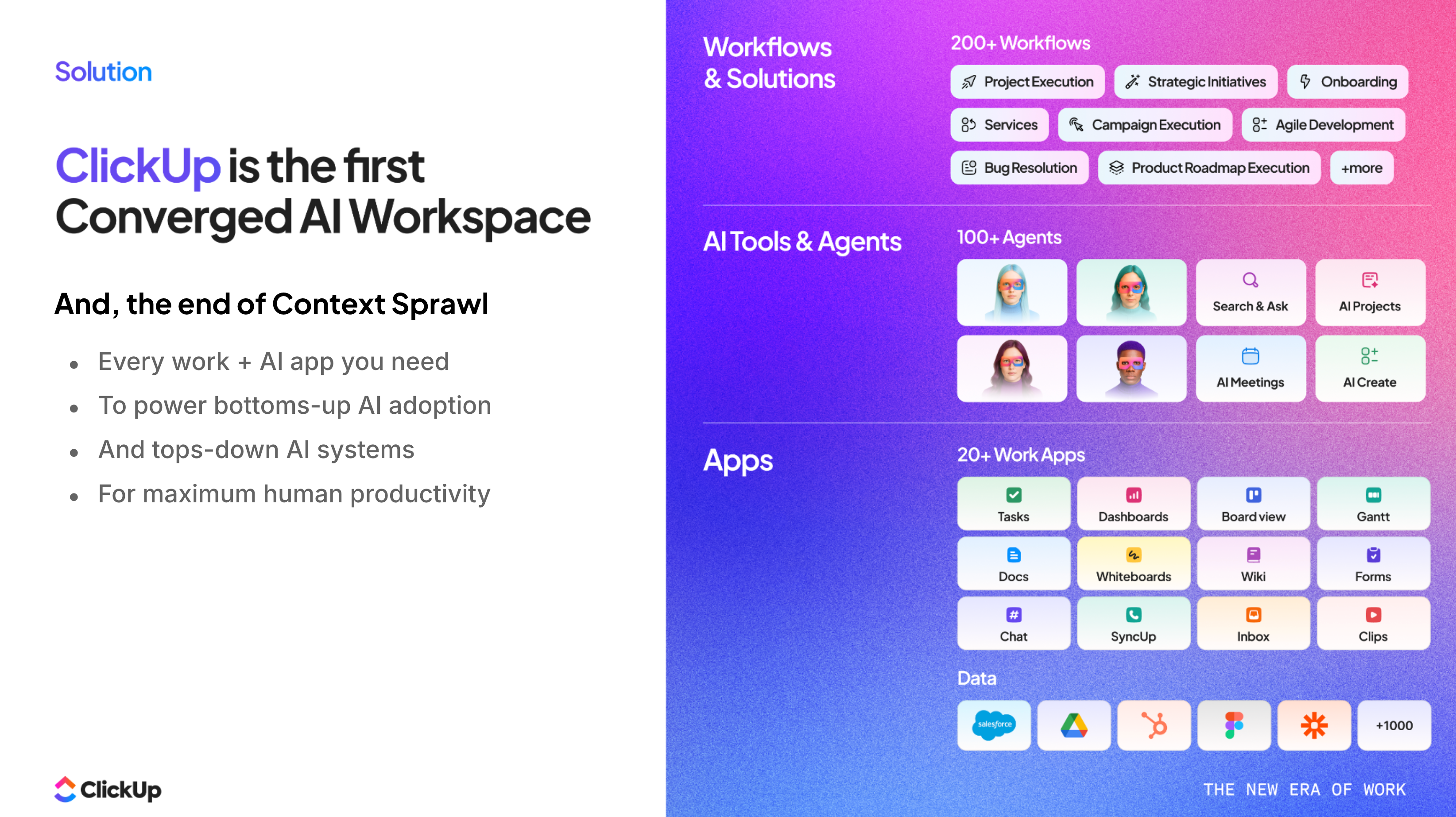
ClickUp is the converged AI Workspace

This is where consolidation starts to matter.

If demand comes in through forms, email, chat, and side notes, you will miss things. One example from the webinar was an HVAC business that realized requests were getting lost because intake and handoff were spread across too many systems.

Once the team brought intake into ClickUp and gave it a clear path into execution, they stopped dropping demand on the floor.

2. Build one weekly rhythm everyone can follow

Teams often begin with micro use cases. Summarize this meeting. Draft this email. Rewrite this note. Those can help, but they rarely change how the team runs.

A better move is to redesign one full operating rhythm.

Pick something that repeats every week:

  • Review active priorities
  • Check deadlines and risks
  • Confirm owners
  • Call out anything blocked
  • Decide what matters most for the next seven days

This sounds basic because it is. That is why it works.

The value is not the meeting itself. The value is that the meeting pulls from the same place where the work already lives.

Leaders can see progress without chasing people. Individual contributors know what changed. And the team stops running on memory.

3. Turn handoffs into repeatable process

A lot of small-business pain lives in the gap between one stage of work and the next.

Sales closes the deal. Then what? A project gets approved. Then what? A customer asks for help.Then what?

If the answer depends on a person writing the same recap every time, chasing the next owner, or rebuilding the same checklist from scratch, scale will feel harder than it should.

This is where templates, statuses, checklists, and standard docs do real work. They remove guesswork. They lower the chance of missed steps. They help new people ramp faster. And they make the business more consistent without making it feel rigid.

Closed-won deals can turn into structured onboarding projects. Delivery work can start from a standard checklist. Weekly summaries can pull from the same system the team already updates.

None of that is flashy. All of it saves time.

4. Keep decisions close to the work

One of the biggest leaks in a growing business is decision drift.

A conversation happens in chat. A call happens on someone’s calendar. A note gets written in a doc. Then the actual task sits somewhere else. Weeks later, nobody remembers why the plan changed.

That is where connected work starts paying off. When chat threads, docs, comments, meeting notes, and project updates all sit near the work itself, context sticks. People do not have to reconstruct the story from scratch. They can see the actual decision trail.

This matters more as the team grows. A five-person company can survive on tribal knowledge for a while. A twenty-person company cannot.

If you want to scale cleanly, the work needs its own memory.

5. Add Agents after the foundation is clean

If your work is scattered, AI will not fix the operating model. It will just inherit the same mess.

Once your core workflows live in one place, then Agents become useful. They can handle follow-up, summarize status, draft updates, flag risk, and take care of repetitive coordination work that usually lands on a founder, operator, or team lead.

That is why the strongest examples are also practical:

  • Draft outreach and next steps after new lead activity
  • Create onboarding work after a sale closes
  • Summarize weekly performance and call out risk
  • Help owners get routine admin work off their plate

A cafe owner had been spending Saturday mornings on billing and accounts receivable. After setting up a few Agents, that work stopped eating the same chunk of family time every single weekend.

That is the right way to think about AI in a small business. Start with the admin drag. Remove the repeat work. Give the team time back.

Small Business Suite SBS

Ready for the next step?

If your team is still juggling too many tools, do not start with a bigger stack. Start with a better operating model.

Get the core work into one place. Give the team one rhythm. Standardize the handoffs. Then add the support layers that help a small team act bigger than it is.

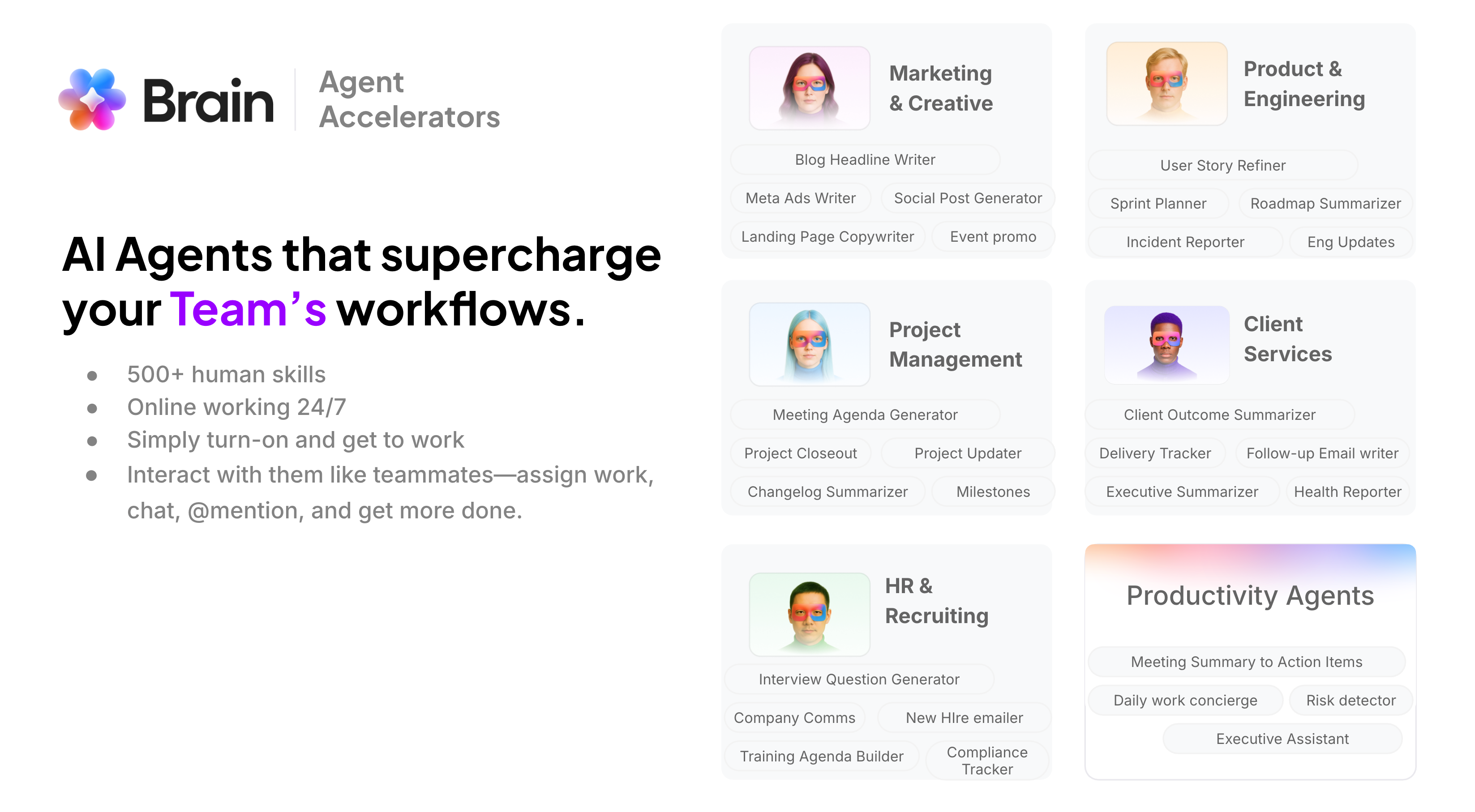
AI Agents that supercharge your Team’s workflows

If you want to apply that approach to your own event program, the next move is simple. Book a free consultation with our team to see how we can help you map your workflow, identify the right Agent opportunities, and build a system that gives your team real time back.