
The best AI is your AI.
Your Company's Brain2
- Multiplayer AI with your context
- Every model. One subscription.
- Self-updating Company Brain


- Threaded dialogue with shared, persistent context windowsREAL-TIME · MULTI-PARTY
- Topic-scoped streams with retained conversational memoryASYNC · SUBSCRIBABLE
- Structured work units that carry state, owners, and dependencies forwardTYPED · STATEFUL
- Cross-list orchestration of work across timelinesHIERARCHICAL
- Composable, tool-calling capabilities invoked on demandMODULAR
- Hybrid vector + graph retrieval across full historyLOW-LATENCY
- Reinforced from outcomes, corrections & user signalADAPTIVE
- Autonomous policy refinement from execution resultsRECURSIVE LOOP
- Auto-clusters entities into a semantic knowledge graphGRAPH · EMBEDDINGS
- Continuous re-index from live workspace event streamsEVENT-SOURCED
- Distills context into token-efficient retrievable vectorsLOSSLESS RECALL
- High-fidelity retrieval at a fraction of the cost, even at scaleCOST-EFFICIENT
- Cascading objectives mapped down to live executionOKR-LINKED
- Versioned rationale with a full reversible audit trailTRACEABLE
- Event-driven status propagated across dependentsPUSH · SUBSCRIBED
- Closed-loop signal capture, scored back into contextREINFORCING
LLMs are literally average without context. Brain2 wins, 100% guaranteed.
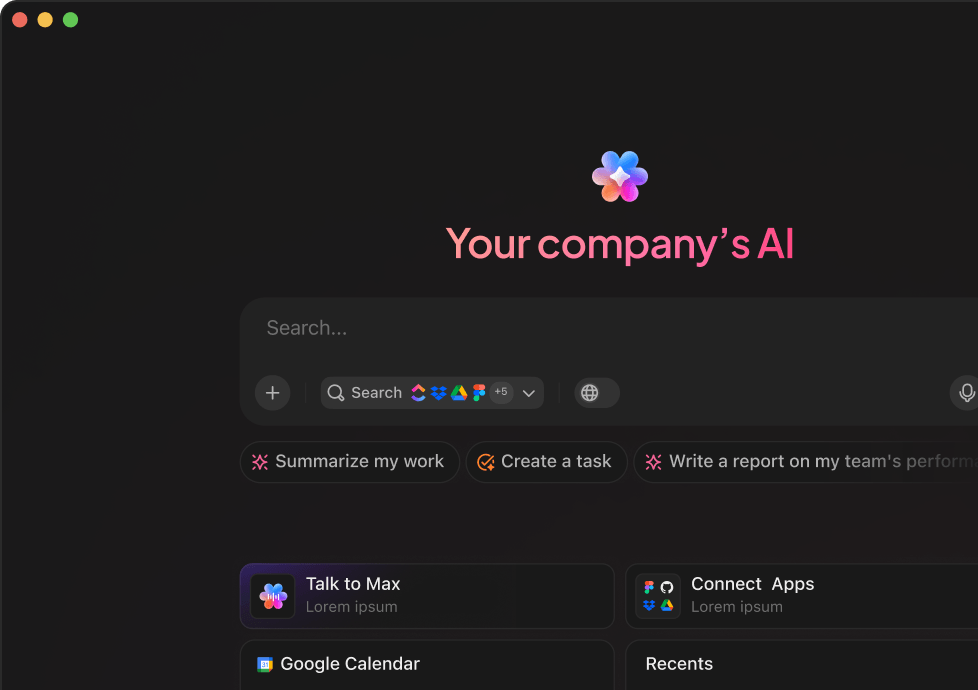
Brain² is your company AI that self-improves, routes to the best models, and coworks to complete your work. Multiplayer contextual AI where human intelligence becomes your collective Brain.
- Quality#1vs OpenAI & Claude
- Cost85%↓ cheaper
- Context Engine92%+34/min
- Win-rate100%+22/min
Brain2 already knows what to do,
watch it work.
Your team's entire way of working is already inside Brain². Just ask. It produces what you need, the right way, every time.


 ChatView
Cowork with Brain2 feels like you aren't actually working
Personality
Brain² learns how you and your team talks: your tone, your shorthand, your preferences.
Intelligence
Brain² picks the best AI model for each job. One subscription. Every frontier model running with full context.

Context
Brain² sees your tasks, docs, and conversations. It doesn't need a brief because it knows what's happening in real-time.
Skills
Teach Brain² your exact workflows. It runs them on command, every time, no re-prompting.
Presence
Brain² joins your calls, takes notes, knows your schedule, and builds context from every interaction automatically.



The best AI is
your AI
Presentation-ready in one prompt
Real typography. Curated palettes. Brain² builds your next all-hands, sprint review, or client pitch, and it's actually polished, so you can present in minutes, without touching a slide.

Dashboards, pages, tools, prototypes
built before you ask
Brain² sees your work and creates finished, shareable deliverables on the spot. Not suggestions. Not outlines. Working pages, real code, ready to use or share immediately.

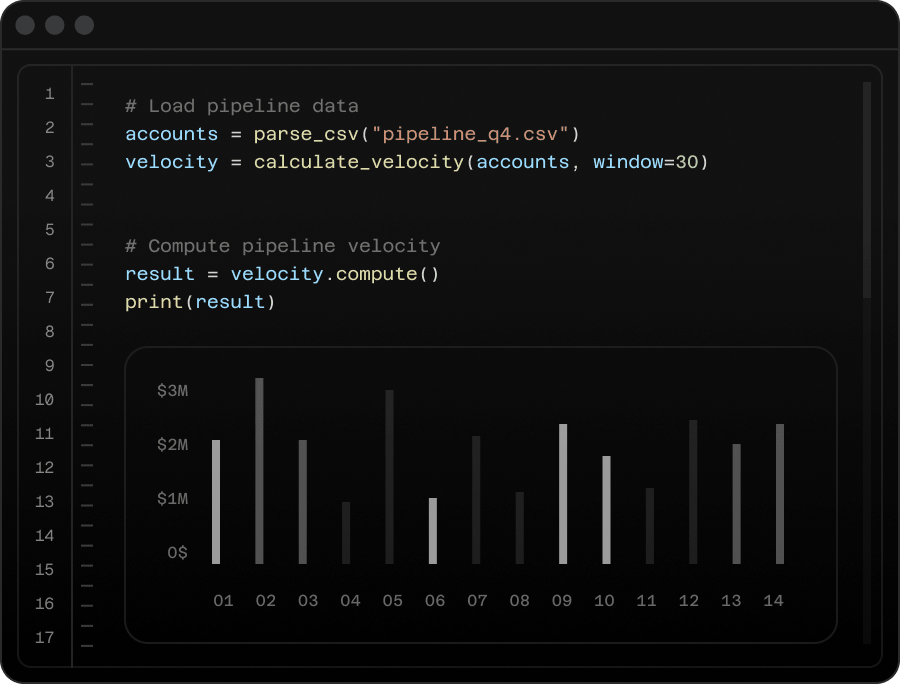
Your data, actually crunched
Ask for a chart of sprint velocity across 6 months, get a rendered image back. Parse 200 accounts from a CSV, cross-reference two task lists, export the result as a spreadsheet. Real answers, computed and visualized in real time.

Presentation-ready in one prompt
Real typography. Curated palettes. Brain² builds your next all-hands, sprint review, or client pitch, and it's actually polished, so you can present in minutes, without touching a slide.
Dashboards, pages, tools, prototypes
built before you ask
Brain² sees your work and creates finished, shareable deliverables on the spot. Not suggestions. Not outlines. Working pages, real code, ready to use or share immediately.
Your data, actually crunched
Ask for a chart of sprint velocity across 6 months, get a rendered image back. Parse 200 accounts from a CSV, cross-reference two task lists, export the result as a spreadsheet. Real answers, computed and visualized in real time.
Nothing comes close to Brain2
We rebuilt Brain² from the ground up to leapfrog the rest.
Memory & Preferences
Brain² keeps track of how you like to work, and gets smarter every time you use ClickUp.
Every AI, Unlimited
GPT, Claude Opus, Gemini, and more. Every model runs with full knowledge of your work.


Multiplayer AI
The more your team uses Brain², the more it knows, the more useful it gets for everyone.


Connected Apps & Any MCP
Brain² taps Google Drive, GitHub, Salesforce, and more to get you answers and insights.
Ambient Intelligence
Brain² surfaces relevant context, related tasks, and smart suggestions before you even ask.
Deep Search
Ask something complex. Brain² checks your workspace, apps, and the web for answers.



Memory & Preferences
Brain² keeps track of how you like to work, and gets smarter every time you use ClickUp.
Every AI, Unlimited
GPT, Claude Opus, Gemini, and more. Every model runs with full knowledge of your work.
Multiplayer AI
The more your team uses Brain², the more it knows, the more useful it gets for everyone.
Connected Apps & Any MCP
Brain² taps Google Drive, GitHub, Salesforce, and more to get you answers and insights.
Ambient Intelligence
Brain² surfaces relevant context, related tasks, and smart suggestions before you even ask.
Deep Search
Ask something complex. Brain² checks your workspace, apps, and the web for answers.
“ClickUp's AI levels the playing field — three-month-old project manager or a seasoned veteran, you tap into the same intelligence. Every project we run is backed by 150 years of our team's collective expertise, not just one person's memory.”


Your data never trains
third-party models
No third-party data training
We forbid third-party AI providers from training on your data.
Zero third-party data retention
We don't allow third-party AI providers to store any of your data.
Multi-model unified security
All models operate under the same permissions, privacy, and security controls.

 New task
 Marketing Backlog
You have questions
Brain has answers.
Bring your memory into Brain2 with one-click.
Import your ChatGPT, Claude, or any AI memory into Brain2 instantly.




