
Service Monitoring Standards Knowledge Base
Build a Robust Knowledge Base for Service Monitoring Standards
Create a centralized, searchable repository for monitoring protocols, alerting criteria, escalation paths, and compliance checklists—ensuring your teams always access the most current standards.
 25,000+ reviews from
Trusted by the best
ClickUp vs Traditional Tools
Why ClickUp Outshines Traditional Tools for Service Monitoring Knowledge Management
Unite knowledge and execution in one scalable workspace.
With traditional tools
- Monitoring standards scattered across multiple platforms, causing confusion
- Manual updates prone to delays and errors
- Limited traceability between standards and incidents
- Rigid access controls leading to redundant documents
- Time-consuming creation and maintenance processes
With ClickUp
- Integrate documentation with operational workflows (Docs + tasks + comments)
- Convert monitoring gaps into actionable tasks
- Link standards directly to monitoring incidents and alerts
- Flexible permissions for internal teams, partners, and stakeholders
- AI-powered drafting, summarization, and troubleshooting for faster upkeep
Steps to build your knowledge base
How to create a knowledge base for service monitoring standards?
Follow this 6-step approach to keep monitoring standards clear, accessible, and current.
1. Identify your audience and define monitoring standards goals
- Determine who relies on monitoring documentation
- Map key workflows from detection to resolution and compliance
- Assign clear ownership for ongoing content accuracy
2. Design an intuitive knowledge base structure
- Create a unified hub with straightforward navigation for teams
- Organize sections like alerting criteria, escalation procedures, metrics, and compliance
- Ensure version history and change logs are easily accessible
3. Standardize documentation templates for consistency
- Use repeatable formats for alert definitions, thresholds, and response steps
- Include context, examples, and troubleshooting guidance
- Document exceptions and edge scenarios to reduce confusion
4. Incorporate practical guides and incident postmortems
- Develop how-to manuals for common monitoring tools and processes
- Add detailed incident analyses and lessons learned
- Centralize escalation matrices and communication protocols
5. Keep standards aligned with operational changes
- Link documentation updates to monitoring tool releases and process changes
- Integrate feedback loops from incident reviews and audits
- Treat knowledge base upkeep as an ongoing operational priority
6. Manage access and ensure continuous improvement
- Define permissions for internal teams, external partners, and auditors
- Maintain audit trails for compliance and review
- Collect and act on user feedback regularly to keep content relevant
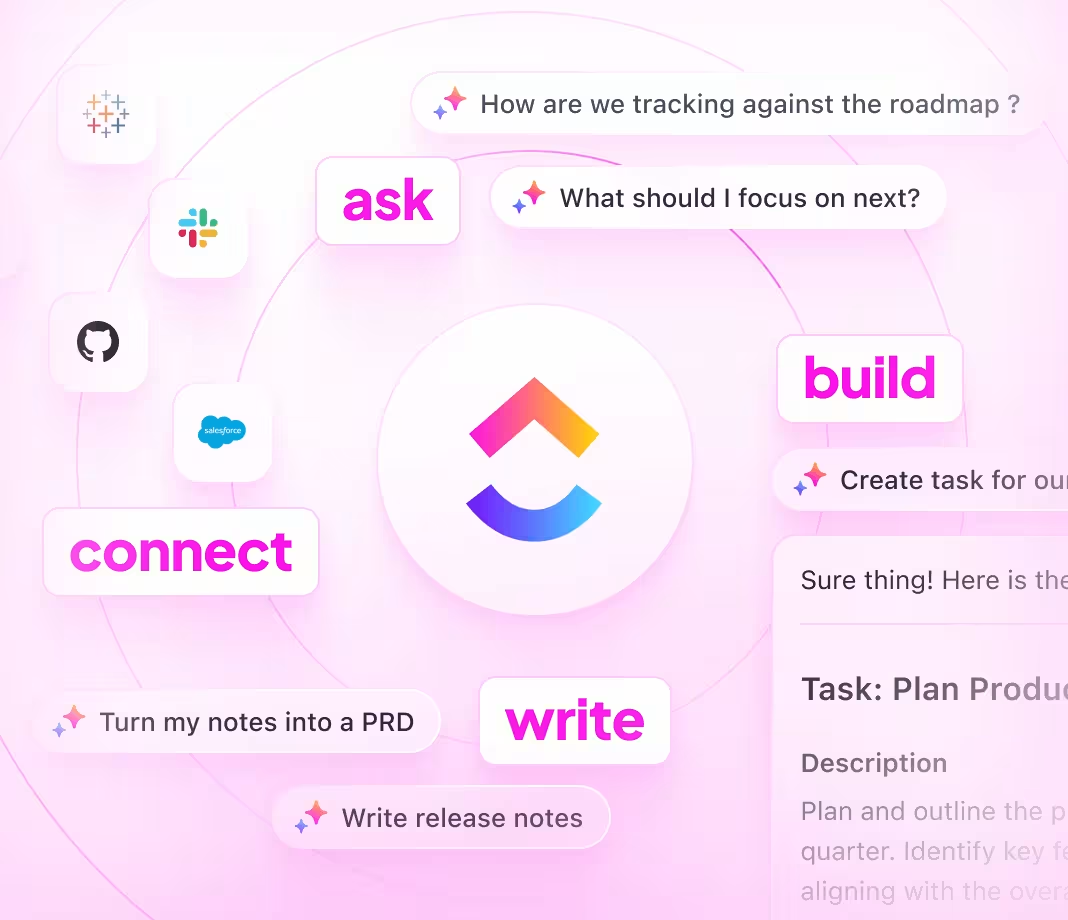
Leveraging ClickUp for Monitoring Excellence
How ClickUp empowers your service monitoring knowledge base
Ensure your monitoring standards are structured, owned, and dynamically updated alongside every operational change.
Structure
Organize Monitoring Standards with ClickUp Docs
- Alert definitions, Escalation paths, Metrics catalog, Compliance checklists
- Table of contents with nested subpages for easy navigation
- Consistent formatting templates for all monitoring documents
Why it matters: Teams find protocols quickly, reducing resolution times and errors.

Track
Assign Ownership and Track Updates Seamlessly
- Convert documentation gaps into actionable tasks
- Assign owners, set deadlines, and schedule periodic reviews
- Manage documentation updates like core operational work
Why it matters: Your knowledge base stays reliable as monitoring evolves.

Document
Connect Documentation Directly to Monitoring Operations
- Link standards to monitoring tool updates, incident tickets, and audits
- Integrate postmortems and change requests
- Tie in feedback and support cases to refine documentation
Why it matters: Documentation evolves in step with your monitoring environment.

ClickUp knowledge base for service monitoring
Frequently Asked Questions


SOC 2
CERTIFIED

ISO 27001
CERTIFIED

GDPR
COMPLIANT

HIPAA
COMPLIANT