Scientific Research Data Knowledge Base
Streamline Your Scientific Data with a Unified Knowledge Hub
Create a centralized, searchable repository for research protocols, datasets, analysis methods, and findings—ensuring your team accesses the latest data insights effortlessly.
 25,000+ reviews from
Trusted by the best
ClickUp vs Traditional Research Tools
Elevate Your Research Data Management with ClickUp
Consolidate your scientific knowledge and workflows in one scalable platform.
With conventional methods
- Data and documentation scattered across disconnected tools
- Manual updates cause outdated or inconsistent records
- Limited integration between experimental data and project tasks
- Access control challenges lead to duplicated or restricted information
- Time-intensive data curation and collaboration processes
With ClickUp
- Integrate research notes, datasets, and project tasks in one workspace
- Automate data updates and generate insights with AI-powered ClickUp Brain
- Link experimental results directly to analysis and publication workflows
- Fine-grained permissions support secure collaboration with internal and external partners
- Streamline knowledge capture and review using ClickUp 4.0 and Brain Max capabilities
Building Your Research Knowledge Base
How to establish a scientific research data knowledge base?
Follow this 6-step framework to maintain organized, accessible, and evolving research documentation.
1. Identify your research stakeholders and documentation objectives
- Define primary users such as researchers, data analysts, and collaborators
- Outline goals including reproducibility, data sharing, and compliance
- Assign responsibility for knowledge base upkeep and quality control
2. Design a clear, modular structure for research data and protocols
- Organize content into sections like experimental design, datasets, analysis pipelines, and publications
- Use nested pages and indexes for straightforward navigation
- Include version histories and changelogs for transparency
3. Standardize documentation templates for consistency
- Develop uniform formats for experiment summaries, data descriptions, and method protocols
- Capture essential metadata such as sample info, instruments, and parameters
- Embed links to raw data, code repositories, and related publications
4. Incorporate practical guides and troubleshooting resources
- Provide step-by-step protocols and best practices
- Document common data quality issues and resolution steps
- Centralize FAQs and collaborative annotations
5. Synchronize documentation updates with research milestones
- Link documentation tasks to project phases, experiment completions, and peer reviews
- Treat documentation as integral to research progress, not an afterthought
- Use ClickUp Brain to automate update reminders and summarize changes
6. Manage access and continuous improvement
- Set role-based permissions for internal teams and external collaborators
- Maintain audit trails, feedback loops, and regular content reviews
- Leverage Brain Max for intelligent content suggestions and error detection
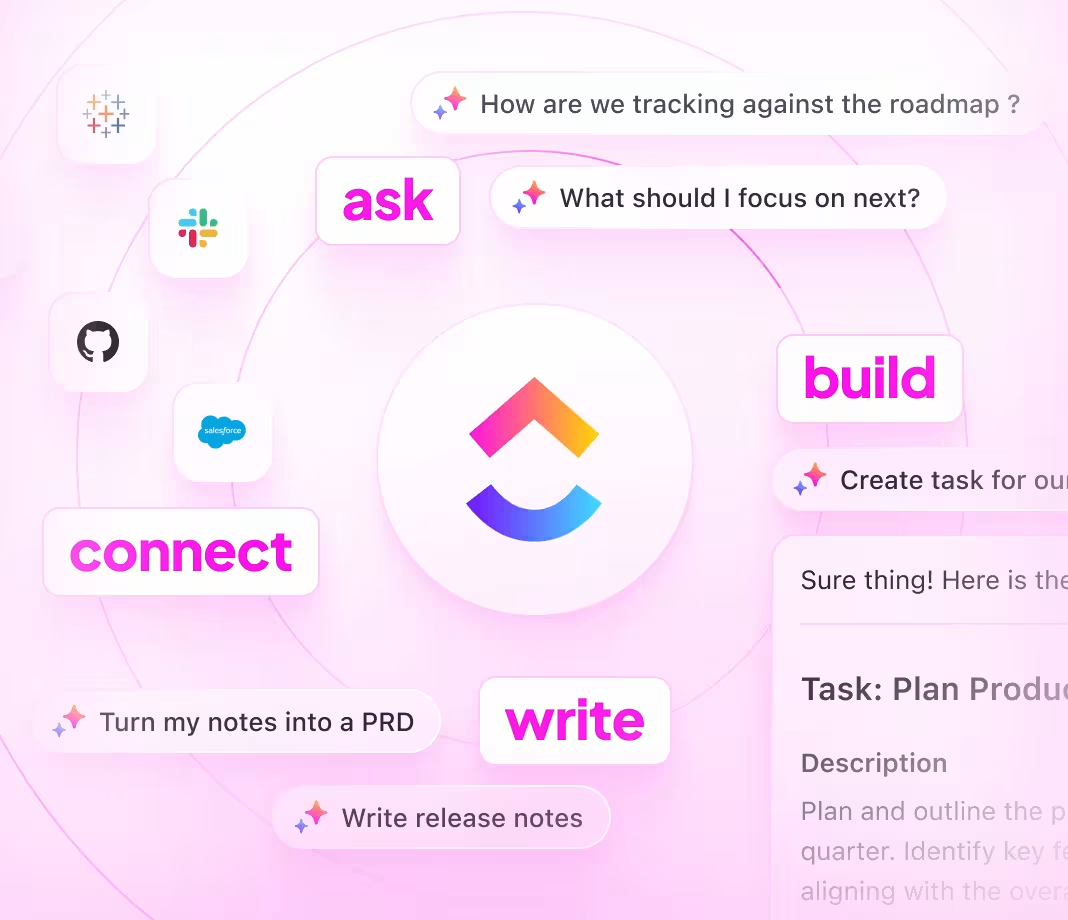
Harness ClickUp’s Capabilities
Unlock the Power of ClickUp for Scientific Knowledge Management
Ensure your research data knowledge base is structured, assigned, and evolves with every project update.
Organize
Structured Scientific Documentation with ClickUp Docs
- Sections for protocols, datasets, analyses, results, and references
- Dynamic table of contents with nested pages
- Consistent formatting templates for experiments and data descriptions
Why it matters: Researchers locate critical information quickly, minimizing delays and errors.

Manage
Accountable Knowledge Ownership and Tracking
- Convert documentation gaps into assigned tasks
- Assign owners, set deadlines, and schedule periodic reviews
- Monitor progress and maintain high data quality standards
Why it matters: Your knowledge base remains up-to-date with clear responsibility.

Integrate
Documentation Linked to Research Deliverables
- Connect documentation updates to experiments, publications, and data releases
- Associate findings with incident reports, protocol deviations, and analyses
- Use feedback and support tickets to continually refine documentation
Why it matters: Documentation evolves in tandem with your scientific projects.

ClickUp for Scientific Research Data
Frequently Asked Questions




SOC 2
CERTIFIED

ISO 27001
CERTIFIED

GDPR
COMPLIANT

HIPAA
COMPLIANT