
Quantitative Research Knowledge Hub
Streamline Your Quantitative Research Knowledge Base
Centralize your datasets, methodologies, statistical models, and findings into one searchable platform—empowering researchers to access validated insights effortlessly.
 25,000+ reviews from
Trusted by the best
ClickUp vs Conventional Research Tools
Why ClickUp Excels for Quantitative Research Knowledge Management
Unify your research assets and workflows seamlessly.
Using traditional tools
- Research notes and data scattered across platforms cause version conflicts
- Manual updates delay knowledge sharing and introduce errors
- Disconnected documentation from data analysis pipelines
- Limited permission controls lead to redundant copies
- Time-intensive manual coordination for updates and reviews
Leveraging ClickUp
- Integrate data, documentation, and analysis tasks in one workspace
- Automate gap identification and assign action items instantly
- Link knowledge base entries directly to datasets and statistical models
- Fine-tune access for collaborators, stakeholders, and external partners
- Harness AI-powered drafting, summarization, and troubleshooting to accelerate knowledge capture
Building Your Quantitative Research Hub
How to Develop a Knowledge Base for Quantitative Research?
Follow this 6-step framework to maintain structured, accessible, and current research documentation.
1. Identify your research audience and knowledge objectives
- Define users: analysts, statisticians, stakeholders
- Map data flow from raw collection to final interpretation
- Assign roles to ensure consistent knowledge upkeep
2. Design an intuitive knowledge base architecture
- Establish core sections: data sources, statistical methods, results, interpretations, and appendices
- Create clear navigation with comprehensive tables of contents and subpages
- Ensure changelogs and version histories are prominent
3. Standardize documentation templates for consistency
- Use uniform formats for datasets, codebooks, and analysis protocols
- Include purpose, methodology, assumptions, and limitations
- Document error margins, confidence intervals, and anomalies
4. Integrate practical guides and troubleshooting protocols
- Develop walkthroughs for common statistical procedures
- Include troubleshooting for data anomalies and computational errors
- Centralize best practices for data cleaning and validation
5. Link documentation updates to research milestones
- Associate knowledge base changes with project phases, peer reviews, and publication dates
- Treat documentation as an integral part of the research lifecycle
- Maintain accuracy as datasets and methodologies evolve
6. Govern access and maintain ongoing relevance
- Define permission levels for internal teams, collaborators, and external reviewers
- Regularly update changelogs and methodological notes
- Collect user feedback and schedule periodic audits to prevent knowledge decay
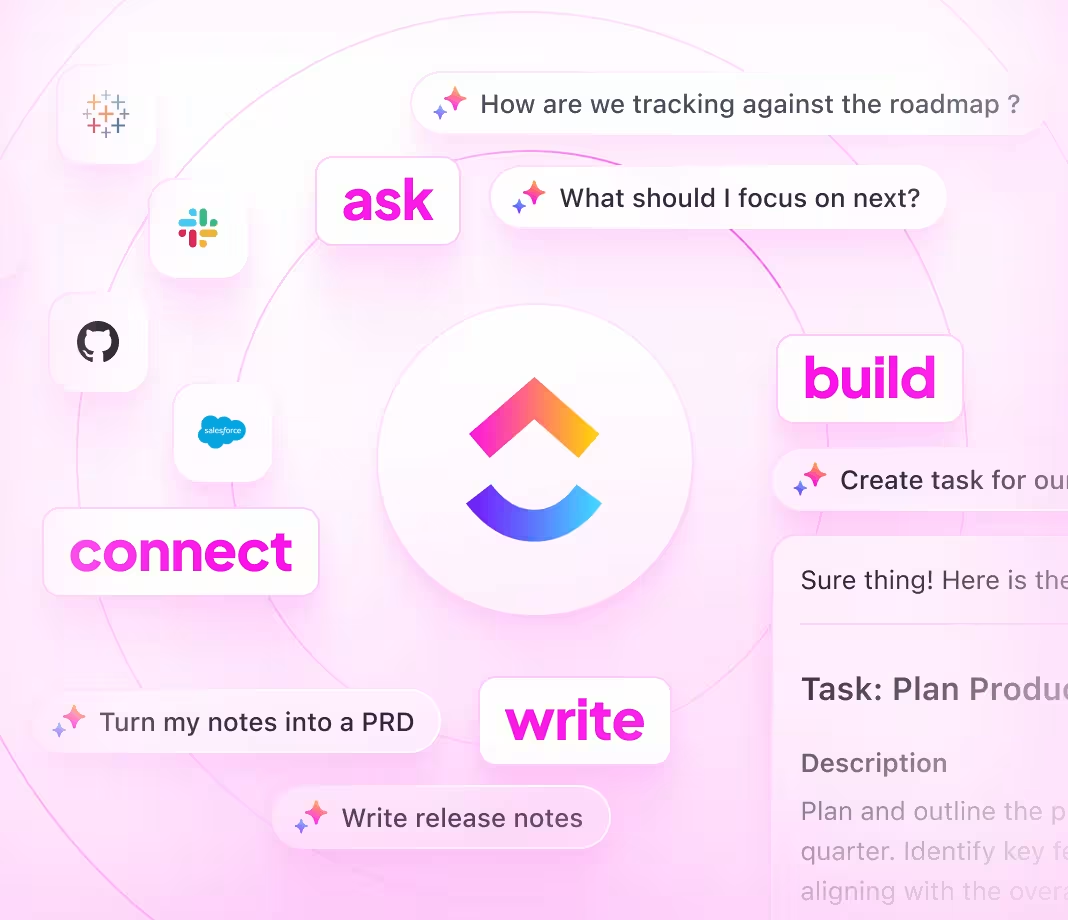
Harness ClickUp Features for Research Excellence
Unlock the potential of ClickUp for quantitative research knowledge
Keep your research documentation comprehensive, accountable, and aligned with ongoing analyses.
Organize
Structured Research Documentation with ClickUp Docs
- Sections for Data Collection, Statistical Techniques, Analysis Results, Visualizations, and Appendices
- Intuitive tables of contents with layered subpages for efficient navigation
- Consistent documentation templates for datasets and analyses
Why it matters: Researchers locate critical information quickly, reducing redundant inquiries.

Manage
Accountable Knowledge Ownership and Tracking
- Identify documentation gaps and convert them into actionable tasks
- Assign owners, set deadlines, and establish review cycles
- Monitor documentation tasks with the same rigor as research projects
Why it matters: Ensures your knowledge base evolves alongside your research without lapses.

Connect
Documentation Integrated with Research Progression
- Link documentation updates to project milestones, data releases, and peer reviews
- Connect bugs, data anomalies, and post-analysis reflections
- Tie user feedback and stakeholder input directly to documentation updates
Why it matters: Keeps your knowledge base synchronized with the dynamic research environment.

ClickUp for Quantitative Research Knowledge Base
Common Questions Answered


SOC 2
CERTIFIED

ISO 27001
CERTIFIED

GDPR
COMPLIANT

HIPAA
COMPLIANT