Build a Centralized Knowledge Base for Penetration Testing
Create a comprehensive, searchable repository of vulnerabilities, testing methodologies, exploit details, remediation steps, and reports—so your security team stays aligned and informed.
 25,000+ reviews from
Why ClickUp Outperforms Traditional Knowledge Management for Penetration Testing
Unite testing insights and workflows in a single scalable platform.
Traditional Penetration Testing Tools
- Security data scattered across multiple platforms, leading to disorganization
- Manual updates prone to delays and errors
- Limited integration between test findings and remediation workflows
- Access controls often inflexible, causing duplicated or outdated records
- Entirely manual processes slow down knowledge sharing and response
ClickUp for Penetration Testing Knowledge Base
- Centralized knowledge and tasks live together (Docs, tasks, comments)
- Automatically transform knowledge gaps into actionable tasks
- Link test findings directly to remediation efforts and incident reports
- Granular permissions for internal teams, partners, and auditors
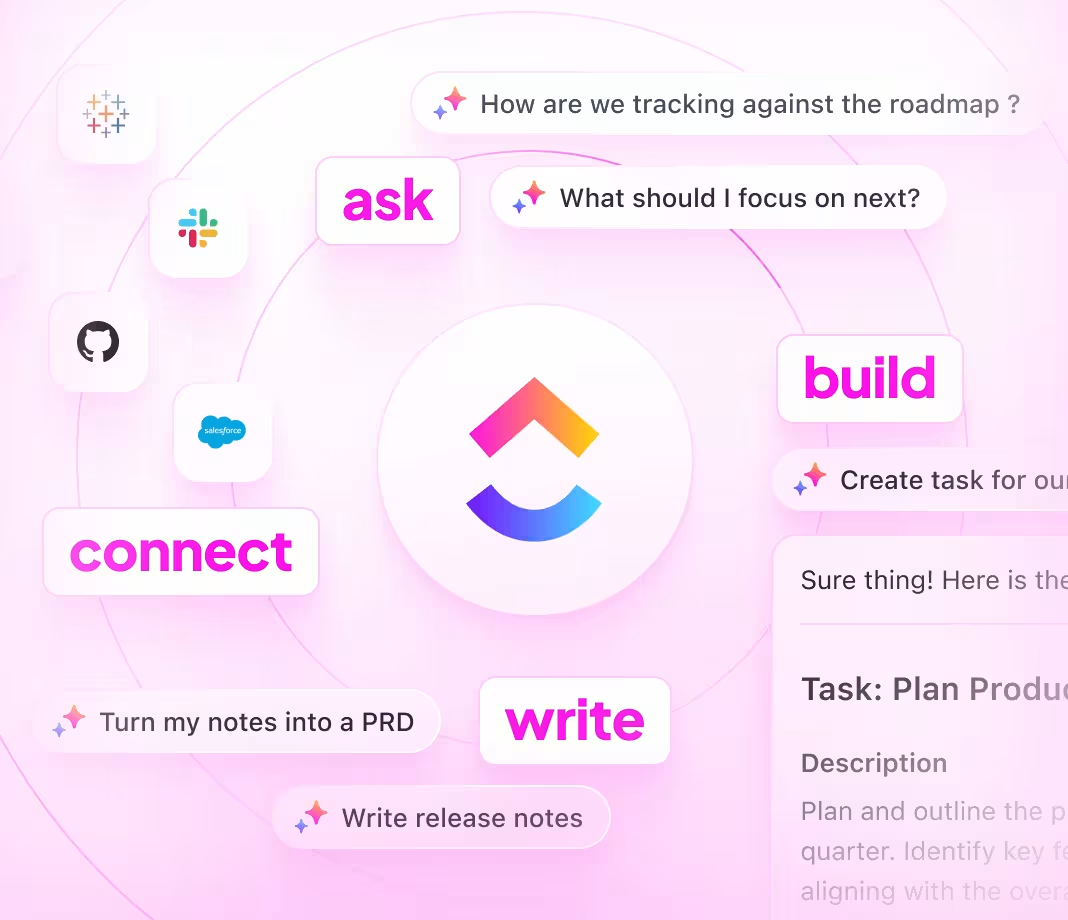
- AI-powered assistance accelerates report generation, summaries, and triage
How to Create a Penetration Testing Knowledge Base with ClickUp
Follow this 6-step framework to ensure your penetration testing knowledge stays organized, current, and actionable.
1. Identify Stakeholders and Define Knowledge Objectives
- Determine who will access and contribute to the knowledge base
- Outline key documentation goals: vulnerabilities, methodologies, remediation
- Assign clear ownership to maintain content quality and consistency
2. Design a Logical Knowledge Base Structure
- Develop a centralized hub with intuitive navigation for testing phases
- Segment core sections: Reconnaissance, Exploitation, Post-Exploitation, Reporting
- Include changelogs and vulnerability timelines for traceability
3. Standardize Vulnerability and Test Case Documentation
- Implement uniform templates detailing vulnerability description, risk, exploit steps
- Cover reproduction steps, tools used, and remediation guidance
- Document edge cases and mitigation caveats to reduce repeated queries
4. Integrate Practical Guides and Troubleshooting Resources
- Create step-by-step guides for common penetration tools and techniques
- Add troubleshooting workflows for failed exploits or false positives
- Centralize incident response playbooks and escalation procedures
5. Synchronize Documentation with Testing Cycles and Reports
- Link knowledge updates to testing sprints, bug tracking, and change management
- Treat documentation as an integral part of penetration testing lifecycle
- Ensure knowledge base reflects the latest security posture and findings
6. Manage Access and Continuously Improve Content Quality
- Set role-based permissions for testers, developers, and stakeholders
- Maintain audit trails, revision histories, and feedback channels
- Schedule periodic reviews and updates to prevent knowledge decay
Harness ClickUp to Build Your Penetration Testing Knowledge Base
Maintain structured, accountable, and updated penetration testing documentation that integrates seamlessly with your workflows.
Structured Documentation with ClickUp Docs
- Vulnerability categories, testing methodologies, remediation guides
- Table of contents plus nested pages for efficient navigation
- Consistent templates for vulnerability and test case entries
Why it matters: Team members locate critical security information quickly, reducing response times.

Clear Accountability with Trackable Documentation Ownership
- Convert knowledge gaps into actionable tasks with assigned owners
- Set deadlines and review cycles for documentation updates
- Manage documentation progress alongside penetration testing activities
Why it matters: Ensures your knowledge base remains accurate and reliable through built-in responsibility.

Documentation Aligned with Testing and Reporting Cycles
- Link knowledge updates to test runs, incident reports, and remediation efforts
- Connect vulnerabilities, findings, and fixes in a unified system
- Tie feedback and support tickets directly to documentation
Why it matters: Keeps your knowledge base in lockstep with ongoing security operations.

Frequently Asked Questions






