Build a Dynamic Knowledge Hub for Neuroscience Research
Centralize protocols, datasets, experimental notes, and publications into one searchable resource—so your team stays aligned on the latest findings and methodologies.
 25,000+ reviews from
Why ClickUp Transforms Neuroscience Knowledge Management
Create a unified platform that evolves with your research team.
With Conventional Methods
- Data and notes scattered across spreadsheets and emails, causing version confusion
- Manual updates slow down knowledge sharing and increase errors
- Research insights disconnected from experimental workflows
- Access control challenges lead to duplicated or outdated files
- Time-intensive documentation and collaboration processes
With ClickUp
- Integrated workspace combining protocols, data, and discussions (Docs + tasks + comments)
- AI-powered assistance accelerates literature summaries and hypothesis generation
- Link research notes directly to experiments and datasets
- Granular permissions for lab members, collaborators, and external partners
- Streamlined updates with ClickUp Brain and Brain Max to keep insights current
How to develop a neuroscience research knowledge base with ClickUp
Follow this 6-step framework to organize, maintain, and evolve your research repository effectively.
1. Identify your research team and knowledge objectives
- Define who will access and contribute to the knowledge base
- Outline key research areas: experimental protocols, data sets, publications
- Assign responsibility for content curation and updates
2. Design a clear, intuitive knowledge structure
- Create hubs for methodologies, datasets, analyses, and literature reviews
- Implement nested pages and tables of contents for easy navigation
- Standardize formats for protocols and data documentation
3. Standardize documentation templates for consistency
- Develop uniform templates for experiments, results, and meta-analyses
- Include sections for objectives, methods, observations, and references
- Ensure reproducibility and clarity across all entries
4. Integrate real-time collaboration and AI-driven insights
- Use ClickUp Brain to summarize complex research discussions
- Enable task assignments to close documentation gaps
- Collaborate seamlessly on manuscripts, grant proposals, and reports
5. Synchronize knowledge updates with ongoing research workflows
- Link documentation to experiment timelines, data collection, and analysis phases
- Treat knowledge base updates as integral to research milestones
- Maintain accuracy as hypotheses evolve and new data emerges
6. Manage access and continuously review content quality
- Set permissions for internal teams, external collaborators, and public sharing
- Schedule regular audits for data integrity and literature relevance
- Collect feedback to refine knowledge base usability and completeness
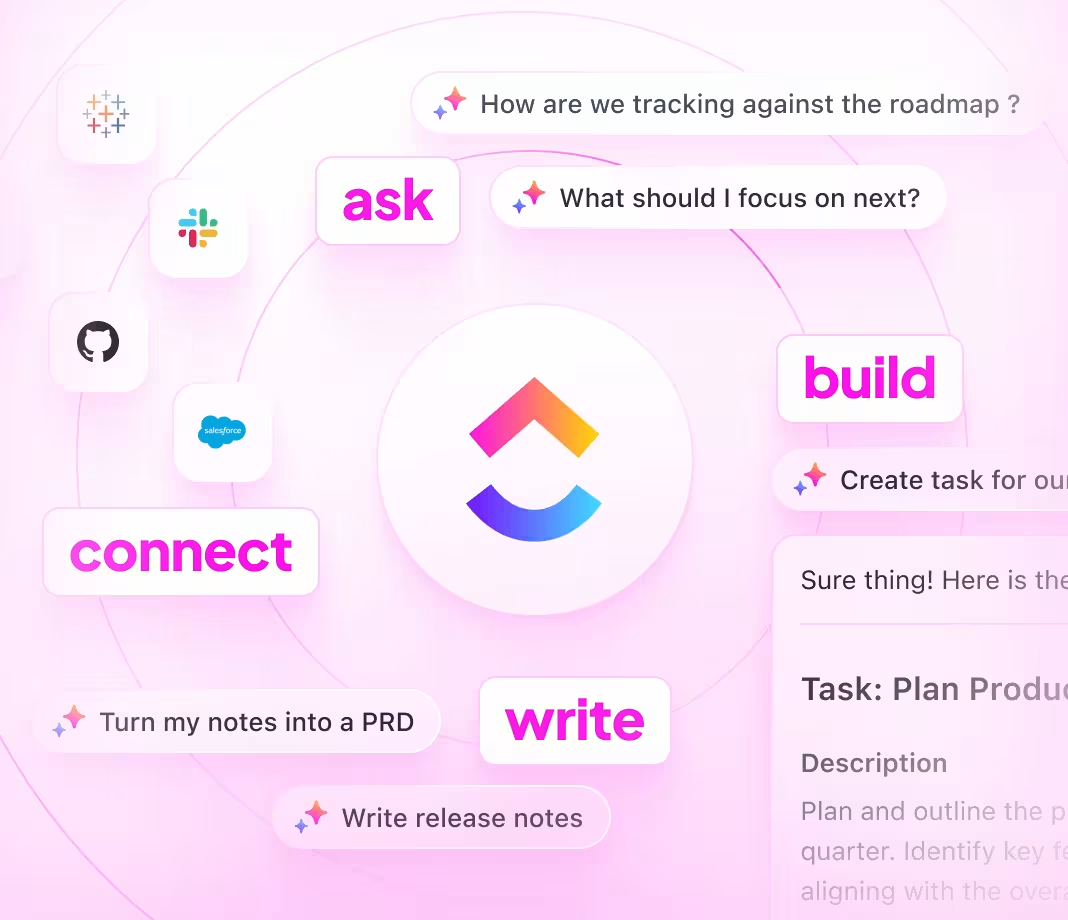
Unlock the full potential of neuroscience knowledge with ClickUp
Keep your research documentation organized, accountable, and aligned with every project phase.
Structured neuroscience documentation with ClickUp Docs
- Protocols, datasets, analyses, literature reviews, and experiment logs
- Nested pages and tables of contents for seamless navigation
- Consistent templates for methodologies and results
Why it matters: Researchers find critical information faster, reducing redundant experiments and accelerating discovery.

Transparent ownership and progress tracking
- Convert documentation gaps into actionable tasks with ClickUp Brain
- Assign curators with due dates and review cycles
- Monitor documentation updates alongside research activities
Why it matters: Accountability ensures your knowledge base reflects the latest insights and protocols.

Link research documentation to experimental workflows
- Associate docs with datasets, experiments, and analysis tasks
- Integrate findings with publications and grant submissions
- Use Brain Max to highlight critical updates and emerging trends
Why it matters: Your knowledge base evolves in step with your research, keeping teams aligned and informed.

Common Questions About Using ClickUp for Neuroscience






