
Build a Robust Knowledge Base for NLP Workflows
Create a centralized, searchable repository for datasets, models, algorithms, evaluation metrics, and troubleshooting—ensuring your NLP team accesses the latest insights effortlessly.
 25,000+ reviews from
Why ClickUp Elevates Your NLP Knowledge Base
Unify knowledge and workflows seamlessly under one platform.
Traditional NLP Documentation
- Knowledge scattered across disconnected platforms, leading to outdated information
- Manual updates prone to errors and delays
- Documentation detached from active model development and deployment
- Rigid access controls causing duplication and fragmentation
- Time-consuming manual maintenance and collaboration
Using ClickUp for NLP Knowledge Base
- Integrate documentation with tasks, comments, and AI-powered insights
- Automatically convert knowledge gaps into actionable items
- Link docs directly to model training, evaluation, and deployment workflows
- Granular permission settings for internal teams, collaborators, and external partners
- AI-driven assistance accelerates writing, summarizing, and troubleshooting
Step-by-Step Guide to Structuring NLP Knowledge
Follow these 6 essential steps to maintain a clear, searchable, and current NLP knowledge repository.
1. Define your NLP team’s needs and documentation goals
- Identify primary users (data scientists, engineers, linguists)
- Outline key NLP tasks from data preprocessing to model deployment
- Assign responsible owners for content accuracy and updates
2. Design a logical structure for NLP documentation
- Establish core sections: datasets, preprocessing, models, evaluation, deployment, troubleshooting
- Use nested Docs and clear navigation for easy access
- Include changelogs and version histories for models and data
3. Standardize documentation templates for consistency
- Create repeatable formats for datasets, model cards, and experiment reports
- Cover methodology, parameters, metrics, and limitations
- Document common errors and edge cases comprehensively
4. Incorporate practical guides and troubleshooting resources
- Develop step-by-step workflows for tasks like tokenization, training, and inference
- Add solutions for common issues such as data imbalance or model drift
- Centralize notes on hyperparameter tuning and optimization
5. Link documentation updates directly to model iterations
- Connect docs to training runs, deployment cycles, and bug fixes
- Treat documentation as part of the continuous integration pipeline
- Ensure the knowledge base reflects the latest NLP advancements in your projects
6. Manage access and foster continuous improvement
- Set role-based permissions for researchers, developers, and partners
- Maintain review schedules and gather feedback regularly
- Prevent knowledge decay with ongoing upkeep and version control
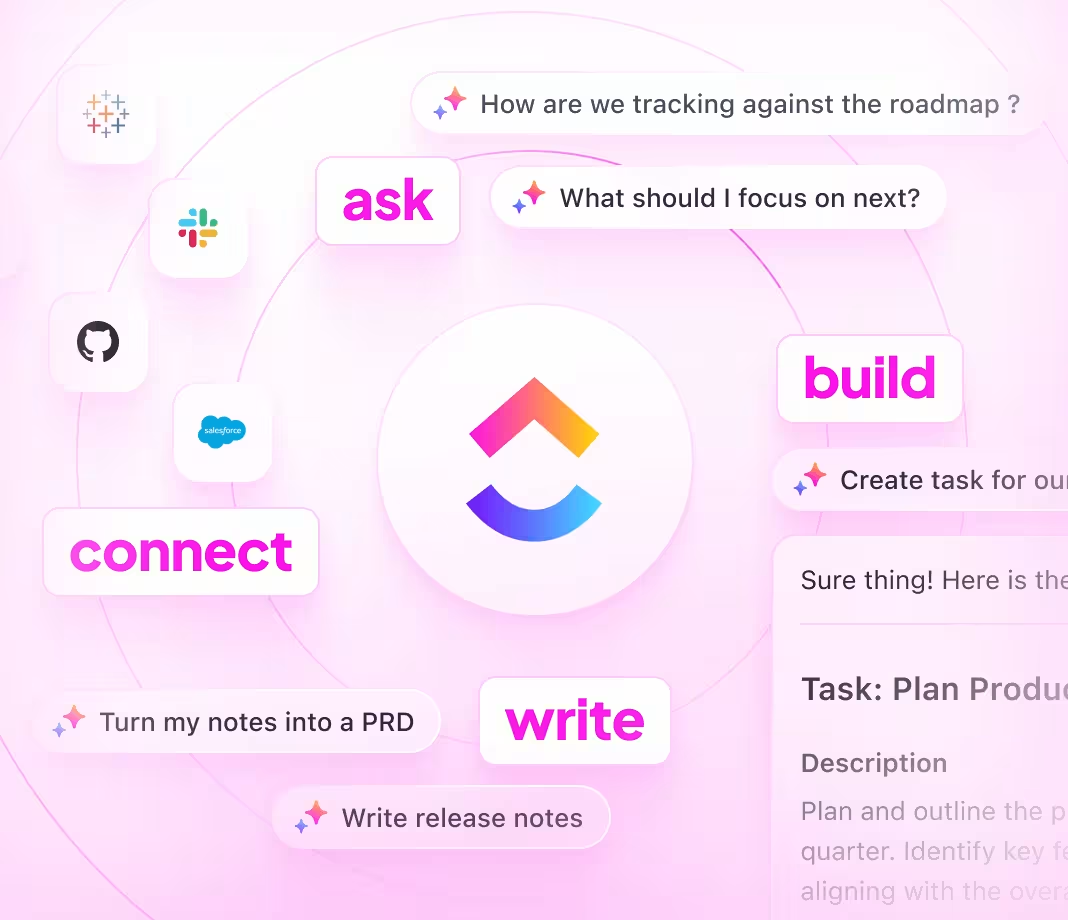
Unlock the Power of ClickUp for NLP Knowledge Management
Maintain clarity, ownership, and synchronization across all NLP documentation with every project milestone.
Comprehensive NLP Documentation with ClickUp Docs
- Document datasets, preprocessing steps, models, evaluation protocols, and deployment guides
- Utilize tables of contents and subpages for intuitive navigation
- Enforce consistent templates for model and experiment records
Why it matters: Your team finds precise information quickly, reducing delays and errors.

Accountable Documentation Ownership
- Identify content gaps and assign actionable tasks with ClickUp Brain
- Set clear ownership, deadlines, and review cycles
- Monitor documentation progress alongside NLP project workflows
Why it matters: Documentation remains accurate and reflective of ongoing work thanks to built-in accountability.

Dynamic Linkage Between Docs and NLP Workflows
- Connect documentation to model training runs, evaluation reports, and deployment updates
- Align bug fixes, incident reports, and postmortems with relevant docs
- Tie user feedback and support tickets directly to knowledge base content
Why it matters: Your NLP documentation evolves in real time with your projects, preventing knowledge silos.

Common Questions Answered




