Construct a Dynamic Knowledge Base for Museum Curation
Centralize your collection data, exhibition protocols, conservation guidelines, and provenance records in one searchable platform—so curators and staff always access the most accurate and current information.
 25,000+ reviews from
Why ClickUp Excels for Museum Curation Knowledge Management
Unify your curation resources and workflows into a single evolving system.
Using traditional methods
- Critical knowledge scattered across spreadsheets, emails, and files
- Manual updates cause inconsistent and outdated records
- Disconnected from actual exhibition and conservation workflows
- Limited access controls leading to version confusion
- Time-intensive documentation and revision processes
Using ClickUp
- Integrate knowledge with task management, comments, and real-time updates
- Automatically convert documentation gaps into actionable tasks
- Link collections data with ongoing exhibitions and conservation work
- Granular permissions for internal teams, collaborators, and public access
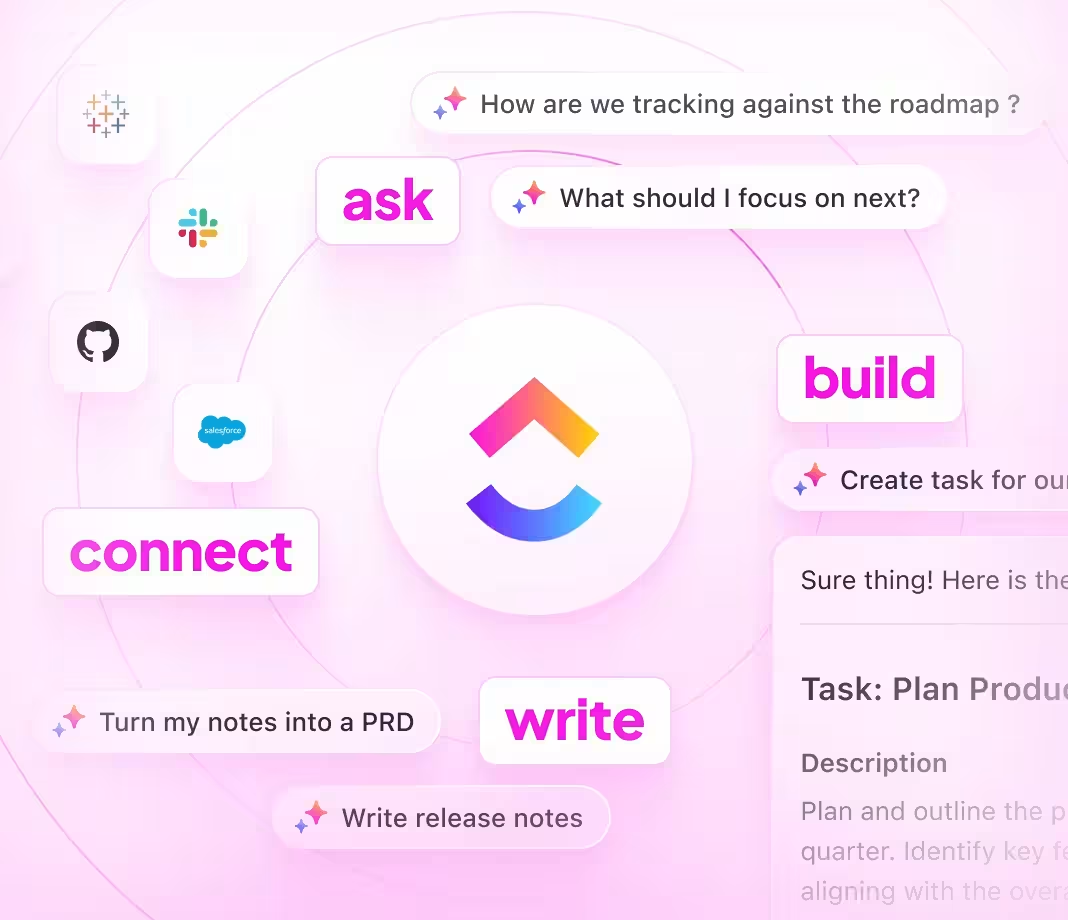
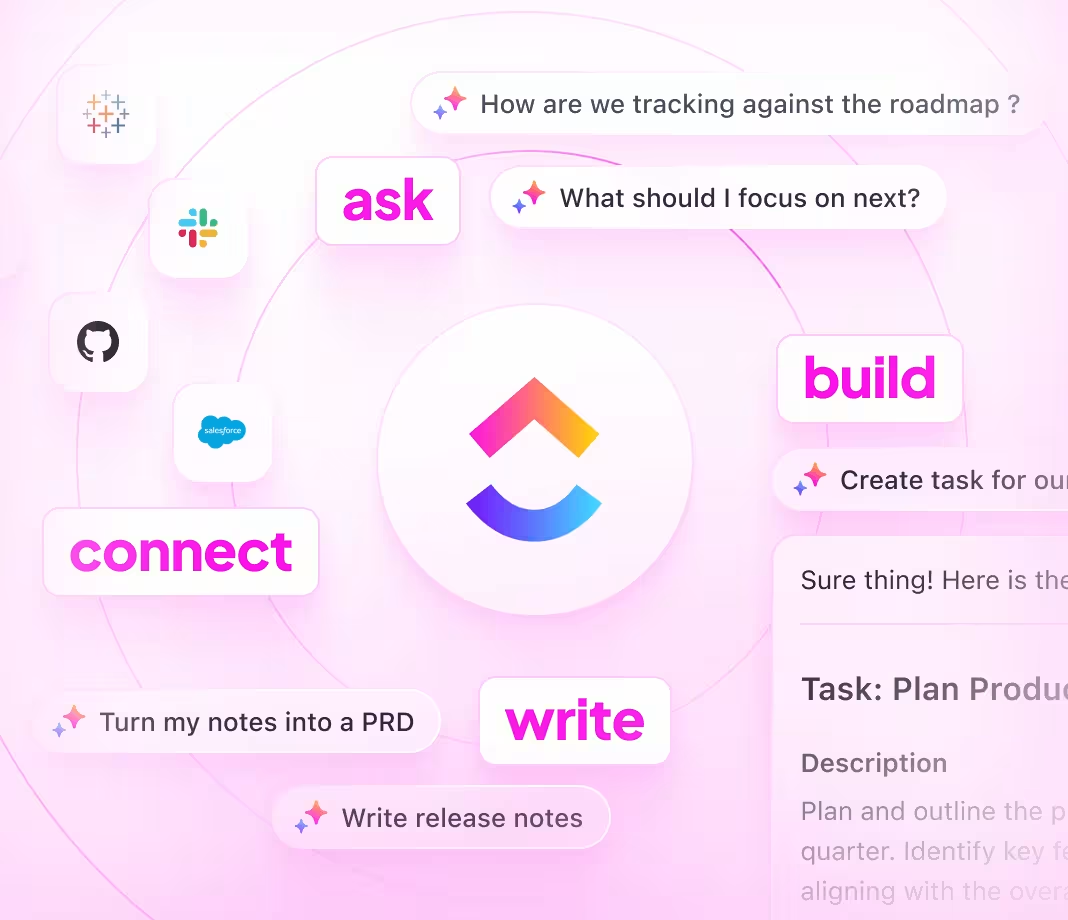
- AI-driven content creation and summarization accelerate updates
How to build a knowledge base tailored for museum curation
Follow these 6 essential steps to maintain a comprehensive, searchable, and evolving curation knowledge repository.
1. Identify your stakeholders and knowledge goals
- Define who will access the knowledge base: curators, conservators, educators, or public
- Outline key content areas: artifact provenance, condition reports, exhibition histories
- Assign clear ownership to maintain accuracy and relevance
2. Develop a structured knowledge framework
- Create a centralized hub with intuitive navigation for collections, exhibitions, and policies
- Include core sections like acquisition records, conservation protocols, and interpretive materials
- Establish changelogs for updates and revisions
3. Standardize documentation formats for consistency
- Apply uniform templates for artifact records, condition assessments, and exhibition plans
- Ensure consistent metadata fields: object ID, date, condition, provenance
- Document restoration histories and handling instructions systematically
4. Incorporate practical guides and troubleshooting resources
- Develop how-to articles on conservation techniques and installation procedures
- Compile FAQs on artifact handling, loan agreements, and environmental controls
- Centralize emergency response protocols and risk assessments
5. Synchronize knowledge updates with museum operations
- Link documentation changes to exhibition launches, acquisitions, and restoration projects
- Treat knowledge updates as integral to curatorial workflows, not afterthoughts
- Use task assignments and reminders to ensure timely revisions
6. Manage access and review cycles effectively
- Set permissions for internal staff, external partners, and public viewers as appropriate
- Schedule periodic reviews to maintain the accuracy of records and protocols
- Use feedback mechanisms to capture insights and improve documentation
Harness ClickUp to craft your museum’s knowledge foundation
Align your curation team with structured, up-to-date knowledge that evolves alongside your collection and exhibitions.
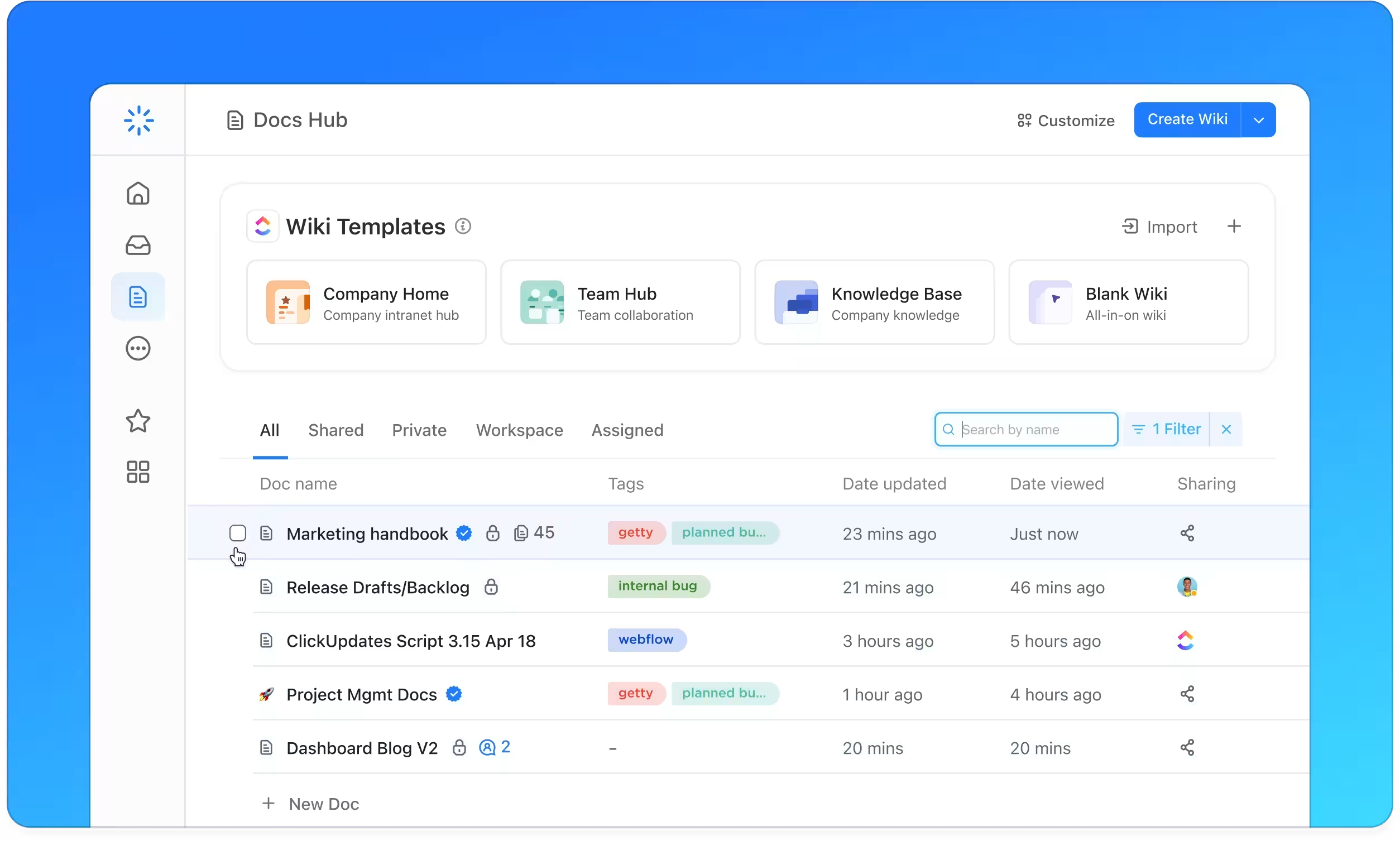
Systematic Documentation with ClickUp Docs
- Collection overviews, provenance logs, conservation reports, exhibition catalogs
- Tables of contents plus nested pages for seamless navigation
- Uniform templates for artifact and exhibition documentation
Why it matters: Curators and staff find precise information quickly, reducing delays and errors.

Accountable Knowledge Ownership
- Identify gaps and turn them into assigned tasks
- Assign curators and conservators as document owners with review dates
- Monitor documentation progress alongside exhibition and conservation workflows
Why it matters: Ensures your knowledge base reflects current museum status and standards.

Documentation Synced with Museum Activities
- Connect knowledge updates to exhibition launches, acquisitions, and restoration efforts
- Link change requests and feedback to documentation revisions
- Embed visitor insights and educational feedback into knowledge updates
Why it matters: Keeps your knowledge base accurate and relevant as your museum evolves.

Common Questions from Museum Professionals