Build a Centralized Knowledge Hub for Model Documentation Standards
Create a comprehensive, searchable repository for model structures, version histories, evaluation metrics, and deployment guidelines—so your team accesses the authoritative source every time.
 25,000+ reviews from
Why Choose ClickUp for Your Model Documentation Knowledge Base
Unify documentation and workflows in a single scalable platform.
With traditional tools
- Documentation scattered across multiple platforms causing version confusion
- Updates depend on manual tracking and inconsistent follow-ups
- Model docs disconnected from development and deployment workflows
- Access restrictions lead to duplicated documents for varied stakeholders
- Entirely manual processes slow down documentation creation and maintenance
With ClickUp
- Integrate documentation, tasks, and discussions in one workspace
- Seamlessly convert documentation gaps into actionable tasks
- Link model docs directly to experiments, releases, and issue tracking
- Granular permission controls for internal teams, collaborators, and external partners
- AI-powered drafting, summarization, and troubleshooting accelerate updates
How to Establish a Knowledge Base for Model Documentation Standards
Follow this 6-step framework to keep your model documentation organized, current, and accessible.
1. Identify stakeholders and documentation objectives
- Define who will use the knowledge base: data scientists, engineers, compliance teams
- Outline key documentation needs from model design to deployment and monitoring
- Assign roles for ownership and periodic reviews
2. Design a clear, modular documentation structure
- Develop a centralized hub with intuitive navigation for model types, guidelines, and best practices
- Include essential sections like architecture, data preprocessing, training protocols, and evaluation metrics
- Ensure changelogs and version histories are easily accessible
3. Standardize documentation templates and formats
- Implement consistent templates covering model purpose, inputs, outputs, parameters, and performance
- Document assumptions, limitations, and compliance requirements
- Include error analysis and edge case handling to reduce recurrent inquiries
4. Incorporate practical guides and troubleshooting content
- Develop how-to guides for model validation, deployment, and maintenance
- Detail troubleshooting workflows for common model failures and anomalies
- Centralize monitoring metrics, alerts, and feedback loops
5. Keep documentation synchronized with model lifecycle events
- Link documentation updates to experiments, retraining cycles, and production releases
- Treat documentation as a continuous deliverable integrated with model development
- Use ClickUp Brain and Brain Max to automate update notifications and summaries
6. Manage access and sustain documentation quality over time
- Configure permission levels for internal teams, external collaborators, and auditors
- Maintain audit trails, deprecation notices, and migration guides
- Collect and act on feedback regularly to prevent knowledge decay
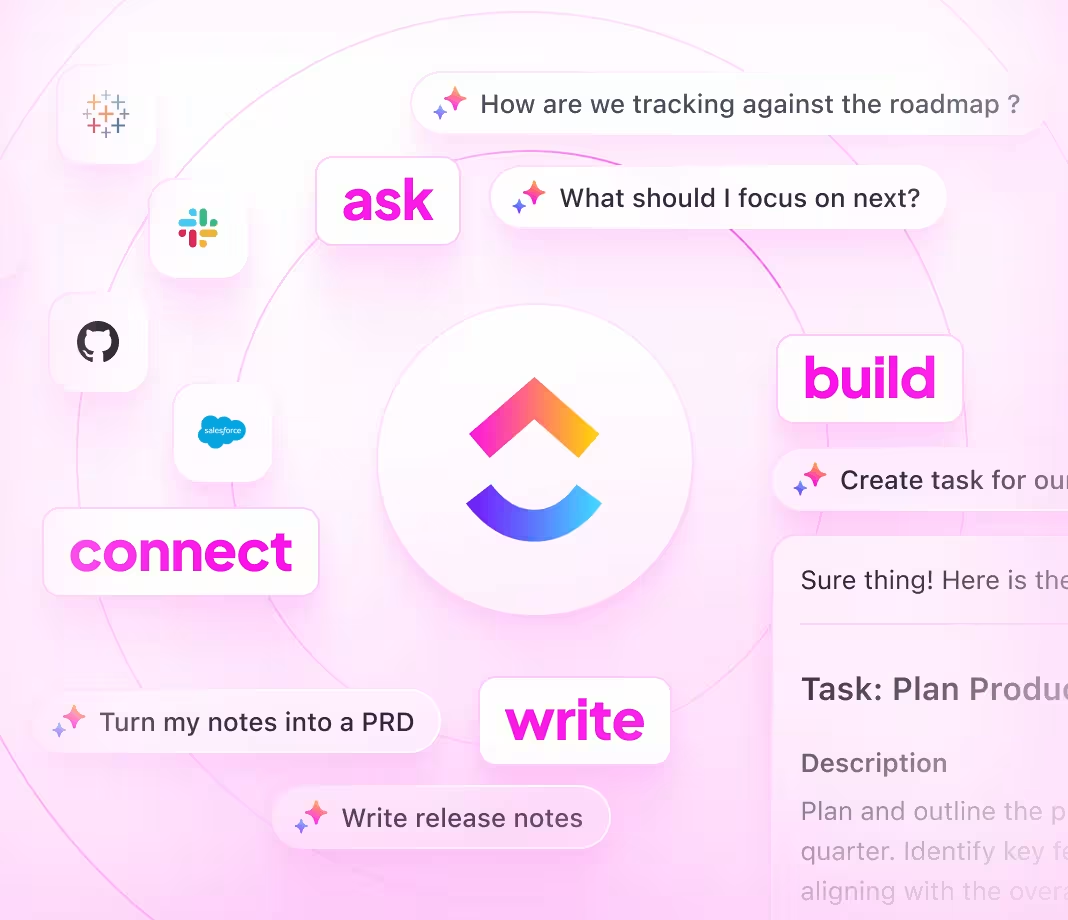
How ClickUp supports building a robust model documentation knowledge base
Ensure your documentation reflects the latest standards, owned by the right experts, and tied directly to model development progress.
Structured model documentation with ClickUp Docs
- Sections for Model Overview, Data Schema, Training Procedures, Evaluation Metrics, Deployment Guidelines
- Hierarchical navigation with linked subpages
- Standardized documentation templates across models
Why it matters: Teams find critical information quickly, reducing onboarding and troubleshooting time.

Accountability through trackable documentation ownership
- Convert documentation gaps into assigned tasks with deadlines
- Define owners and set recurring review cycles
- Monitor documentation progress alongside model development
Why it matters: Documentation stays accurate and updated because responsibility is clearly assigned.

Documentation synchronized with model lifecycle events
- Link docs to model experiments, version releases, and incident reports
- Connect feedback, bug fixes, and performance issues to documentation updates
- Use AI tools like Brain Max to generate summaries and update changelogs
Why it matters: Documentation evolves continuously with your models, reducing knowledge gaps.

Your Questions About Model Documentation in ClickUp Answered






