ClickUp MLOps Knowledge Hub
Craft a Robust Knowledge Base for MLOps Workflows
Centralize all your machine learning operations knowledge—from model versioning to deployment protocols—in a searchable, collaborative space so your team stays aligned and efficient.
 25,000+ reviews from
Trusted by the best
ClickUp vs Conventional Solutions
Why ClickUp Excels for MLOps Knowledge Management
Unify workflow insights with actionable documentation.
With traditional tools
- Knowledge scattered across multiple platforms leading to silos
- Manual updates cause version drift and outdated practices
- Documentation disconnected from live MLOps pipelines
- Limited permission controls complicate collaboration
- Time-consuming creation and maintenance processes
With ClickUp
- Integrate documentation with active MLOps tasks and discussions
- Convert documentation gaps directly into actionable tasks
- Link knowledge base to model releases, incidents, and experiments
- Granular access controls for team, partners, and external stakeholders
- AI-powered assistance accelerates content creation and validation
Steps to build your MLOps knowledge base
How to build a knowledge base for MLOps workflows?
Follow this 6-step framework to develop a dynamic, scalable MLOps knowledge repository.
1. Identify your MLOps stakeholders and knowledge goals
- Define users: data scientists, ML engineers, ops teams
- Outline key workflow documentation needs: model training, deployment, monitoring
- Assign dedicated owners for sustained accuracy
2. Design a clear, modular structure for your knowledge base
- Create hubs for model lifecycle stages: data, training, validation, deployment
- Include sections for tools, environment configs, and incident reports
- Ensure intuitive navigation through nested pages
3. Standardize documentation templates for MLOps components
- Develop repeatable formats for experiment tracking, model cards, and pipeline steps
- Detail inputs, outputs, parameters, and dependencies
- Document failure modes and mitigation strategies comprehensively
4. Incorporate practical runbooks and troubleshooting guides
- Provide step-by-step instructions for common deployment issues
- Add monitoring dashboards and alerting workflows
- Share best practices for rollback and incident response
5. Link documentation updates directly to model releases and experiments
- Synchronize knowledge updates with CI/CD pipelines and version control
- Treat documentation as part of MLOps delivery, not an afterthought
- Maintain accurate, real-time insights as workflows evolve
6. Manage permissions and continuous improvement processes
- Set role-based access for internal teams and external collaborators
- Schedule regular reviews and integrate feedback loops
- Use analytics to track documentation usage and gaps
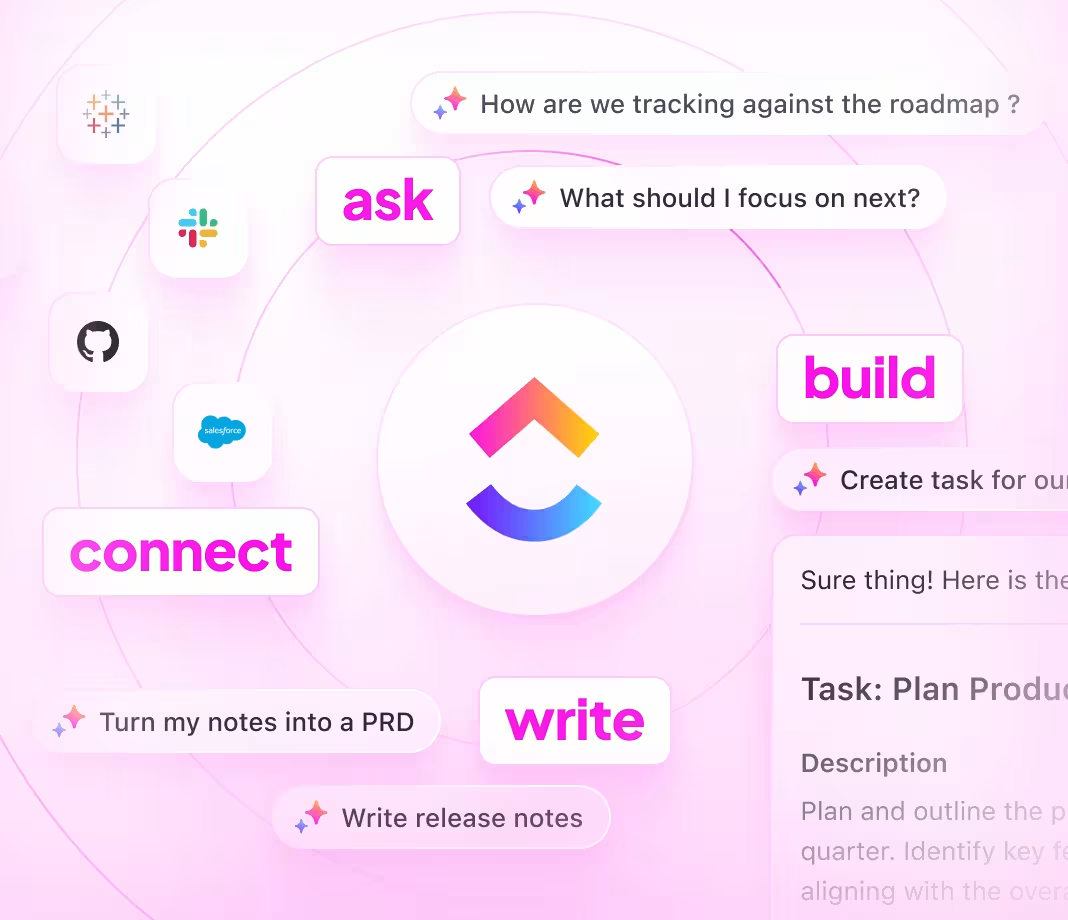
ClickUp Knowledge Base in MLOps
How ClickUp empowers MLOps knowledge management
Ensure your MLOps documentation stays organized, accountable, and aligned with every model iteration.
Organize
Structured MLOps documentation with ClickUp Docs
- Organize by lifecycle stages: data prep, training, validation, deployment, monitoring
- Use nested pages and tables of contents for easy navigation
- Maintain consistent templates for experiments and model documentation
Why it matters: Teams quickly locate critical info, reducing errors and delays.

Assign
Trackable ownership for knowledge accuracy
- Convert knowledge gaps into tasks with clear ownership
- Set deadlines and review cycles to maintain current content
- Manage documentation work alongside ML projects
Why it matters: Accountability ensures your knowledge base remains reliable and fresh.

Integrate
Documentation synchronized with model releases
- Link knowledge updates to model deployments and experiment logs
- Connect incidents, bug fixes, and postmortems to documentation
- Use feedback from monitoring and support to refine content
Why it matters: Your knowledge base evolves with your MLOps workflows, staying relevant.

ClickUp for MLOps knowledge base
Frequently Asked Questions




SOC 2
CERTIFIED

ISO 27001
CERTIFIED

GDPR
COMPLIANT

HIPAA
COMPLIANT