ClickUp ML Monitoring Playbooks Knowledge Base
Build a Robust Knowledge Base for ML Monitoring Playbooks
Create a centralized, searchable hub for monitoring protocols, alerts, dashboards, troubleshooting guides, and incident logs—so your ML team always accesses the most current operational playbook.
 25,000+ reviews from
Trusted by the best
ClickUp vs Traditional Tools
Why ClickUp Excels for ML Monitoring Playbook Knowledge Bases
One unified platform that grows with your ML operations.
Traditional ML monitoring tools
- Playbooks stored separately from workflows, leading to outdated procedures
- Manual updates prone to delays and errors
- Documentation disconnected from real-time model changes
- Fragmented access controls causing duplicated or restricted content
- Heavily manual creation and maintenance processes
Using ClickUp for ML monitoring playbooks
- Unified environment combining Docs, tasks, and comments for seamless knowledge flow
- Gaps in playbooks converted directly into assigned tasks
- Integrated links between documentation and model deployments, alerts, and incidents
- Granular permissions for internal teams, partners, and stakeholders
- AI-powered drafting, summarizing, and troubleshooting accelerates upkeep
Steps to build your knowledge base
How to create a knowledge base for ML monitoring playbooks
Follow this 6-step framework to keep playbooks organized, actionable, and current.
1. Identify your ML monitoring audience and objectives
- Define users: data scientists, SREs, ML engineers
- Outline monitoring goals from anomaly detection to incident response
- Assign ownership for ongoing maintenance and accuracy
2. Design a clear and scalable playbook knowledge base structure
- Develop a central hub with intuitive navigation for policies, alerts, dashboards
- Include essential sections: model metrics, alert thresholds, remediation steps, and escalation paths
- Keep version histories and audit trails accessible
3. Standardize playbook templates for consistency
- Implement uniform formats covering triggers, detection methods, diagnostic steps, and resolution actions
- Document dependencies and integration points clearly
- Address common failure modes and edge cases to reduce ambiguity
4. Add practical troubleshooting guides and runbook instructions
- Incorporate step-by-step guides for frequent alerts and failures
- Detail escalation workflows and communication protocols
- Centralize links to supporting dashboards and logs
5. Maintain playbooks linked to model updates and incidents
- Tie documentation revisions to model retraining, deployments, and postmortem analyses
- Embed update tasks into release cycles to ensure accuracy
- Keep all stakeholders informed of changes in real-time
6. Control access and continuously improve the knowledge base
- Set role-based permissions for engineers, analysts, and external partners
- Monitor feedback and usage to refine content
- Schedule regular reviews to prevent knowledge decay
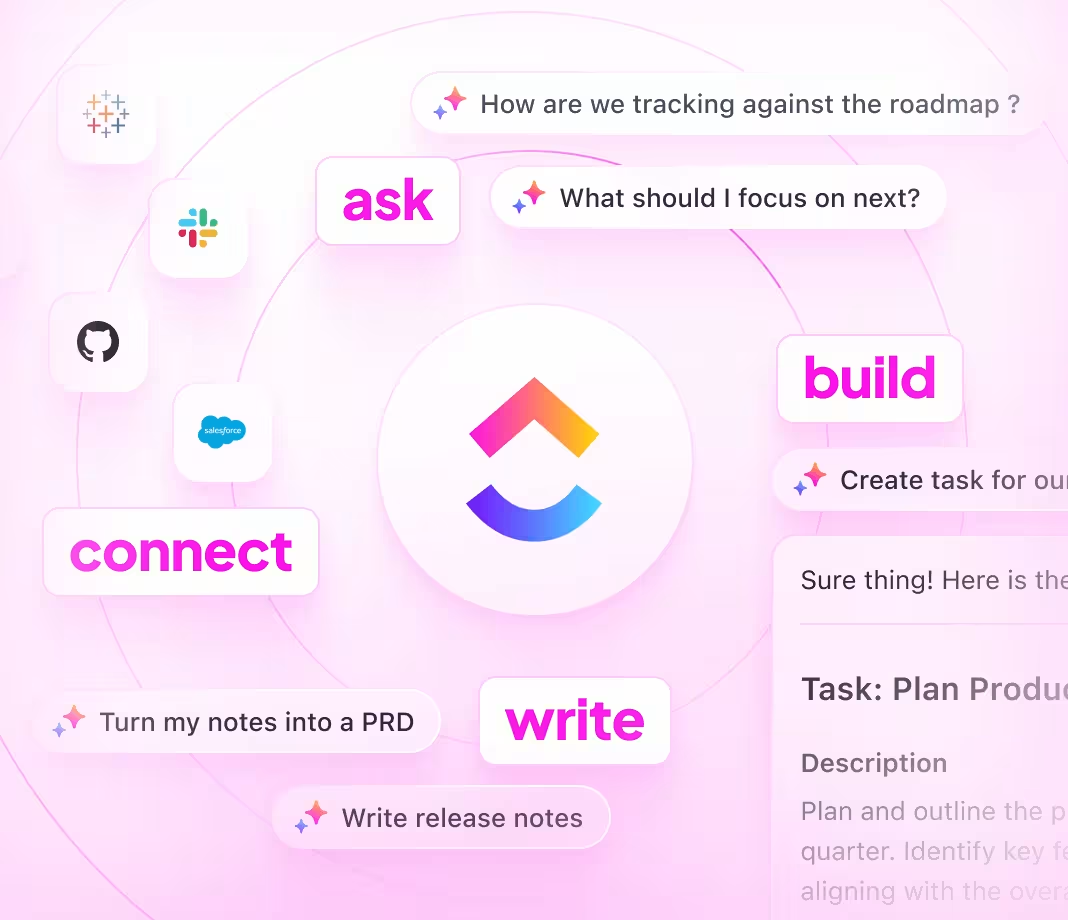
Harnessing ClickUp for ML Monitoring Playbooks
Unlock the power of ClickUp for ML monitoring knowledge
Keep your monitoring playbooks accurate, owned, and aligned with every model iteration.
Organize
Organized ML monitoring playbooks with ClickUp Docs
- Sections for alerts, dashboards, incident response, root cause analysis
- Nested pages and tables of contents for easy navigation
- Consistent playbook templates across models and teams
Why it matters: Your team finds critical procedures quickly, reducing downtime and errors.

Manage
Managed ownership and accountability
- Convert documentation gaps into actionable tasks
- Assign clear owners with deadlines and review cycles
- Track updates alongside your ML projects
Why it matters: Playbooks remain accurate and dependable because responsibility is transparent.

Integrate
Integrated documentation tied to deployments and incidents
- Link playbooks to model releases, alert triggers, and incident reports
- Connect bugs, anomalies, and postmortem insights
- Collect feedback and support tickets linked to documentation
Why it matters: Your knowledge base evolves dynamically with your ML environment.

ClickUp for ML Monitoring Playbooks
Frequently Asked Questions




SOC 2
CERTIFIED

ISO 27001
CERTIFIED

GDPR
COMPLIANT

HIPAA
COMPLIANT