
ClickUp Mental Health Advocacy Knowledge Hub
Build a Comprehensive Knowledge Base for Mental Health Advocacy
Create a centralized, searchable platform for resources, best practices, advocacy tools, and support networks—so your team stays informed and empowered.
 25,000+ reviews from
Trusted by the best
ClickUp vs Traditional Advocacy Tools
Why ClickUp Transforms Mental Health Advocacy Knowledge Management
Unite knowledge and action in one adaptable platform.
With traditional tools
- Information scattered across emails, docs, and platforms, causing delays
- Manual updates lead to outdated or incomplete advocacy materials
- Limited collaboration hinders real-time responses
- Access control issues create confusion among stakeholders
- Slow knowledge sharing impacts advocacy impact
With ClickUp
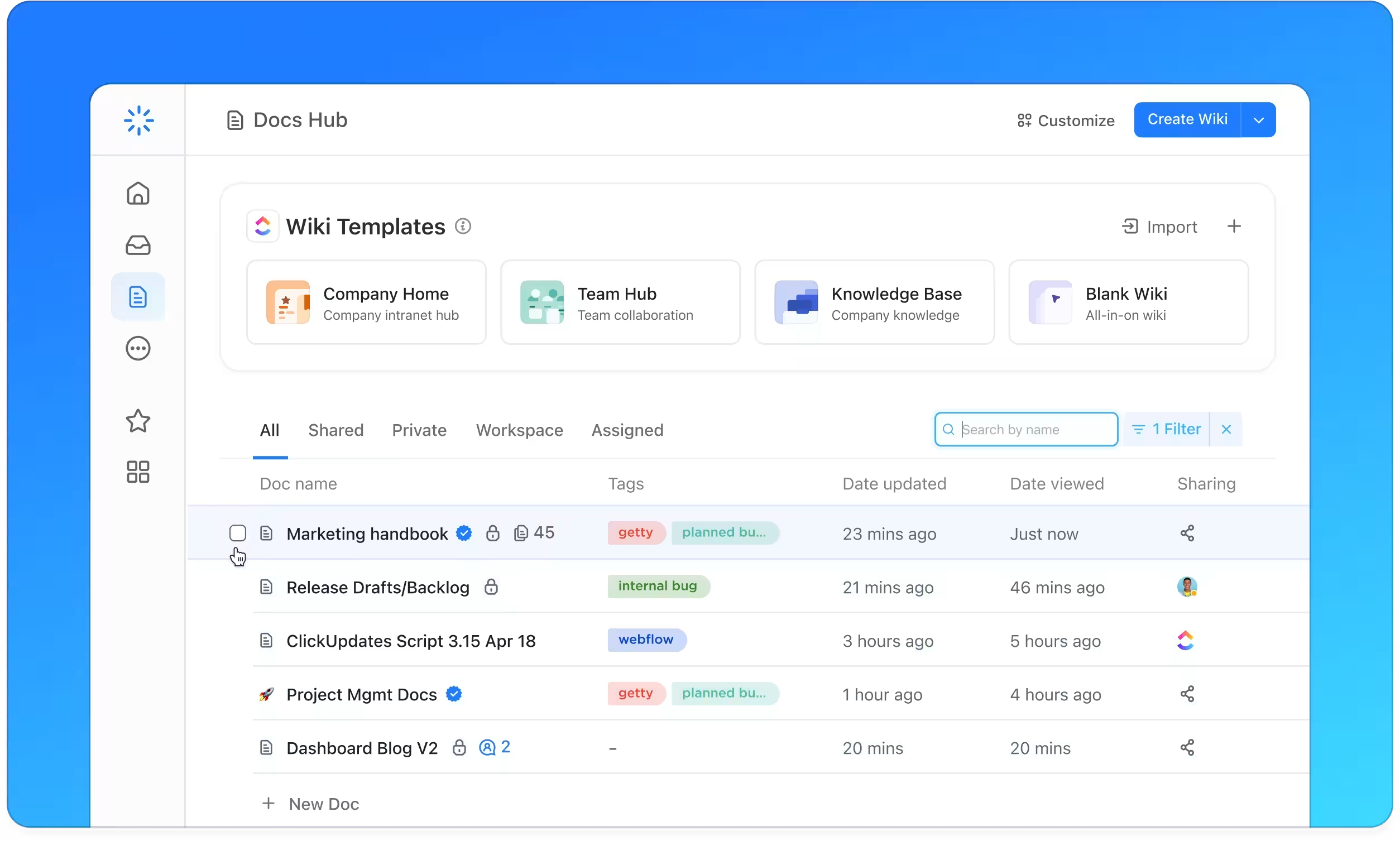
- Centralized Docs integrated with tasks, comments, and timelines
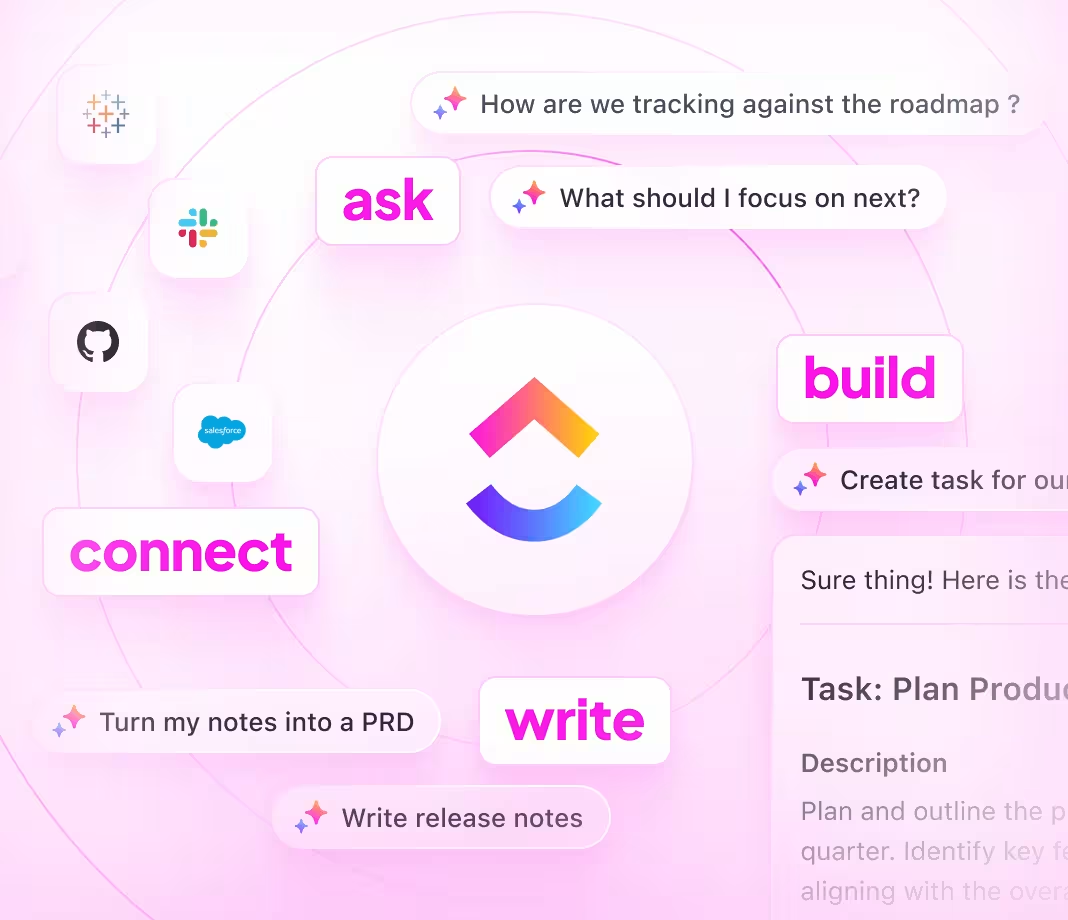
- AI-powered Brain and Brain Max accelerate content creation and insights
- Link knowledge directly to advocacy campaigns and events
- Flexible permissions ensure appropriate access for all contributors
- Real-time updates keep your knowledge base current and actionable
Build Your Advocacy Knowledge Base
How to create a knowledge base for mental health advocacy
Follow these 6 steps to build an organized, dynamic, and impactful knowledge hub.
1. Identify your advocacy audience and objectives
- Define supporters, partners, and community members who will use the knowledge base
- Clarify the mission and key outcomes you want to drive
- Assign content owners to maintain accuracy and relevance
2. Design a clear and navigable knowledge base framework
- Structure sections for campaigns, resources, training, research, and support
- Use intuitive navigation with tables of contents and subpages
- Plan for scalable content as advocacy efforts grow
3. Standardize resource pages for consistency
- Create templates covering purpose, usage guidelines, contact points, and updates
- Include mental health terminology, advocacy best practices, and cultural considerations
- Provide FAQs and troubleshooting for common advocacy challenges
4. Incorporate real-world guides and case studies
- Document successful campaigns and lessons learned
- Offer step-by-step toolkits for advocacy actions
- Centralize crisis response protocols and partner contacts
5. Connect knowledge updates to advocacy campaigns and events
- Link content revisions to campaign launches, policy changes, or community feedback
- Treat knowledge management as integral to advocacy cycles
- Keep your knowledge base reflective of evolving mental health landscapes
6. Manage access and sustain your knowledge base
- Set permissions for internal teams, external partners, and public audiences
- Regularly review and update content based on user feedback and new research
- Use ClickUp Brain and AI tools to monitor knowledge gaps and automate updates
Empowering Advocacy with ClickUp
Unlock the potential of ClickUp for mental health advocacy knowledge
Organize, update, and share critical mental health resources seamlessly with your team and community.
Organize
Structured knowledge management with ClickUp Docs
- Campaign strategies, resource libraries, training modules, crisis protocols
- Table of contents and subpages for effortless navigation
- Consistent page templates ensuring clarity and accessibility
Why it matters: Advocates find essential information quickly, reducing response time and boosting impact.

Manage
Clear ownership and progress tracking
- Identify content owners, set deadlines, and schedule regular reviews
- Convert knowledge gaps into actionable tasks
- Track content updates alongside advocacy milestones
Why it matters: Your knowledge base remains accurate and relevant, supporting effective advocacy.

Connect
Integration with campaigns and community feedback
- Link documents to advocacy events, policy updates, and community input
- Incorporate post-campaign analyses and lessons learned
- Use Brain Max to synthesize feedback and generate insights
Why it matters: Knowledge stays aligned with real-world advocacy efforts and evolving mental health needs.

Mental Health Advocacy Knowledge Base FAQs
Common Questions About Using ClickUp for Advocacy Knowledge


SOC 2
CERTIFIED

ISO 27001
CERTIFIED

GDPR
COMPLIANT

HIPAA
COMPLIANT