ClickUp Machine Learning Knowledge Hub
Build a Dynamic Knowledge Base for Machine Learning Models
Create a centralized, searchable repository for datasets, model architectures, training logs, evaluation metrics, and deployment guides—ensuring your ML team always accesses the latest insights.
 25,000+ reviews from
Trusted by the best
ClickUp vs Traditional Tools
Why ClickUp Elevates Machine Learning Knowledge Management
Develop a unified platform that scales with your ML workflows.
Traditional Knowledge Management
- Documentation scattered across multiple platforms causing version conflicts
- Manual updates delay critical knowledge sharing
- Lack of integration with ML pipelines and model iterations
- Complex permission settings leading to duplicated content
- Time-consuming, manual curation and maintenance processes
ClickUp for ML Knowledge Base
- Integrates documentation with tasks, experiments, and team discussions
- Converts knowledge gaps into actionable tasks automatically
- Links docs directly to datasets, model versions, and deployments
- Granular access controls for internal teams, partners, and stakeholders
- AI-powered assistance accelerates drafting, summarization, and troubleshooting
Building Your ML Knowledge Base
How to create an effective knowledge base for machine learning models?
Follow this 6-step approach to keep your ML documentation organized, accessible, and up to date.
1. Identify your ML team’s knowledge needs and goals
- Define users: data scientists, engineers, stakeholders
- Map workflows from data preprocessing to model deployment
- Assign owners for continuous content stewardship
2. Design a clear structure tailored to ML documentation
- Centralize sections like data sources, model architectures, training logs, and evaluation
- Use nested pages for experiments, hyperparameters, and deployment details
- Keep version histories and changelogs transparent
3. Standardize model documentation templates
- Create unified formats for experiment summaries, model cards, and code snippets
- Include key metadata: dataset versions, training parameters, performance metrics
- Document edge cases and failure modes to reduce troubleshooting time
4. Incorporate practical guides and troubleshooting advice
- Develop how-to articles for model retraining, hyperparameter tuning, and deployment
- Provide debugging steps and error resolution tips
- Centralize monitoring protocols and rollback procedures
5. Sync documentation updates with ML releases and iterations
- Link docs to model version releases, retraining schedules, and incident reports
- Treat documentation as part of your ML lifecycle, not an afterthought
- Maintain alignment between operational pipelines and knowledge base
6. Manage access and sustain knowledge quality over time
- Define permissions for data scientists, ML engineers, and external collaborators
- Keep changelogs, deprecation notes, and migration plans current
- Collect team feedback and schedule regular reviews to prevent drift
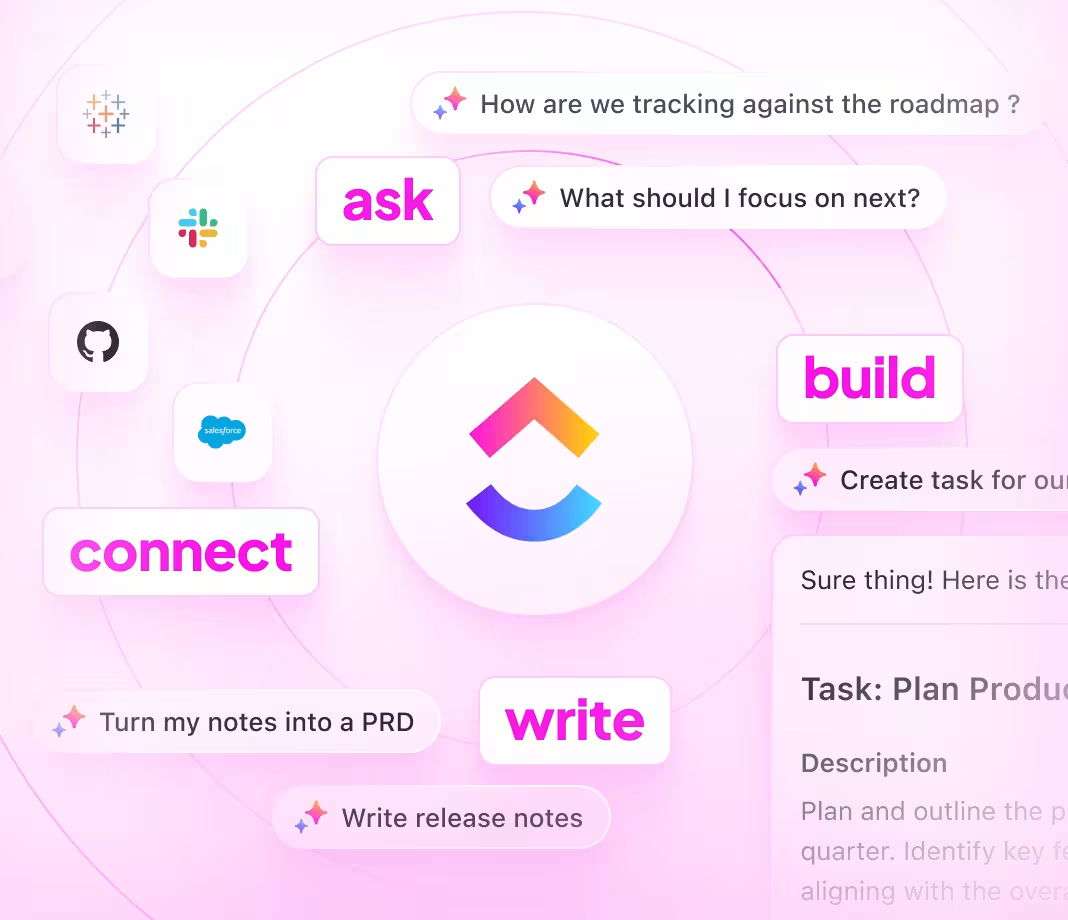
Harness ClickUp for ML Knowledge
Unlock the power of ClickUp for machine learning knowledge management
Ensure your ML documentation is structured, assigned, and synchronized with every model iteration.
Organize
Structure your ML knowledge with ClickUp Docs
- Sections for datasets, model architectures, training pipelines, and evaluation metrics
- Table of contents and subpages for quick navigation
- Consistent templates for experiment and model documentation
Why it matters: Your team finds insights rapidly, reducing guesswork and rework.

Assign
Track ownership and updates effortlessly
- Convert documentation gaps into actionable tasks
- Assign owners, set deadlines, and establish review cycles
- Manage documentation progress like any ML project work
Why it matters: Documentation stays accurate because responsibility is clear and ongoing.

Integrate
Connect documentation directly to ML releases
- Link docs to model version releases, retraining workflows, and incident analyses
- Bridge bugs, performance regressions, and post-deployment reviews
- Tie feedback loops and support tickets back to knowledge base
Why it matters: Your ML documentation evolves seamlessly alongside your models.

ClickUp ML Knowledge Base
Frequently Asked Questions




SOC 2
CERTIFIED

ISO 27001
CERTIFIED

GDPR
COMPLIANT

HIPAA
COMPLIANT