Machine Learning Model Operations Knowledge Hub
Build a Robust Knowledge Base for ML Model Operations
Create a unified, searchable platform to document model lifecycle stages, deployment protocols, monitoring metrics, and troubleshooting guides—ensuring your ML team always accesses the latest operational insights.
 25,000+ reviews from
Trusted by the best
ClickUp vs Conventional Solutions
Why ClickUp Excels for ML Model Operations Knowledge Management
Centralize knowledge and workflows tailored for ML teams.
Using conventional tools
- Operational insights scattered across emails and spreadsheets
- Manual updates leading to outdated and inconsistent information
- Disconnect between documentation and model deployment cycles
- Limited permissions causing duplication and access issues
- Time-consuming manual documentation and review processes
Leveraging ClickUp
- Integrate documentation with task management, comments, and automation
- Convert knowledge gaps into actionable tasks with assigned owners
- Link docs directly to model releases, incidents, and performance updates
- Granular access controls for internal teams, partners, and stakeholders
- AI-powered assistance accelerates content creation and issue resolution
Building Your ML Ops Knowledge Base
How to create a knowledge base for machine learning model operations?
Follow this 6-step approach to keep your ML Ops documentation organized, accessible, and current.
1. Identify stakeholders and define knowledge base objectives
- Determine who will use and maintain the knowledge base
- Outline key operational stages: training, deployment, monitoring, retraining
- Assign clear ownership to ensure ongoing accuracy
2. Develop a coherent structure for your ML Ops knowledge hub
- Organize content by lifecycle phases, model types, and environments
- Include sections for data preprocessing, model metrics, alerting, and incident response
- Ensure easy navigation with tables of contents and subpages
3. Standardize document templates for consistency
- Use uniform formats for runbooks, troubleshooting guides, and deployment checklists
- Document parameters like model version, data sources, and evaluation criteria
- Address common failure modes and mitigation steps
4. Incorporate practical guides and operational playbooks
- Provide step-by-step instructions for model deployment and rollback
- Include monitoring dashboards, alert configurations, and escalation paths
- Centralize best practices and lessons learned
5. Synchronize documentation with model updates and releases
- Link changes in models to documentation revisions and incident reports
- Treat knowledge updates as integral to the deployment process
- Maintain accuracy as models evolve over time
6. Manage access controls and ongoing maintenance
- Define permissions for engineering, data science, and business teams
- Track feedback, schedule periodic reviews, and update deprecated content
- Use ClickUp Brain and Brain Max to automate knowledge validation and summarization
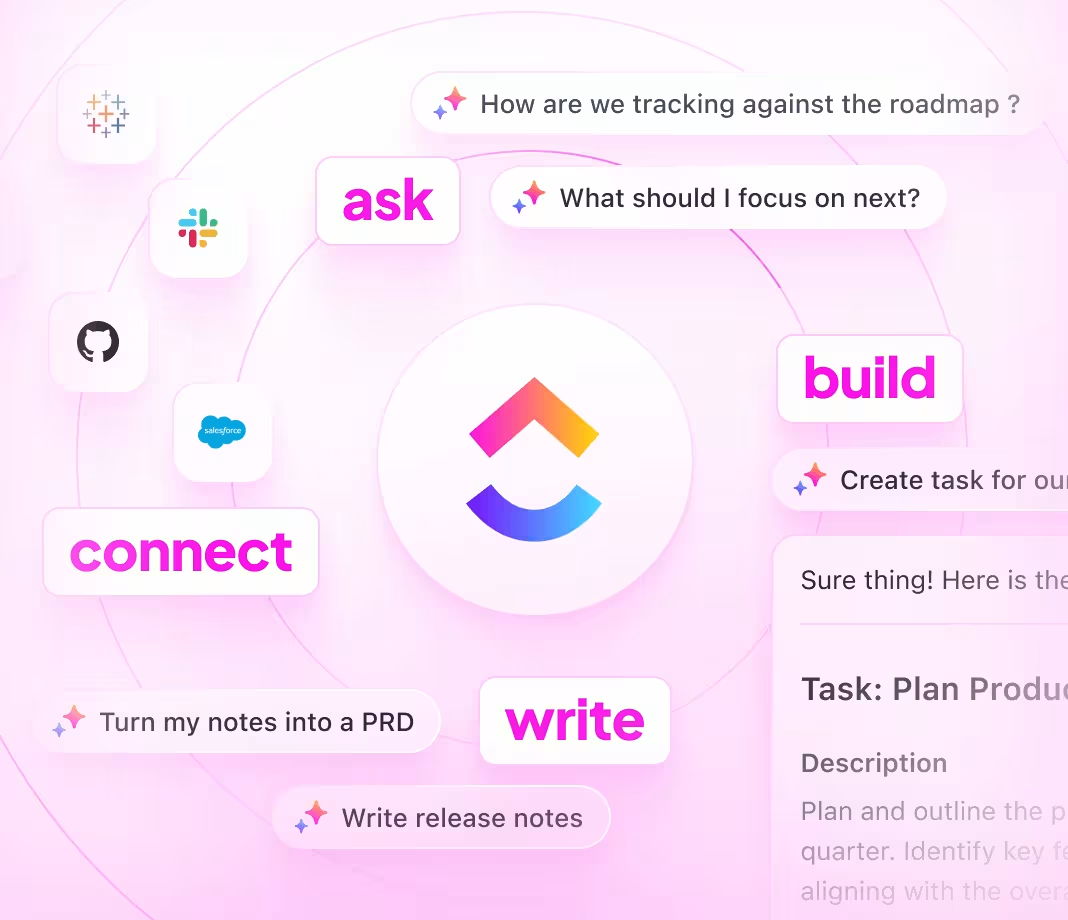
Maximizing ML Ops Efficiency with ClickUp
Unlock the power of ClickUp for ML Model Operations Knowledge
Ensure your model operations documentation is organized, assigned, and synchronized with every deployment.
Organize
Structured ML Ops Documentation Using ClickUp Docs
- Lifecycle stages: Training, Deployment, Monitoring, Retraining
- Navigable table of contents with detailed subpages
- Consistent formats for runbooks and operational protocols
Why it matters: Teams quickly locate critical information, reducing downtime and confusion.

Assign
Clear Ownership and Review Tracking
- Identify documentation gaps and convert them into tasks
- Assign responsible owners with deadlines and review cycles
- Monitor documentation progress alongside model development
Why it matters: Accountability ensures your knowledge base remains accurate and reliable.

Integrate
Link Documentation to Model Releases and Incidents
- Connect knowledge updates to deployment versions and change logs
- Associate bug fixes, monitoring alerts, and postmortem analyses
- Tie user feedback and support tickets back to documentation
Why it matters: Documentation evolves with your models, keeping teams informed and aligned.

ClickUp Knowledge Base for ML Model Operations
Frequently Asked Questions




SOC 2
CERTIFIED

ISO 27001
CERTIFIED

GDPR
COMPLIANT

HIPAA
COMPLIANT