ClickUp Log Management Knowledge Base
Build a Robust Knowledge Base for Log Management
Create a centralized, searchable repository for log formats, parsing rules, alert configurations, incident responses, and troubleshooting guides—empowering your team to access accurate log insights anytime.
 25,000+ reviews from
Trusted by the best
ClickUp vs Traditional Tools
How ClickUp Advances Your Log Management Knowledge Base
Unify knowledge and operations in one adaptive platform.
With traditional tools
- Log knowledge scattered across disconnected platforms, causing outdated or inconsistent info
- Manual updates prone to delays and overlooked changes
- Limited integration with live log monitoring and incident workflows
- Fragmented access controls leading to duplicated or inaccessible documentation
- Time-intensive creation and maintenance processes without automation
With ClickUp
- Centralize log knowledge alongside alerting, tasks, and incident tracking
- Convert documentation gaps into actionable tasks automatically
- Connect logs, incidents, and remediation guides for real-time context
- Granular permission settings for internal teams, partners, and stakeholders
- AI-powered drafting, summarization, and troubleshooting assistance accelerate updates
Steps to build your knowledge base
How to create a knowledge base for log management?
Follow this 6-step framework to keep your log documentation structured, accessible, and continuously updated.
1. Identify key users and define log management objectives
- Determine who relies on log data (engineers, analysts, support)
- Outline goals from log ingestion to alert resolution and incident analysis
- Assign responsibility for maintaining documentation accuracy
2. Design a clear knowledge base architecture
- Establish a unified hub with intuitive navigation for log types, parsing, alerts, and troubleshooting
- Include sections for pipelines, schemas, dashboards, and compliance
- Ensure changelogs and updates are easy to locate
3. Standardize log entry and alert documentation formats
- Use templates covering source, format, alert conditions, and response protocols
- Document parsing rules, thresholds, and error scenarios consistently
- Minimize repetitive support queries through clarity
4. Incorporate operational guides and troubleshooting workflows
- Develop step-by-step instructions for common log analysis and incident response
- Document known failure modes and mitigation strategies
- Centralize configuration best practices and escalation paths
5. Link documentation updates to log system changes and incidents
- Connect knowledge base edits with deployment cycles, incident reports, and audit trails
- Embed documentation as part of operational workflows, not afterthoughts
- Preserve accuracy amid evolving log sources and alerts
6. Manage permissions and maintain documentation lifecycle
- Implement role-based access for internal teams, partners, and external users
- Regularly review and archive outdated entries
- Collect feedback for continuous improvement and knowledge retention
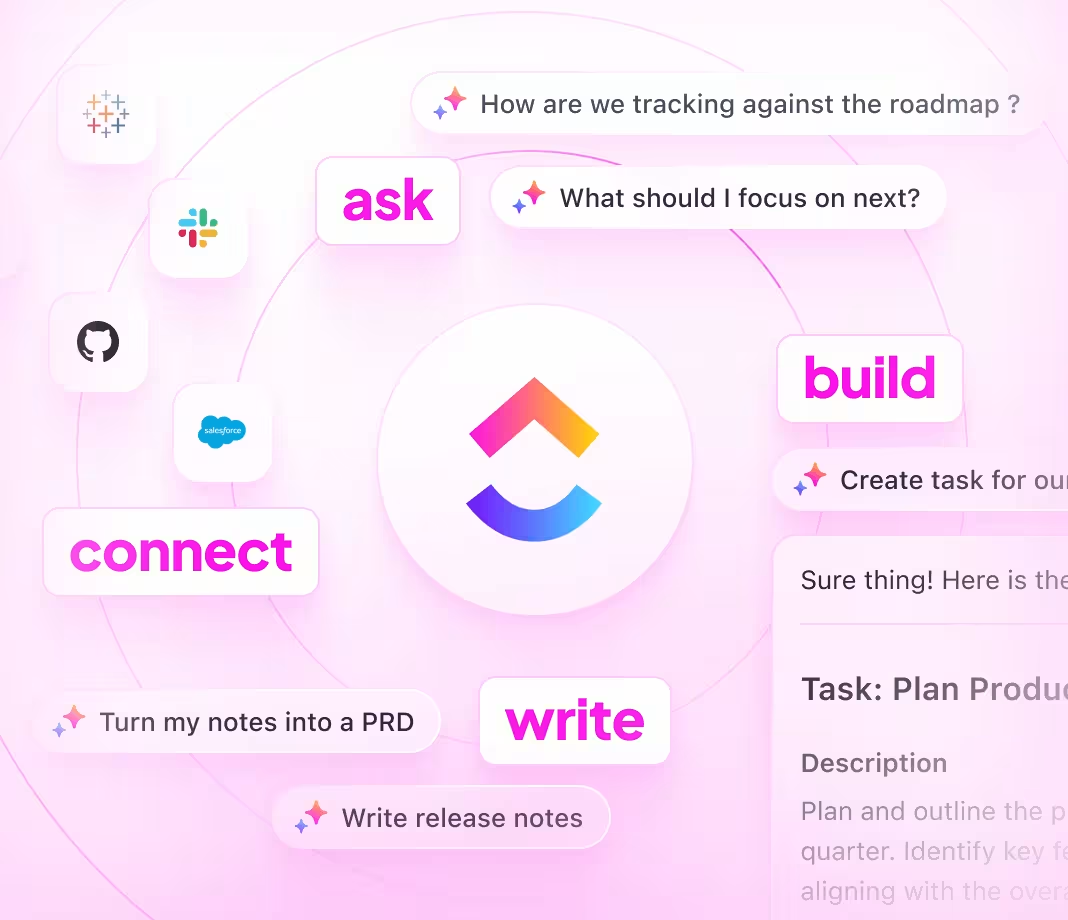
Empowering Log Knowledge Management
Harness ClickUp for your log management knowledge base
Ensure log documentation is organized, accountable, and aligned with operational changes.
Organize
Comprehensive log documentation with ClickUp Docs
- Data sources, parsing schemas, alert rules, incident playbooks
- Table of contents plus nested pages for streamlined navigation
- Uniform documentation templates for log entries and alerts
Why it matters: Teams find critical log info quickly, reducing downtime and errors.

Manage
Transparent ownership and progress tracking
- Identify documentation gaps and convert them into assigned tasks
- Designate owners, set deadlines, and schedule regular reviews
- Monitor documentation tasks alongside operational work
Why it matters: Knowledge stays fresh because responsibility is clear and enforced.

Integrate
Documentation synchronized with log operations
- Link documentation updates to deployments, alert tuning, and incident retrospectives
- Connect bugs, system alerts, and post-incident analyses
- Use feedback loops from support and monitoring tools
Why it matters: Documentation evolves in lockstep with your log environment.

ClickUp log management knowledge base
Common Questions About ClickUp for Log Knowledge




SOC 2
CERTIFIED

ISO 27001
CERTIFIED

GDPR
COMPLIANT

HIPAA
COMPLIANT