Kubernetes Orchestration Knowledge Hub
Streamline Your Kubernetes Knowledge Base with ClickUp
Create a centralized, searchable repository for configs, workflows, troubleshooting guides, and best practices—empowering your team to manage Kubernetes with confidence.
 25,000+ reviews from
Trusted by the best
ClickUp vs Legacy Solutions
Elevate Kubernetes Knowledge Management Beyond Traditional Tools
Unify your operational insights and documentation in one platform built for scale.
Traditional knowledge tools
- Fragmented docs separate from operational tasks lead to outdated information
- Manual updates cause delays and errors
- Lack of integration with deployment and monitoring workflows
- Limited permission controls increase risk of data duplication
- Time-intensive creation and maintenance processes
Using ClickUp for Kubernetes knowledge
- Integrate docs, tasks, and comments for seamless knowledge and execution
- Automatically convert documentation gaps into actionable tasks
- Link knowledge directly to deployments, incidents, and updates
- Granular permissions for internal teams, partners, and stakeholders
- AI-powered drafting, summarization, and troubleshooting assistance accelerate workflows
Building Your Knowledge Base
Transform Your Kubernetes Knowledge Base in 6 Strategic Steps
Apply this proven framework to keep your orchestration docs clear, current, and easy to navigate.
1. Identify your Kubernetes users and documentation objectives
- Define user roles: DevOps, SREs, developers
- Outline key workflows from cluster setup to scaling
- Assign document ownership for accountability
2. Architect a clear, modular knowledge base layout
- Centralize content with intuitive navigation
- Cover critical topics: cluster management, deployment patterns, monitoring, security
- Make changelogs and deprecation notices accessible
3. Standardize documentation templates for consistency
- Use uniform formats for workload definitions, Helm charts, and manifests
- Include purpose, prerequisites, commands, and expected outcomes
- Document troubleshooting and common pitfalls to reduce support load
4. Incorporate practical how-to guides and incident playbooks
- Develop step-by-step workflows for common tasks like rolling updates and autoscaling
- Create runbooks for incident response and disaster recovery
- Centralize monitoring and alerting configurations
5. Synchronize documentation updates with release cycles
- Link docs to deployment pipelines, change requests, and incident reports
- Embed documentation as part of release checklists
- Ensure real-time accuracy as clusters evolve
6. Enforce access controls and maintain continuous improvement
- Configure permissions for internal teams, external partners, and public docs
- Keep track of change history and migration guides
- Collect feedback and schedule regular reviews to prevent drift
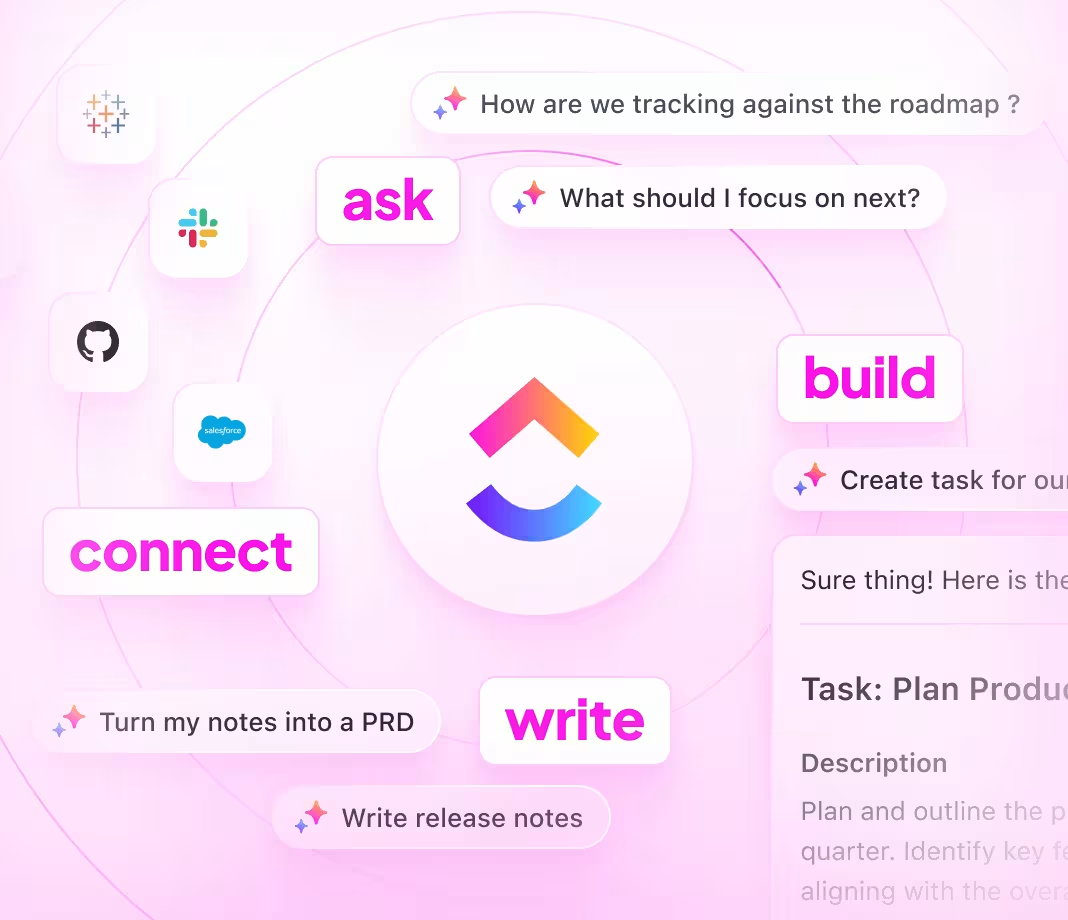
Empowering Kubernetes Teams
Unlock Kubernetes Expertise with ClickUp Knowledge Base
Ensure your orchestration knowledge is organized, accountable, and tightly integrated with your workflows.
Organize
Structured Kubernetes Documentation Using ClickUp Docs
- Cluster setup, Deployment workflows, Scaling strategies, Security policies, Monitoring
- Table of contents and nested pages for effortless navigation
- Consistent template usage for manifests and configurations
Why it matters: Quickly access critical info to minimize downtime and accelerate deployments.

Manage
Clear Ownership and Tracking for Documentation Tasks
- Identify documentation gaps and assign tasks directly within ClickUp
- Set owners, deadlines, and periodic reviews
- Manage documentation as part of your operational workflows
Why it matters: Keeps knowledge fresh and reliable through built-in accountability.

Integrate
Link Docs with Deployment and Incident Processes
- Connect documentation updates to release pipelines and change management
- Tie incident reports and postmortem analysis directly to knowledge base
- Use feedback loops to continuously improve documentation
Why it matters: Documentation evolves alongside your Kubernetes environment for accuracy and relevance.

ClickUp Kubernetes Knowledge Base FAQs
Answers to Your Top Questions




SOC 2
CERTIFIED

ISO 27001
CERTIFIED

GDPR
COMPLIANT

HIPAA
COMPLIANT