
Jet Propulsion Knowledge Hub
Construct a Comprehensive Knowledge Base for Jet Propulsion
Centralize critical data on engine designs, thermodynamics, fuel systems, and diagnostics—ensuring aerospace engineers always access the most accurate, up-to-date insights.
 25,000+ reviews from
Trusted by the best
ClickUp vs Conventional Methods
Why Choose ClickUp for Your Jet Propulsion Knowledge Base
Develop a unified source that evolves with your aerospace projects.
Using conventional tools
- Knowledge scattered across emails and spreadsheets, leading to outdated info
- Manual updates increase risk of errors and delays
- Documentation isolated from engineering workflows
- Access controls cause redundant document versions
- Time-intensive creation and revision processes
Leveraging ClickUp
- Integrates knowledge with tasks, discussions, and project milestones
- Automatically converts documentation gaps into actionable tasks
- Links technical docs directly to propulsion system development and tests
- Granular permissions for team members, partners, and stakeholders
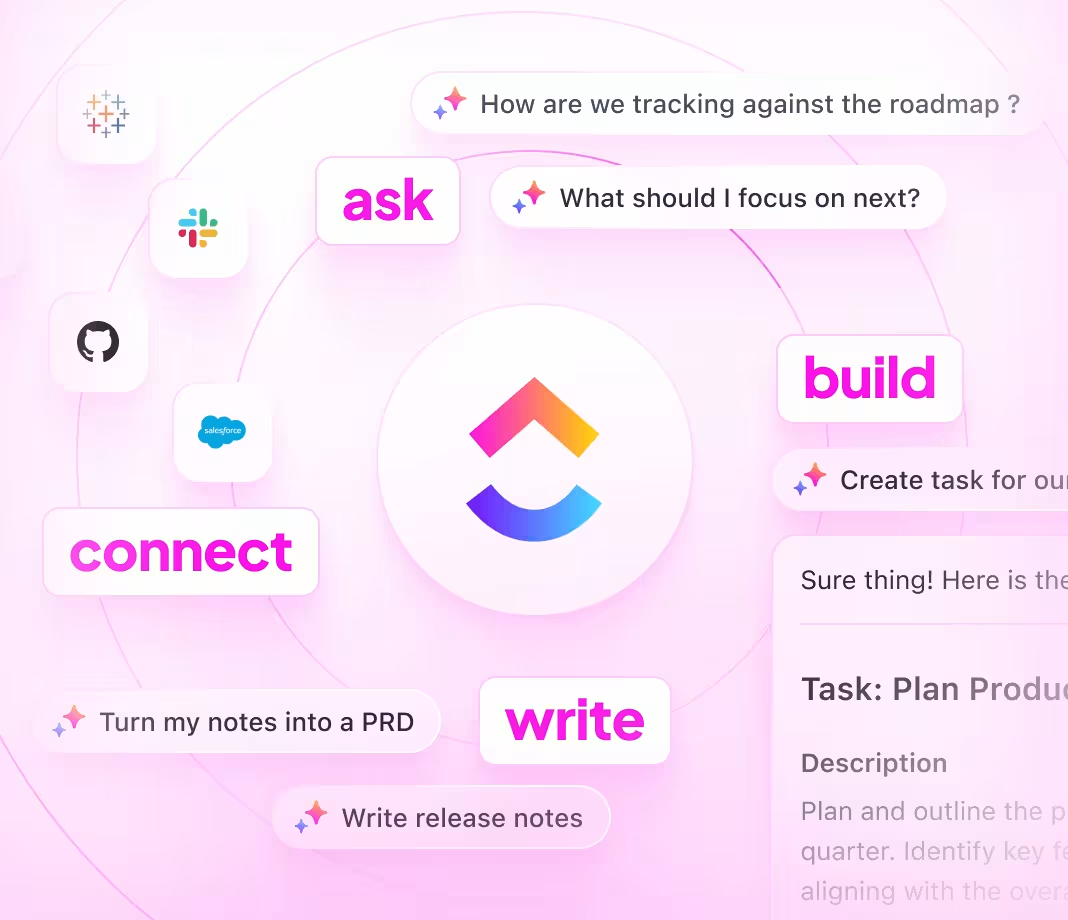
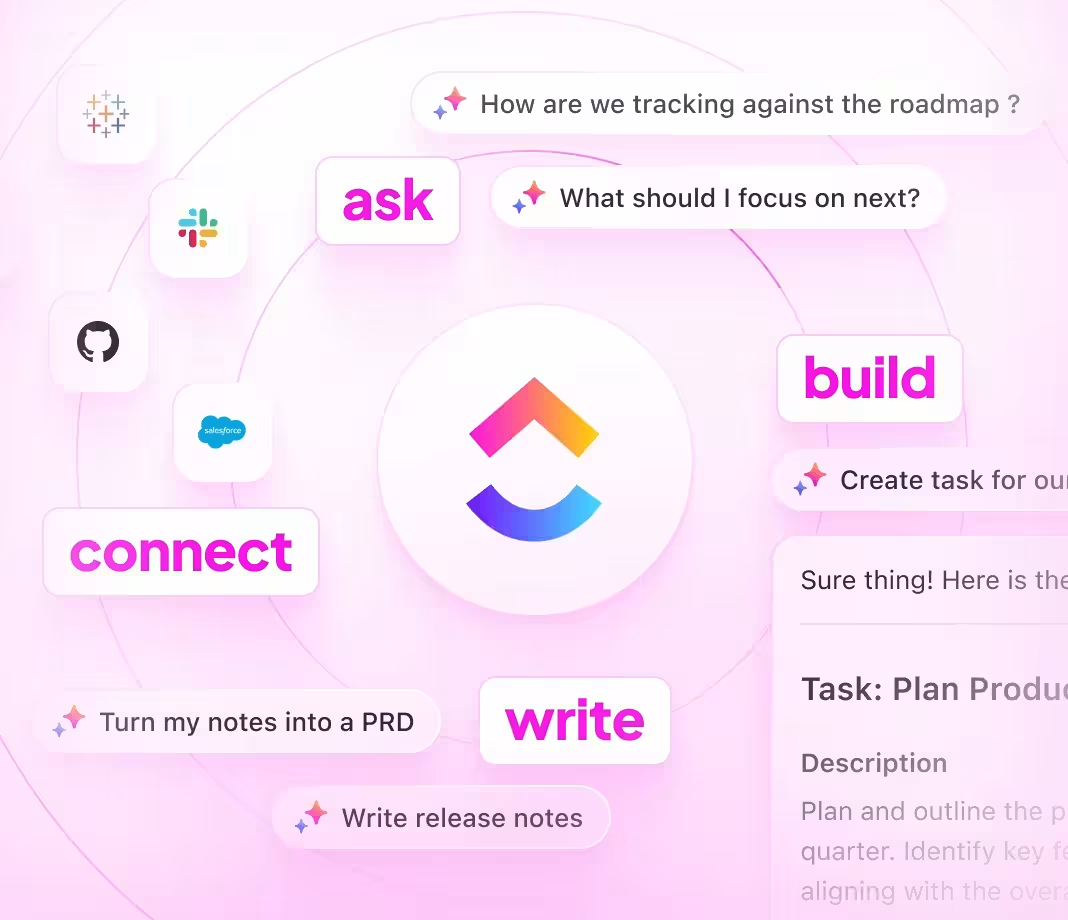
- AI-powered features accelerate drafting, summarizing, and troubleshooting
Blueprint for Building Your Knowledge Base
How to Develop a Jet Propulsion Knowledge Base with ClickUp
Follow these 6 strategic steps to ensure a structured, searchable, and continually updated aerospace knowledge repository.
1. Identify your user groups and knowledge objectives
- Pinpoint engineers, technicians, and project managers who will access the base
- Outline key topics: propulsion principles, fuel analysis, diagnostics, and maintenance
- Assign content ownership for consistent updates
2. Design a clear, modular knowledge base framework
- Establish sections for engine types, thermodynamics, fuel systems, and troubleshooting
- Organize content logically for quick navigation
- Include changelogs for design iterations and regulatory updates
3. Standardize technical documentation formats
- Use consistent templates for engine specs, test procedures, and performance data
- Detail parameters such as thrust levels, fuel consumption, and emission standards
- Document failure modes and mitigation strategies to reduce repeated queries
4. Incorporate practical guides and problem-solving workflows
- Develop step-by-step maintenance protocols and diagnostic procedures
- Detail common anomalies with corrective actions
- Centralize test setups, calibration methods, and safety checklists
5. Synchronize knowledge updates with project milestones
- Link documentation revisions to propulsion system development phases and testing cycles
- Treat documentation as integral to engineering deliverables
- Maintain accuracy as designs and standards evolve
6. Manage access rights and continuous improvement
- Define permissions for internal teams, external collaborators, and regulatory bodies
- Update changelogs, phase out deprecated methods, and offer transition guidance
- Collect feedback and schedule reviews to prevent knowledge gaps
Empowering Aerospace Teams
Harness ClickUp to Centralize Jet Propulsion Knowledge
Maintain structured, accountable documentation that evolves seamlessly with every propulsion system upgrade.
Organize
Consistent Technical Documentation with ClickUp Docs
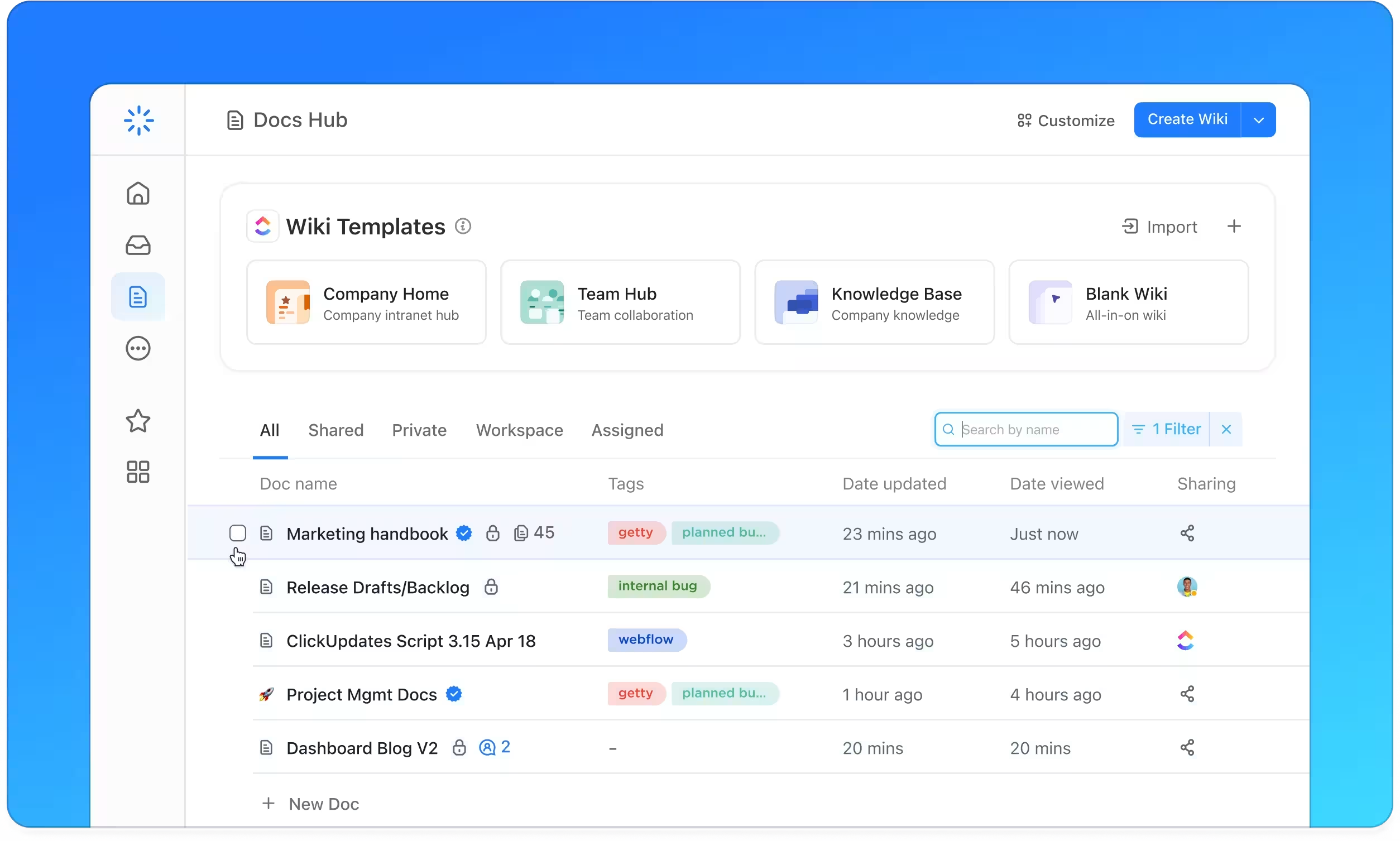
- Sections covering Propulsion Fundamentals, Fuel Systems, Engine Types, Diagnostics
- Table of contents paired with nested subpages for intuitive navigation
- Uniform formatting across engine specification sheets and test protocols
Why it matters: Engineers locate critical information swiftly, reducing downtime and errors.

Manage
Clear Ownership and Accountability for Content
- Transform knowledge gaps into assigned tasks
- Assign content owners, set deadlines, and schedule regular reviews
- Monitor documentation updates like engineering project tasks
Why it matters: Ensures documentation reflects current engineering standards and practices.

Integrate
Documentation Linked to Development and Testing Cycles
- Associate documentation updates with propulsion system builds and test reports
- Connect incident analyses and troubleshooting logs to knowledge base
- Incorporate user feedback and support tickets into documentation improvements
Why it matters: Keeps technical knowledge synchronized with evolving jet propulsion designs.

Jet Propulsion Knowledge Base with ClickUp
Common Questions Answered


SOC 2
CERTIFIED

ISO 27001
CERTIFIED

GDPR
COMPLIANT

HIPAA
COMPLIANT