Internal Escalation Response Standards Hub
Build a Centralized Knowledge Base for Escalation Protocols
Create one searchable source for escalation workflows, response templates, roles, and critical contacts—empowering your team to resolve incidents swiftly and consistently.
 25,000+ reviews from
Trusted by the best
ClickUp vs Traditional Tools
Why ClickUp Excels for Escalation Response Knowledge Management
Consolidate your escalation procedures in a dynamic, evolving hub.
Using traditional tools
- Escalation guidelines scattered across emails and docs, causing delays
- Manual updates lead to inconsistent procedures
- Lack of integration with incident tracking systems
- Permission challenges cause redundant or outdated copies
- Time-consuming manual review and revision processes
With ClickUp
- Unified platform combining docs, tasks, and real-time collaboration
- Convert process gaps into actionable tasks with clear ownership
- Link escalation docs directly to incidents and response workflows
- Granular access control for internal teams and external partners
- AI-powered drafting, summarization, and troubleshooting assistance
Building your escalation knowledge base
How to create a knowledge base for internal escalation response standards
Follow this 6-step framework to develop clear, accessible, and actionable escalation documentation.
1. Identify stakeholders and define escalation objectives
- Determine who will use and maintain the knowledge base
- Clarify escalation goals: response time, communication flow, resolution steps
- Assign roles for content ownership and periodic reviews
2. Design a structured knowledge base layout
- Create sections for escalation levels, communication protocols, and contact lists
- Include critical documents such as response checklists and decision trees
- Ensure intuitive navigation with tables of contents and subpages
3. Standardize escalation procedure documentation
- Use consistent templates outlining triggers, responsible parties, and required actions
- Document decision criteria and escalation thresholds
- Incorporate examples and common scenarios to clarify expectations
4. Integrate real-world incident guides and troubleshooting steps
- Provide step-by-step guides for typical escalation cases
- Include FAQs for common challenges and responses
- Link to communication scripts and resource repositories
5. Maintain synchronization with incident management and updates
- Connect documentation updates to incident reviews and policy changes
- Treat knowledge base upkeep as part of ongoing operational processes
- Use ClickUp Brain to detect outdated content and suggest revisions
6. Control access and ensure ongoing compliance
- Set permission levels for internal teams and external stakeholders
- Monitor change history and audit trails
- Collect feedback and schedule regular content audits for accuracy
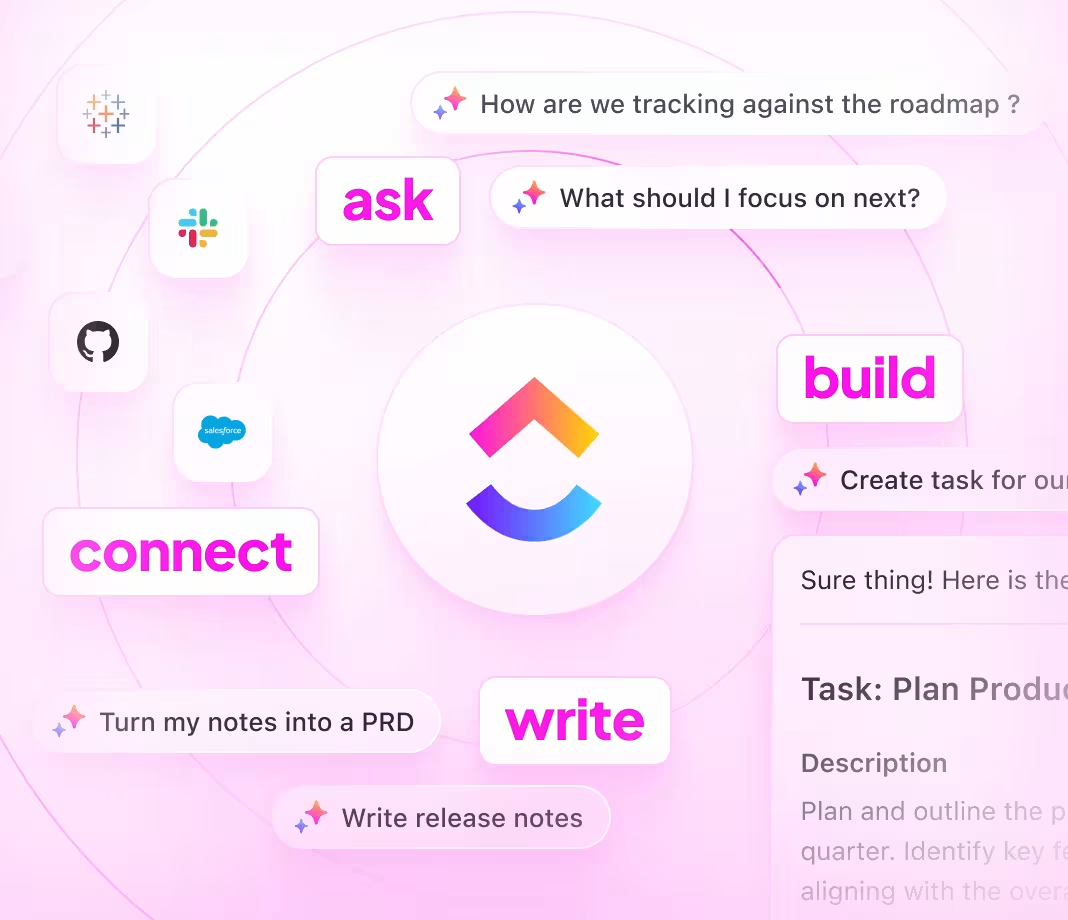
Benefits of ClickUp Knowledge Base
Unlock the power of ClickUp for escalation knowledge management
Ensure escalation standards are clear, consistent, and aligned with your operational goals.
Organize
Structured escalation documentation with ClickUp Docs
- Clear sections: escalation tiers, roles, response steps, contacts
- Navigable tables of contents and nested subpages
- Uniform templates for procedures and communications
Why it matters: Teams find critical information without delay, reducing errors and confusion.

Manage
Accountability through task-linked updates
- Convert documentation gaps into assigned tasks with due dates
- Assign owners for ongoing content review and maintenance
- Monitor documentation progress alongside incident management
Why it matters: Escalation knowledge remains up-to-date, supporting reliable responses.

Connect
Link documentation directly to incidents and workflows
- Attach escalation standards to incident tickets and postmortems
- Synchronize updates with operational changes and feedback
- Use Brain Max AI to summarize incidents and update docs accordingly
Why it matters: Documentation evolves with your environment, ensuring relevance and accuracy.

ClickUp knowledge base for escalation protocols
Frequently Asked Questions




SOC 2
CERTIFIED

ISO 27001
CERTIFIED

GDPR
COMPLIANT

HIPAA
COMPLIANT