Incident Reporting Procedures Knowledge Hub
Establish a Robust Knowledge Base for Incident Reporting Procedures
Centralize your incident workflows, protocols, and escalation paths in one searchable, reliable source—empowering your team to respond swiftly and accurately every time.
 25,000+ reviews from
Trusted by the best
ClickUp vs Conventional Systems
Why ClickUp Excels for Incident Reporting Knowledge Management
Unify knowledge and action in a system designed for rapid response.
Using Traditional Methods
- Incident knowledge scattered across emails and docs, causing delays
- Manual updates prone to errors and outdated info
- Disconnected from actual incident workflows
- Complex permissions lead to redundant copies
- Time-consuming manual documentation and follow-up processes
Leveraging ClickUp
- Integrate incident knowledge with tasks, comments, and workflows
- Automatically convert knowledge gaps into assignable tasks
- Link procedures directly to incident records and resolutions
- Granular access control for internal teams and external partners
- AI-powered drafting, summarizing, and troubleshooting accelerates updates
Blueprint to Build Your Knowledge Base
How to Craft a Knowledge Base for Incident Reporting Procedures?
Follow these 6 essential steps to create a dependable, organized, and up-to-date incident knowledge repository.
1. Identify key users and define incident reporting objectives
- Determine who accesses the knowledge base: responders, managers, auditors
- Clarify the scope: incident types, severity levels, escalation paths
- Assign stakeholders to own content accuracy and updates
2. Develop a clear structure for your incident knowledge base
- Organize content by incident categories, procedures, and roles
- Include sections like detection, reporting, escalation, and resolution
- Ensure easy navigation with tables of contents and cross-links
3. Standardize procedural documentation for consistency
- Use uniform formats for incident types and response steps
- Cover triggers, responsible parties, communication protocols, and follow-up
- Document common pitfalls and mitigation strategies
4. Incorporate real-world scenarios and troubleshooting guides
- Add step-by-step guides for frequent incident cases
- Include diagnostic checklists and error resolution tips
- Centralize lessons learned and post-incident reviews
5. Keep procedures current by linking to incident workflows
- Connect documentation updates to incident reports and change requests
- Embed knowledge base maintenance into incident response cycles
- Ensure all teams access the latest procedures as incidents evolve
6. Securely manage access and maintain ongoing relevance
- Control permissions for sensitive and public information
- Monitor feedback, update cycles, and compliance requirements
- Regularly review content to prevent knowledge decay
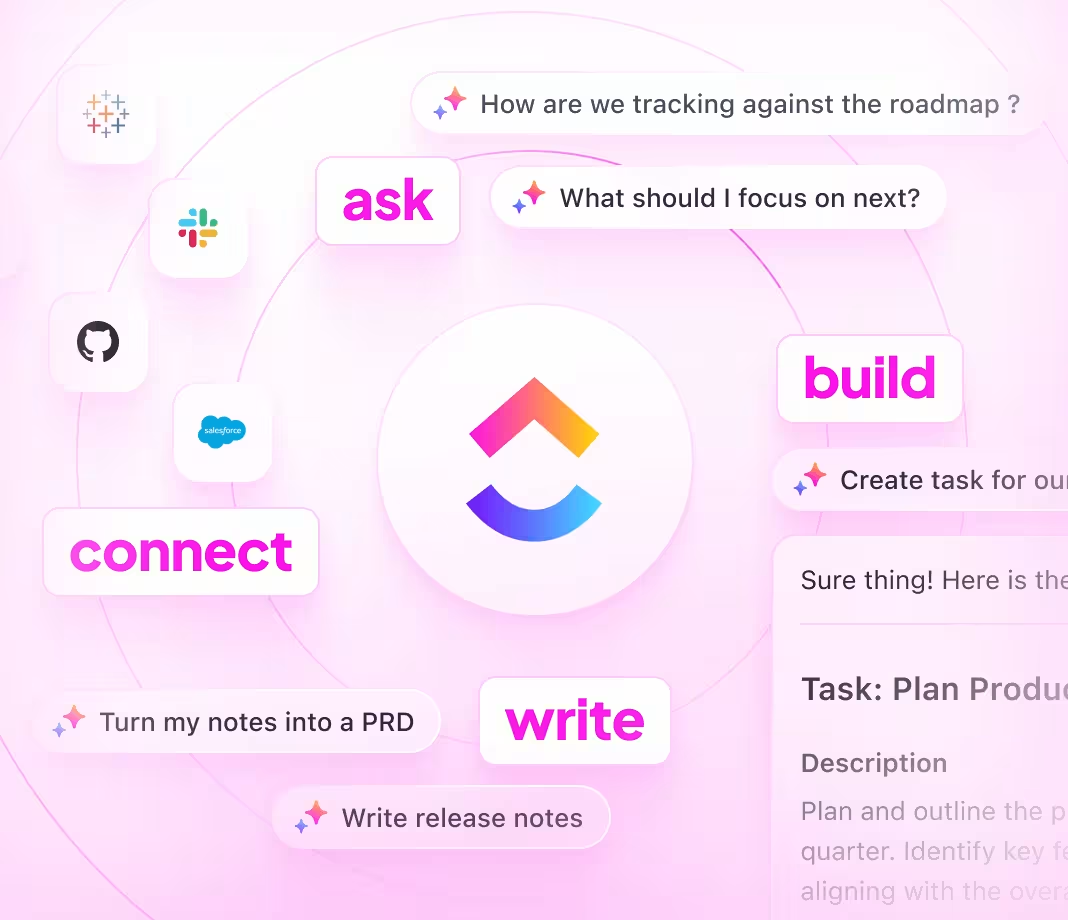
How ClickUp Supports Your Incident Reporting Knowledge Base
Unlock the Power of ClickUp for Incident Knowledge Management
Keep your incident procedures accurate, assigned, and integrated with every response.
Organization
Structured Incident Procedures with ClickUp Docs
- Categorize by incident type, priority, and response phase
- Utilize table of contents and nested pages for clarity
- Apply consistent formatting across all procedure documents
Why it matters: Your team finds critical steps quickly to minimize downtime.

Accountability
Clear Ownership and Tracking of Documentation
- Convert procedural gaps into actionable tasks
- Assign owners, set deadlines, and schedule reviews
- Monitor updates with the same rigor as incident tickets
Why it matters: Procedures stay current because responsibility is transparent.

Integration
Connect Documentation to Incident Workflows
- Link docs directly to incident reports, change logs, and postmortems
- Synchronize updates with evolving incident response plans
- Capture team feedback and support requests within documentation
Why it matters: Procedures evolve alongside your incident management process.

Incident Reporting Knowledge Base FAQs
Your Questions About Incident Knowledge Management Answered




SOC 2
CERTIFIED

ISO 27001
CERTIFIED

GDPR
COMPLIANT

HIPAA
COMPLIANT