Immunology Protocols Knowledge Hub
Streamline Your Immunology Protocols Knowledge Base
Create a centralized, searchable repository for immunology protocols, assay details, reagent databases, and troubleshooting guides—ensuring your team accesses the most current and accurate protocols every time.
 25,000+ reviews from
Trusted by the best
ClickUp vs Traditional Solutions
Elevate Immunology Protocol Management with ClickUp
Centralize knowledge and keep it aligned with your lab workflows.
Traditional Methods
- Protocols scattered across emails, spreadsheets, and documents
- Updates depend on memory and manual communication
- Lack of integration with lab results and experiments
- Permission challenges lead to version confusion
- Time-intensive manual updates and maintenance
Using ClickUp
- Unified platform combining protocol docs, tasks, and comments
- Instantly convert knowledge gaps into actionable tasks
- Link protocols directly to experiments, data, and reports
- Granular permissions for internal teams and collaborators
- AI-powered drafting, summarization, and troubleshooting accelerates updates
Building Your Knowledge Base
How to build a knowledge base for immunology protocols?
Follow this 6-step framework to keep protocols organized, accessible, and current.
1. Identify your users and protocol objectives
- Define researchers, technicians, and collaborators who rely on protocols
- Outline goals: reproducibility, compliance, training, and innovation tracking
- Assign stewards to oversee protocol consistency and updates
2. Design a structured protocol knowledge base
- Develop a clear hierarchy: Overview, Sample Prep, Assays, Analysis, Troubleshooting
- Use subpages for different cell types, reagents, and instrumentation
- Maintain changelogs and version history for regulatory compliance
3. Standardize protocol documentation templates
- Adopt uniform formatting: Purpose, Materials, Methods, Controls, Expected Results
- Include critical parameters like incubation times, temperatures, and concentrations
- Document known pitfalls and troubleshooting tips to reduce errors
4. Integrate practical guides and problem-solving content
- Provide step-by-step workflows for common immunoassays and staining techniques
- Add troubleshooting guides for assay variability and reagent issues
- Centralize protocols for flow cytometry, ELISA, immunohistochemistry, and more
5. Keep protocols synchronized with experiment updates
- Link protocol revisions to experimental results, validation studies, and publications
- Treat documentation as an evolving asset alongside lab research
- Automatically track changes to maintain accuracy and traceability
6. Manage access and continuous protocol refinement
- Set permission levels for internal teams, collaborators, and external reviewers
- Monitor feedback and schedule periodic reviews to uphold quality
- Use AI tools to generate draft updates and summarize findings efficiently
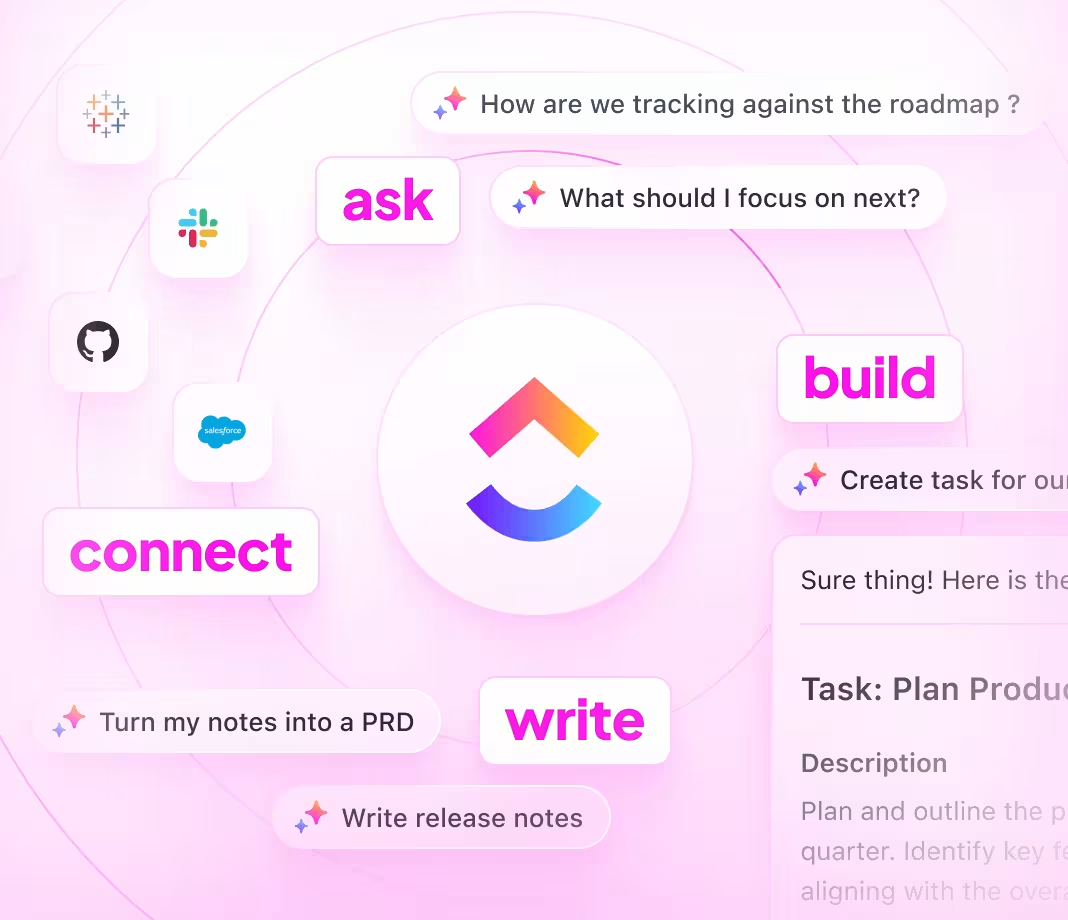
Empowering Labs with ClickUp
Unlock Seamless Immunology Protocol Knowledge Management
Keep your immunology protocols structured, accountable, and connected to every experiment and update.
Organize
Comprehensive Protocol Structure with ClickUp Docs
- Sections for Sample Preparation, Assay Methods, Controls, and Data Analysis
- Table of contents and nested pages for intuitive navigation
- Consistent formatting templates tailored to immunology protocols
Why it matters: Researchers find accurate protocols quickly, reducing experimental variability.

Accountability
Transparent Protocol Ownership and Updates
- Convert protocol gaps into actionable tasks
- Assign protocol owners, set deadlines, and schedule reviews
- Monitor documentation progress alongside research projects
Why it matters: Protocols remain up to date, ensuring reproducibility and compliance.

Synchronize
Protocols Connected to Research Cycles
- Link protocol updates to experiment results and validation data
- Connect revisions to study milestones, incidents, and lab meetings
- Tie feedback from peer reviews and technical support directly to documentation
Why it matters: Protocols evolve with your research, maintaining relevance and accuracy.

ClickUp for Immunology Protocol Knowledge
Frequently Asked Questions




SOC 2
CERTIFIED

ISO 27001
CERTIFIED

GDPR
COMPLIANT

HIPAA
COMPLIANT