Build a Robust Knowledge Base for Fixed Asset Accounting
Create a centralized, searchable repository for policies, procedures, asset registers, depreciation methods, audit trails, and compliance guidelines—so your accounting team accesses the most current information effortlessly.
 25,000+ reviews from
Unlock Efficiency in Fixed Asset Accounting Knowledge Management
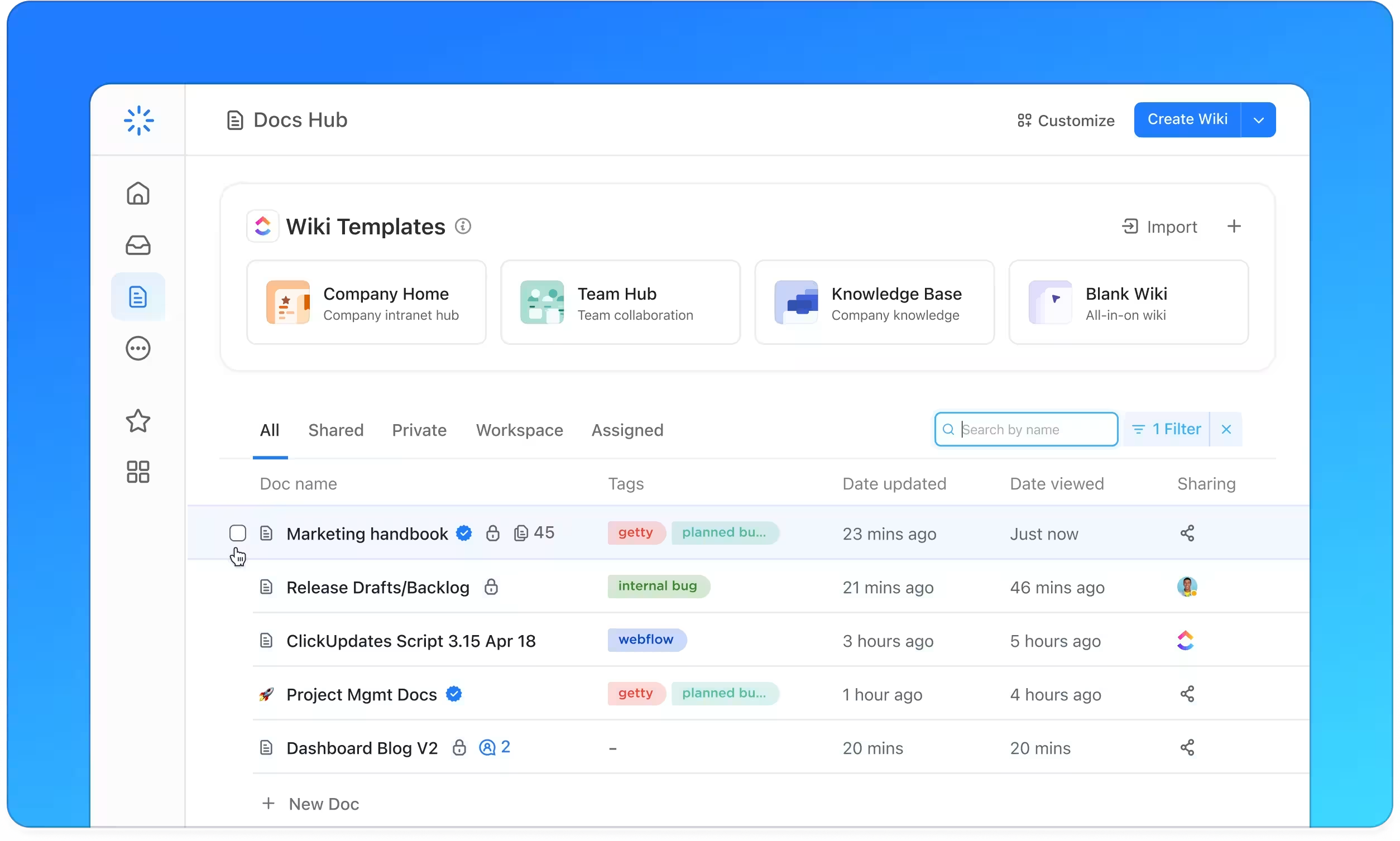
Consolidate your asset accounting knowledge with a platform that grows with your team.
Traditional Approaches
- Asset records and policies scattered across disparate files
- Manual updates increase risk of outdated or inaccurate data
- Limited visibility into asset lifecycle changes
- Access control complexities lead to multiple document versions
- Time-intensive documentation maintenance and audits
With ClickUp Knowledge Base
- Centralize documents, tasks, and communications in one workspace
- Automate updates with AI-powered summaries and task creation
- Link asset policies directly to accounting workflows and audits
- Granular permissions for internal teams, auditors, and external partners
- Streamlined documentation reduces compliance risks and saves time
How to create a knowledge base for fixed asset accounting?
Follow this 6-step framework to ensure your asset accounting knowledge is organized, accurate, and accessible.
1. Identify stakeholders and knowledge objectives
- Define who uses the knowledge base: accountants, auditors, finance managers
- Outline key topics: asset tracking, depreciation schedules, regulatory compliance
- Assign responsibility for content ownership and updates
2. Design a clear knowledge base structure
- Organize by asset types, accounting policies, procedures, and reporting
- Create intuitive navigation with sections for acquisition, valuation, and disposals
- Include regulatory updates and audit documentation sections
3. Standardize documentation templates
- Use consistent formats for asset records, depreciation calculations, and reconciliations
- Cover critical information: asset description, useful life, valuation method, impairments
- Facilitate uniform data entry and reduce errors
4. Incorporate practical accounting guides and troubleshooting
- Develop step-by-step procedures for asset addition, transfers, and disposals
- Provide troubleshooting for common discrepancies and reconciliation issues
- Centralize FAQs on compliance and reporting deadlines
5. Link knowledge to accounting workflows and audits
- Connect documentation to asset management tasks and audit schedules
- Use ClickUp Brain to highlight knowledge gaps and update priorities
- Treat knowledge upkeep as an integral part of financial closing processes
6. Manage access and maintain ongoing accuracy
- Configure permissions for finance teams, external auditors, and management
- Schedule periodic reviews and leverage AI insights for content freshness
- Collect feedback for continuous improvement and regulatory alignment
How ClickUp supports building your fixed asset accounting knowledge base
Ensure your fixed asset documentation stays organized, accountable, and aligned with every financial period.
Structured Fixed Asset Documentation with ClickUp Docs
- Asset categories, acquisition policies, depreciation methods, disposals
- Table of contents with nested subpages for quick navigation
- Standardized templates for asset records and accounting entries
Why it matters: Easily find compliance details and reduce audit preparation time.

Accountability through Trackable Documentation Ownership
- Convert knowledge gaps into actionable tasks
- Assign owners and set review cycles for each documentation piece
- Monitor progress like any financial workflow
Why it matters: Prevents data drift and maintains financial accuracy.

Link Knowledge to Accounting Operations and Audits
- Connect documentation updates to asset management and audit tasks
- Use Brain Max for AI-driven content suggestions and issue detection
- Tie feedback and compliance notes directly to your knowledge base
Why it matters: Keeps documentation aligned with evolving accounting standards.

Frequently Asked Questions