
Experimentation Framework Knowledge Base
Build a Centralized Knowledge Hub for Your Experimentation Framework
Create a dynamic, searchable repository for hypotheses, methodologies, results, and insights—empowering your team to make data-driven decisions with confidence.
 25,000+ reviews from
Trusted by the best
ClickUp vs Traditional Tools
Why ClickUp Transforms Experimentation Framework Knowledge Management
Unify knowledge and execution in one adaptable platform.
With traditional tools
- Experiment data and documentation are siloed, causing delays
- Manual updates lead to outdated or inconsistent information
- Disconnected from ongoing projects and workflows
- Access restrictions create redundant documentation
- Entirely manual processes slow knowledge sharing
With ClickUp
- Centralize experiments, results, and insights alongside tasks and discussions
- Automatically convert documentation gaps into action items
- Link knowledge base entries to real-time projects and analytics
- Granular permissions streamline information sharing
- AI-powered features accelerate content creation and synthesis
Steps to build your knowledge base
How to create a knowledge base for your experimentation framework?
Follow this 6-step process to maintain clarity, consistency, and accessibility across your experimental data.
1. Identify stakeholders and set clear experimentation objectives
- Define who will consult and contribute to the knowledge base
- Outline key goals from hypothesis formulation to outcome analysis
- Assign ownership to ensure ongoing accuracy and relevance
2. Design a logical structure for your experimentation knowledge base
- Develop a centralized hub with intuitive navigation for easy access
- Include sections such as hypotheses, protocols, data sets, results, and learnings
- Ensure changelogs and updates are prominently visible
3. Standardize experiment documentation templates
- Use consistent formats covering objectives, variables, methodologies, and outcomes
- Include sections for controls, metrics, and anticipated impacts
- Document exceptions and anomalies to enhance transparency
4. Incorporate practical guides and troubleshooting resources
- Develop step-by-step instructions for experiment execution
- Provide solutions for common issues and data interpretation
- Centralize best practices and lessons learned for continuous improvement
5. Keep your knowledge base current by linking it to live projects
- Connect documentation updates with active experiments and review cycles
- Treat knowledge management as integral to experiment workflows
- Maintain accuracy as frameworks evolve and scale
6. Implement access controls and regular audits
- Define permissions for internal teams, collaborators, and stakeholders
- Maintain version histories, update logs, and archival practices
- Solicit feedback and conduct periodic reviews to prevent drift
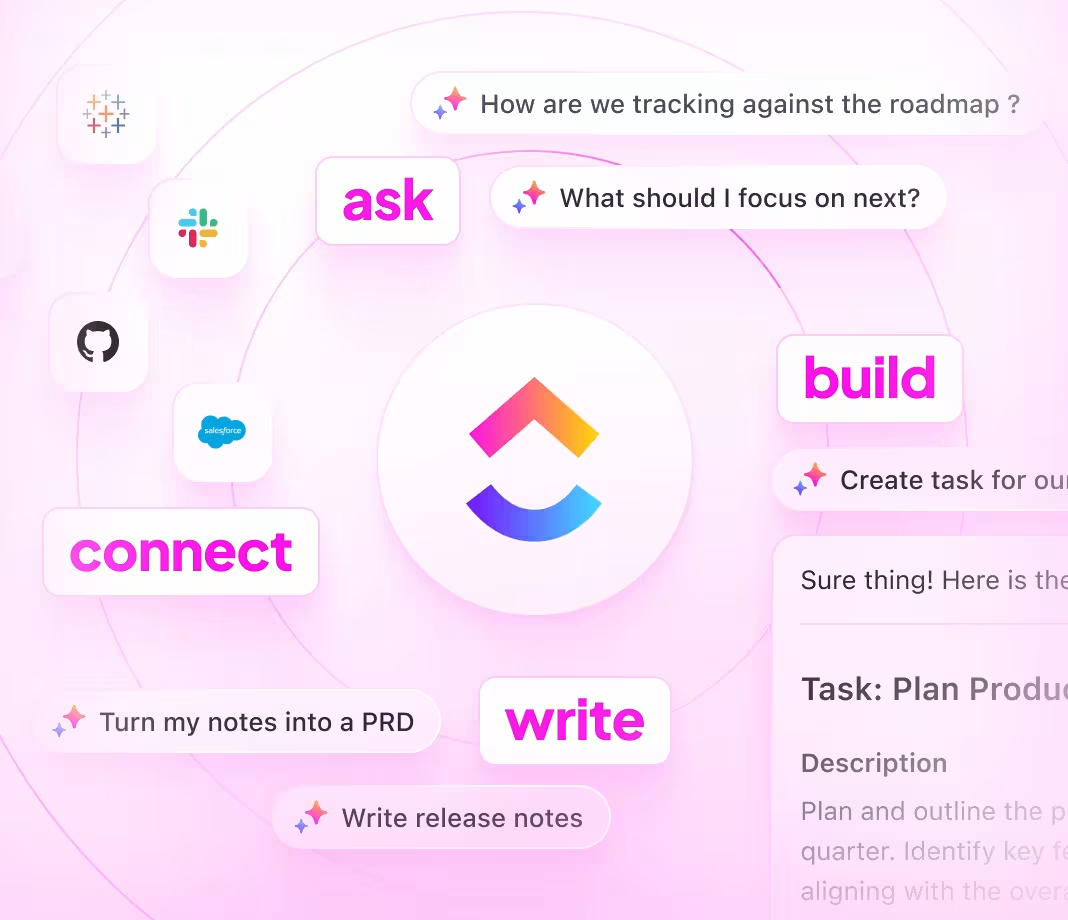
Leverage ClickUp’s advanced capabilities
How ClickUp facilitates building your experimentation knowledge base
Keep your experimentation knowledge structured, collaborative, and aligned with your research cycles.
Organize
Structured Experimentation Documentation with ClickUp Docs
- Hypotheses, Protocols, Data, Results, Learnings
- Table of contents plus subpages for seamless navigation
- Consistent experiment page templates
Why it matters: Teams locate insights quickly, reducing redundant work and accelerating learning.

Manage
Transparent Ownership and Progress Tracking
- Identify gaps and assign action items
- Set owners, deadlines, and periodic reviews
- Monitor documentation as part of experiment workflows
Why it matters: Accountability ensures your knowledge base remains accurate and up to date.

Integrate
Documentation Synced with Experiment Cycles
- Link docs to ongoing experiments and analysis phases
- Connect anomalies, insights, and retrospectives
- Capture feedback and update protocols accordingly
Why it matters: Documentation evolves with your framework, supporting continuous improvement.

ClickUp for Experimentation Framework Knowledge Base
Frequently Asked Questions


SOC 2
CERTIFIED

ISO 27001
CERTIFIED

GDPR
COMPLIANT

HIPAA
COMPLIANT