
Build a Robust Knowledge Base for Executive Reporting Standards
Create a centralized, searchable repository for reporting frameworks, data definitions, governance policies, and update protocols—ensuring executives always access a trusted source of truth.
 25,000+ reviews from
Why ClickUp Transforms Executive Reporting Knowledge Management
Consolidate your reporting standards into a dynamic hub that grows with your leadership needs.
Traditional reporting tools
- Reporting standards scattered across emails, spreadsheets, and docs
- Manual updates cause inconsistent and outdated reports
- Lack of integration with actual data workflows
- Access controls lead to redundant copies and version confusion
- Time-consuming collaboration and approval cycles
Using ClickUp for reporting standards
- Centralizes documentation, workflows, and collaboration in one platform
- Leverages ClickUp Brain and Brain Max to automate updates and surface insights
- Links standards directly to reporting tasks and data sources
- Granular permissions for executives, analysts, and stakeholders
- AI-powered drafting, summarization, and error detection accelerate accuracy
How to Create an Executive Reporting Standards Knowledge Base
Follow these 6 focused steps to organize, maintain, and scale your reporting knowledge effectively.
1. Clarify your executive reporting objectives and audience
- Define key reports, metrics, and compliance requirements
- Identify report consumers and their decision-making needs
- Assign clear ownership to maintain consistency and accountability
2. Design a structured knowledge base tailored to reporting standards
- Organize content into core sections: frameworks, data definitions, report templates, governance
- Implement intuitive navigation with tables of contents and subpages
- Include version histories and change logs for traceability
3. Standardize reporting templates and documentation formats
- Use consistent templates for report designs and data definitions
- Document methodologies, data sources, and calculation logic
- Incorporate compliance and validation criteria to reduce errors
4. Develop practical guides and troubleshooting protocols
- Create how-to guides for report generation and validation
- Outline common pitfalls and resolution steps
- Centralize escalation paths and communication protocols
5. Synchronize knowledge base updates with reporting cycles
- Connect documentation revisions to report releases and audit findings
- Treat knowledge updates as integral to reporting workflows
- Maintain alignment with evolving business and regulatory needs
6. Manage secure access and continuous improvement
- Set role-based permissions for executives, analysts, and auditors
- Monitor feedback, conduct regular reviews, and update content proactively
- Leverage ClickUp analytics to track usage and identify gaps
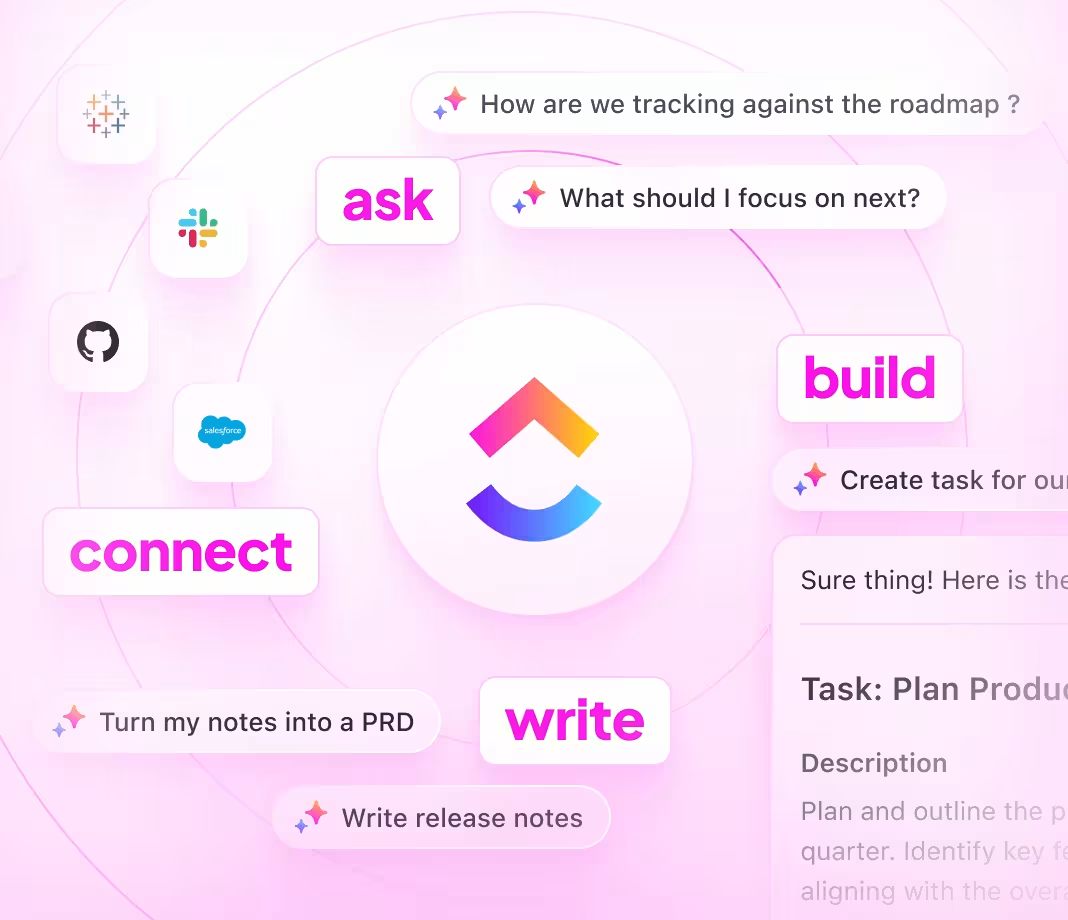
Unlock the Power of ClickUp for Executive Reporting Standards
Maintain structured, owned, and synchronized reporting standards aligned with every reporting cycle.
Structured Reporting Standards with ClickUp Docs
- Frameworks, Data Definitions, Templates, Governance
- Table of contents and nested subpages for effortless navigation
- Uniform template formats for clarity and consistency
Why it matters: Executives and analysts find precise information swiftly, reducing report preparation time.

Accountable Ownership and Work Tracking
- Identify content gaps and convert them into actionable tasks
- Assign clear owners, set deadlines, and schedule regular reviews
- Track documentation progress alongside reporting workflows
Why it matters: Accountability ensures knowledge stays current and reliable over time.

Documentation Linked to Reporting Processes
- Connect standards to reporting releases, audits, and compliance updates
- Link incidents and data quality issues for continuous improvement
- Incorporate stakeholder feedback directly into documentation
Why it matters: Keeps knowledge aligned with evolving reporting requirements and business objectives.

Your Questions About ClickUp and Executive Reporting




