Enterprise Asset Management Knowledge Base
Build a Robust Knowledge Base for Enterprise Asset Management
Create a centralized, searchable resource for asset records, maintenance schedules, compliance protocols, and troubleshooting—so your team always accesses up-to-date operational insights.
 25,000+ reviews from
Trusted by the best
ClickUp vs Traditional Asset Management Tools
Why ClickUp Transforms Enterprise Asset Management Knowledge
Develop one unified platform that evolves with your asset operations.
Traditional asset management tools
- Asset data and maintenance knowledge reside in separate silos, causing delays
- Manual updates increase risk of outdated information
- Lack of integration with real-time asset status and workflows
- Access controls often require duplicating data for different teams
- Processes are largely manual and error-prone, extending downtime
Using ClickUp for asset management knowledge
- Combines knowledge base with task and workflow management in one space
- AI-powered insights with ClickUp Brain and Brain Max accelerate updates
- Links documentation directly to asset lifecycle events and incidents
- Granular permission settings secure internal and external knowledge
- Automated reminders and AI drafts reduce manual effort and improve accuracy
Building Your Asset Knowledge Base
How to create a knowledge base for enterprise asset management
Follow this 6-step approach to keep asset information comprehensive, accessible, and actionable.
1. Identify stakeholders and define asset knowledge goals
- Determine who uses asset data: maintenance, operations, compliance
- Outline key information: asset specs, maintenance logs, compliance checklists
- Assign clear ownership for knowledge updates and quality
2. Design an intuitive knowledge base structure
- Organize by asset categories, locations, and maintenance types
- Include sections for standard operating procedures, troubleshooting, and safety
- Establish clear navigation with tables of contents and linked subpages
3. Standardize asset documentation templates
- Use consistent formats for asset profiles including specs, warranties, and maintenance history
- Document workflows for inspections, repairs, and incident response
- Capture common failure modes and mitigation steps to reduce repeat issues
4. Incorporate practical guides and real-time troubleshooting
- Develop step-by-step maintenance and repair guides
- Include troubleshooting flowcharts and error codes for quick resolution
- Centralize vendor contacts and escalation procedures
5. Keep knowledge synchronized with asset lifecycle events
- Link documentation updates to maintenance schedules, incidents, and asset upgrades
- Treat the knowledge base as a living document integrated with operational workflows
- Use ClickUp's AI to automate changelog creation and update summaries
6. Manage access and continuously improve the knowledge base
- Set permissions for internal teams, contractors, and partners
- Regularly review content accuracy and incorporate feedback
- Leverage ClickUp Brain Max for AI-driven content optimization
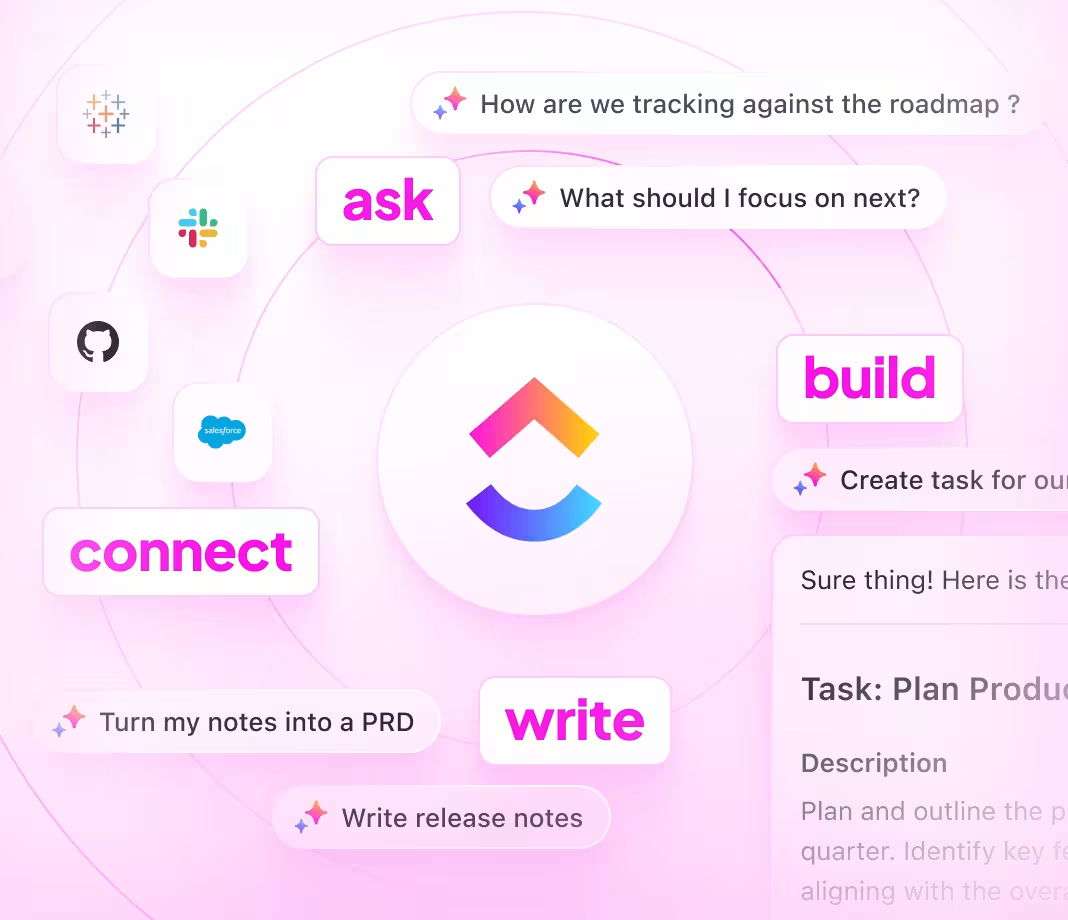
Leverage ClickUp’s Knowledge Base Features
Empowering Enterprise Asset Management with ClickUp
Keep asset information structured, accountable, and aligned with every operational update.
Organize
Comprehensive Asset Documentation with ClickUp Docs
- Asset profiles, maintenance procedures, compliance checklists
- Nested pages and tables of contents for easy navigation
- Standardized templates for consistency
Why it matters: Teams locate critical asset data quickly, minimizing downtime and errors.

Manage
Accountable Knowledge Ownership
- Convert knowledge gaps into assigned tasks
- Set owners, deadlines, and review cycles
- Track documentation progress alongside maintenance workflows
Why it matters: Your knowledge base remains accurate and reliable through clear accountability.

Integrate
Dynamic Documentation Linked to Asset Events
- Connect docs to maintenance schedules, incident reports, and asset upgrades
- Link feedback and support tickets to knowledge updates
- Use AI to summarize operational data into clear documentation
Why it matters: Documentation evolves in step with your assets, reducing information lag.

Enterprise Asset Management Knowledge Base
Common Questions About Building an Asset Knowledge Base




SOC 2
CERTIFIED

ISO 27001
CERTIFIED

GDPR
COMPLIANT

HIPAA
COMPLIANT