Employee Role Expectations Knowledge Base
Streamline Your Employee Role Expectations Knowledge Hub
Create a centralized, searchable resource outlining clear role expectations, responsibilities, and growth paths—so every team member knows exactly what success looks like.
 25,000+ reviews from
Trusted by the best
ClickUp vs Traditional Tools
Why ClickUp Transforms Employee Role Expectations Management
Unify knowledge and execution to empower your workforce.
Using traditional tools
- Role details scattered across emails and documents, leading to confusion
- Updates depend on manual tracking and inconsistent communication
- Lack of integration with daily workflows causes outdated information
- Permission silos create redundant documents for different teams
- Entirely manual processes slow down onboarding and role clarity
Using ClickUp
- Centralized Docs linked to tasks and comments for dynamic knowledge
- Automated task creation to address content gaps and updates
- Role expectations integrated directly with team workflows and projects
- Granular access controls for internal teams and external collaborators
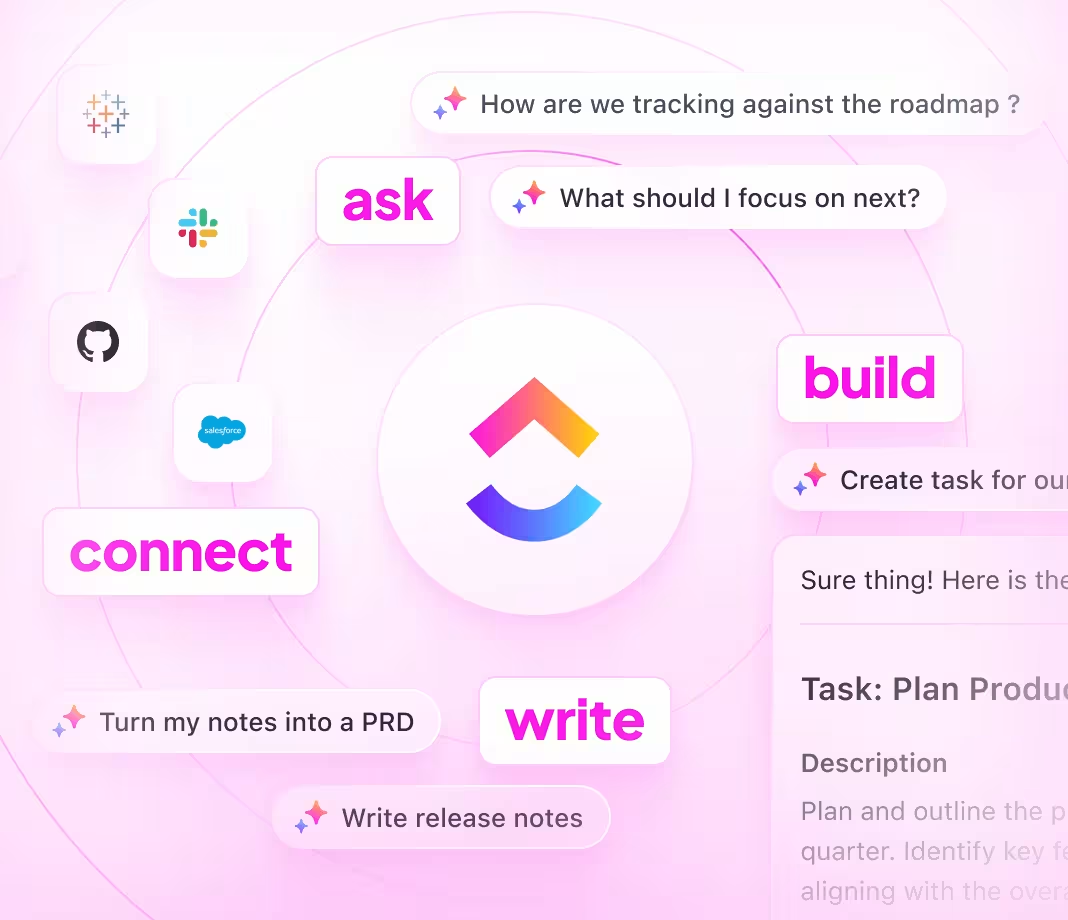
- AI-powered assistance accelerates content creation and maintenance
Building Your Knowledge Base
How to Develop a Knowledge Base for Employee Role Expectations
Follow these 6 strategic steps to keep role expectations clear, accessible, and current.
1. Identify stakeholders and define role expectation objectives
- Determine who will reference the knowledge base (employees, managers, HR)
- Clarify the goals: clarity, consistency, accountability
- Assign ownership to maintain accuracy over time
2. Design a clear, intuitive structure for role expectations
- Organize by department, role level, and function
- Include sections for responsibilities, skills, KPIs, and career paths
- Ensure easy navigation through tables of contents and subpages
3. Standardize role expectation templates for uniformity
- Use consistent formats covering objectives, competencies, and performance criteria
- Provide examples and measurable outcomes
- Reduce ambiguity and promote fairness
4. Incorporate real-world scenarios and best practices
- Add examples of successful role execution
- Include troubleshooting advice for common challenges
- Share tips for continuous improvement
5. Link role expectations to ongoing projects and reviews
- Connect documentation updates to performance cycles and training initiatives
- Treat knowledge maintenance as part of regular workflows
- Keep information synchronized with organizational changes
6. Secure knowledge base access and encourage feedback
- Manage permissions for employees, managers, and HR
- Regularly gather input for updates and improvements
- Schedule periodic reviews to prevent outdated content
Empowering Role Expectation Management
Unlock Clarity with ClickUp’s Knowledge Base
Stay ahead by keeping role expectations structured, visible, and adaptable across your organization.
Structure
Organized Role Expectations with ClickUp Docs
- Departments, roles, competencies, objectives
- Intuitive tables of contents and nested pages
- Uniform templates for all roles
Why it matters: Clear expectations reduce confusion and boost performance.

Track
Accountability Through Trackable Ownership
- Convert gaps into actionable tasks
- Assign owners, deadlines, and review cycles
- Manage updates as part of team workflows
Why it matters: Ensures role expectations remain accurate and trusted.

Document
Dynamic Documentation Linked to Team Progress
- Connect role expectations to performance reviews and projects
- Integrate feedback, training, and development plans
- Use AI to draft, summarize, and update content
Why it matters: Keeps expectations relevant as roles evolve.

ClickUp Knowledge Base for Employee Roles
Your Questions About Role Expectations Management




SOC 2
CERTIFIED

ISO 27001
CERTIFIED

GDPR
COMPLIANT

HIPAA
COMPLIANT