
Emergency Management Knowledge Hub
Build a Centralized Knowledge Base for Emergency Management Plans
Create a unified, searchable resource for protocols, response strategies, contacts, and incident logs—ensuring your team accesses the most current emergency information anytime.
 25,000+ reviews from
Trusted by the best
ClickUp vs Traditional Methods
Why ClickUp Transforms Emergency Management Knowledge Bases
Consolidate knowledge and action in one scalable platform.
Traditional approaches
- Emergency plans scattered across multiple files and systems
- Manual updates prone to errors and delays
- Disconnected from real-time incident management
- Limited access control leads to outdated or conflicting versions
- Time-consuming collaboration and revision processes
Using ClickUp
- Integrates knowledge with workflows (Docs, tasks, comments)
- Automates review cycles with AI assistance (ClickUp Brain, Brain Max)
- Links plans directly to incidents and drills for relevancy
- Granular permissions for teams, partners, and stakeholders
- Accelerates updates and collaboration with ClickUp 4.0 enhancements
Building Your Knowledge Base
Steps to Develop an Emergency Management Knowledge Base
Follow this 6-step process to organize, maintain, and optimize your emergency plans.
1. Identify stakeholders and emergency response objectives
- Define who will use the knowledge base (first responders, coordinators, staff)
- Establish goals for accessibility, update frequency, and compliance
- Assign clear ownership to maintain accountability
2. Design a logical and consistent knowledge base framework
- Structure sections for preparedness, response, recovery, and mitigation
- Include key areas like contact lists, resource inventories, protocols, and training materials
- Use clear navigation with subpages and linked documents
3. Standardize document templates for uniformity
- Create templates for plans, checklists, and reports
- Include critical information like roles, timelines, and communication protocols
- Ensure clarity to minimize confusion during high-pressure situations
4. Integrate real-world scenarios and lessons learned
- Document incident after-action reports and best practices
- Add troubleshooting guides for common challenges
- Centralize drills, exercises, and evaluation materials
5. Keep content current by linking updates to operational activities
- Connect plan revisions to drills, incidents, and regulatory changes
- Treat documentation as an ongoing operational priority
- Use ClickUp AI to summarize changes and highlight impacts
6. Manage permissions and foster continuous improvement
- Set access controls for internal teams, external partners, and public agencies
- Schedule regular reviews and incorporate feedback
- Leverage analytics to identify knowledge gaps and update needs
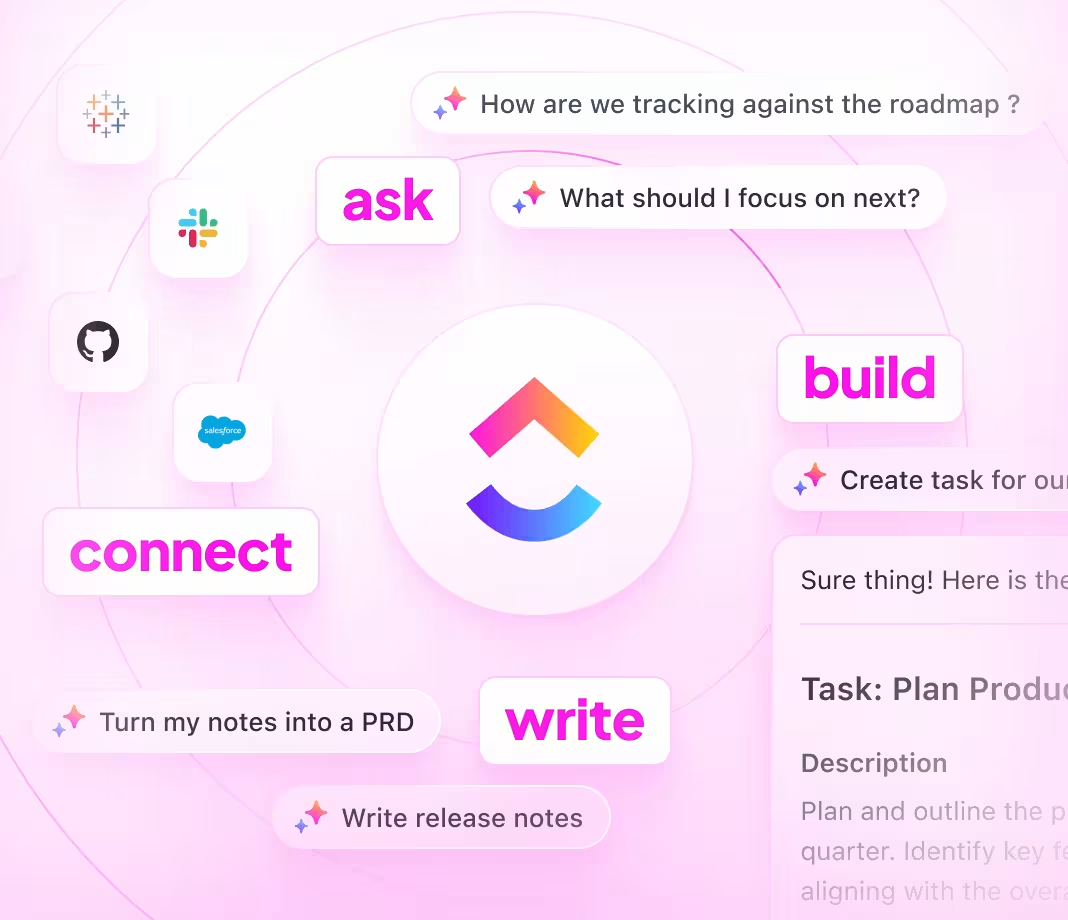
Empowering Your Emergency Response
How ClickUp Strengthens Emergency Management Knowledge
Ensure your plans are structured, accountable, and synchronized with every operational update.
Organize
Comprehensive Structure with ClickUp Docs
- Preparedness, Response, Recovery, Mitigation sections
- Intuitive table of contents with nested subpages
- Standardized templates for plans and protocols
Why it matters: Teams find critical information quickly, reducing response times and errors.

Accountability
Clear Ownership and Tracking
- Convert knowledge gaps into actionable tasks
- Assign owners, set deadlines, and schedule reviews
- Monitor progress alongside operational work
Why it matters: Your knowledge base stays accurate because responsibility is transparent and managed.

Integration
Dynamic Documentation Linked to Operations
- Connect plans to incidents, drills, and after-action reports
- Link updates to regulatory changes and feedback
- Use AI tools to generate summaries and troubleshoot guides
Why it matters: Documentation evolves with your operations, ensuring readiness and compliance.

Emergency Management Knowledge Base FAQs
Common Questions Answered


SOC 2
CERTIFIED

ISO 27001
CERTIFIED

GDPR
COMPLIANT

HIPAA
COMPLIANT