Documentation Audit Process Knowledge Base
Elevate Your Documentation Audit Process with a Centralized Knowledge Hub
Create a unified, easily navigable repository for audit standards, checklists, findings, and remediation plans—ensuring your team always accesses the most accurate and current information.
 25,000+ reviews from
Trusted by the best
ClickUp vs Traditional Audit Tools
Why ClickUp Outperforms Traditional Solutions for Documentation Audits
Manage your audit knowledge seamlessly alongside execution.
With traditional tools
- Audit insights scattered across disconnected platforms
- Manual updates lead to outdated findings and recommendations
- Documentation detached from corrective tasks
- Rigid permissions cause duplication and confusion
- Time-consuming manual tracking of audit progress
With ClickUp
- Integrate knowledge and audit actions in one workspace (Docs + tasks + comments)
- Instantly convert audit gaps into actionable tasks
- Link documentation findings directly to remediation efforts
- Granular access controls for audit teams, stakeholders, and external partners
- AI-powered features accelerate report generation, summaries, and trend analysis
Steps to build your audit knowledge base
How to develop a documentation audit knowledge base with ClickUp
Follow this 6-step approach to maintain structured, accessible, and up-to-date audit documentation.
1. Identify audit objectives and key users
- Define who will utilize the knowledge base (auditors, managers, compliance teams)
- Outline the scope and goals of the documentation audit process
- Designate ownership to ensure ongoing accuracy and relevance
2. Establish a clear knowledge base layout
- Create a centralized hub with intuitive navigation tailored to audit workflows
- Include essential sections like audit criteria, checklists, previous reports, and remediation guidelines
- Organize historical audit data and version control for transparency
3. Standardize audit documentation templates
- Develop consistent templates for audit findings and recommendations
- Ensure uniformity across all audit reports to simplify review and comparison
- Cover critical fields such as risk assessment, evidence, and follow-up actions
4. Incorporate practical guides and troubleshooting protocols
- Provide step-by-step instructions for common audit scenarios
- Document resolution procedures for frequently identified issues
- Centralize escalation pathways and compliance checklists
5. Keep audit records current by linking to ongoing actions
- Connect documentation updates to task completions, incident reports, and process changes
- Integrate audit cycles into regular operational workflows
- Ensure continuous alignment between documentation and organizational standards
6. Control access and enforce regular reviews
- Set permission levels for internal auditors, external reviewers, and stakeholders
- Schedule periodic reviews and feedback collection
- Maintain changelogs and audit trails to support compliance audits
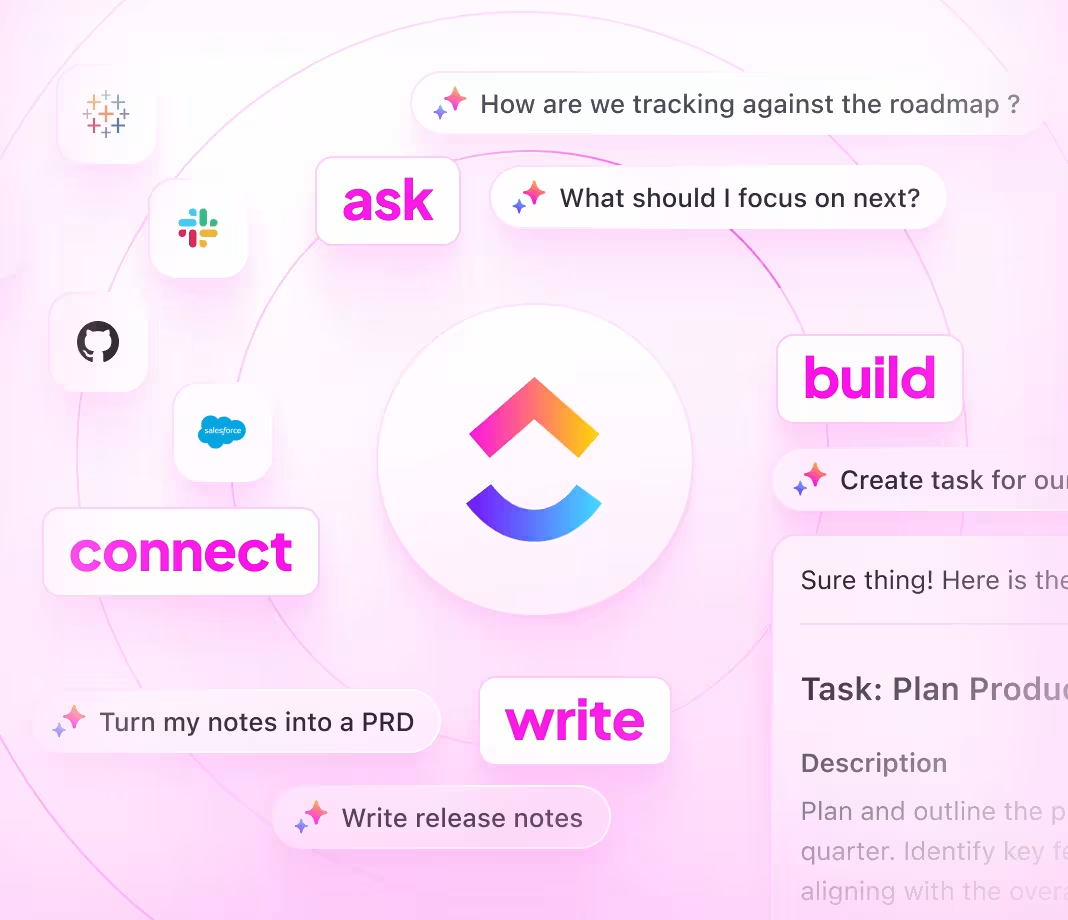
Empowering Audit Teams with ClickUp
Unlock Efficiency in Documentation Audits with ClickUp
Ensure your audit documentation is comprehensive, accountable, and synchronized with every review cycle.
Organize
Structured Audit Knowledge with ClickUp Docs
- Audit criteria, checklists, findings, remediation plans
- Table of contents with nested pages for easy navigation
- Standardized templates for consistent documentation
Why it matters: Teams locate critical audit information quickly, reducing delays and errors.

Accountability
Transparent Ownership and Progress Tracking
- Convert audit findings into assigned tasks
- Set responsible owners, deadlines, and review schedules
- Monitor audit documentation status alongside operational initiatives
Why it matters: Documentation remains accurate and actionable through clear accountability.

Integration
Seamless Connection Between Documentation and Audit Actions
- Link audit docs to remediation tasks and compliance checks
- Tie findings to incident reports and process improvements
- Use feedback loops to refine audit processes continuously
Why it matters: Audit documentation evolves with your organization’s compliance landscape.

ClickUp for Documentation Audit Process
Common Questions About Building an Audit Knowledge Base




SOC 2
CERTIFIED

ISO 27001
CERTIFIED

GDPR
COMPLIANT

HIPAA
COMPLIANT