
Crisis Management Playbooks Knowledge Base
Build a Resilient Knowledge Base for Crisis Management Playbooks
Create a centralized, searchable repository for protocols, response strategies, contact lists, and real-time updates—so your team reacts swiftly and confidently in any crisis.
 25,000+ reviews from
Trusted by the best
ClickUp vs Traditional Tools
Why ClickUp Transforms Crisis Management Knowledge Bases
Develop a unified resource that evolves with your emergency response needs.
With traditional tools
- Crisis plans scattered across disconnected platforms
- Manual updates lead to outdated or inaccessible protocols
- Lack of integration between knowledge and actionable tasks
- Difficulties managing permissions across teams and stakeholders
- Time-consuming to maintain and update during high-pressure situations
With ClickUp
- Knowledge and execution live side-by-side (Docs, tasks, comments)
- Instantly convert knowledge gaps into assigned action items
- Link playbooks directly to incident tasks and updates
- Granular access controls for internal teams, partners, and public info
- AI-powered tools expedite content creation, summarization, and troubleshooting
Steps to create your knowledge base
How to build a knowledge base for crisis management playbooks?
Follow this 6-step approach to keep critical protocols organized, accessible, and actionable under pressure.
1. Identify stakeholders and define crisis response objectives
- Determine who needs access to playbooks and why
- Outline the stages of crisis response from detection to resolution
- Assign clear ownership for content creation and updates
2. Design a clear and intuitive knowledge base structure
- Create central hubs for different crisis types (natural disasters, IT incidents, PR emergencies)
- Include sections for protocols, communication templates, escalation paths, and resources
- Ensure easy navigation with tables of contents and subpages
3. Standardize playbook pages for consistency and clarity
- Use uniform formats covering situation overview, roles, actions, timelines, and resources
- Incorporate checklists and decision trees to guide responders
- Document communication protocols and approval workflows
4. Include real-time guides and troubleshooting procedures
- Develop how-to instructions for common crisis scenarios
- Add troubleshooting steps for frequent issues and decision bottlenecks
- Centralize contact information and escalation procedures
5. Keep playbooks current by linking updates to incident reviews
- Connect documentation updates to debriefs, lessons learned, and change requests
- Treat playbook maintenance as an ongoing part of crisis management
- Use ClickUp Brain and Brain Max to synthesize feedback and identify knowledge gaps
6. Control access and continuously improve knowledge base quality
- Set permissions for internal teams, external partners, and stakeholders
- Regularly review content to ensure relevance and accuracy
- Collect user feedback and adapt playbooks using AI-powered insights
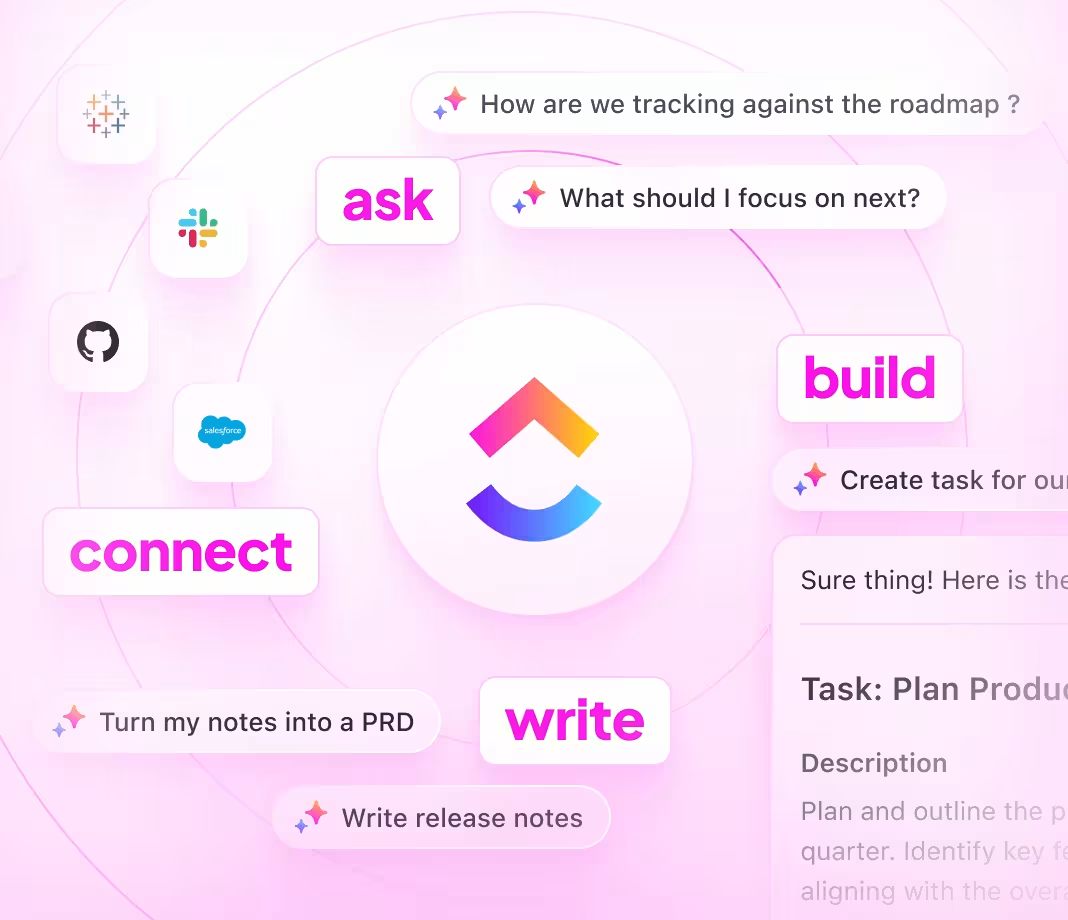
Leveraging ClickUp Capabilities
How ClickUp supports crisis management knowledge bases
Maintain structured, accountable, and integrated playbooks that adapt to evolving crisis scenarios.
Organize
Structured Crisis Playbooks with ClickUp Docs
- Categorize by crisis type, severity, and response phase
- Use tables of contents and nested pages for clarity
- Apply consistent layouts with action steps and role assignments
Why it matters: Teams find critical information quickly, reducing response times.

Accountability
Transparent Documentation Ownership and Progress Tracking
- Convert knowledge gaps into tasks with assigned owners and due dates
- Schedule regular reviews and updates
- Monitor documentation progress alongside incident response activities
Why it matters: Playbooks remain accurate and actionable when ownership is clear.

Integration
Connected Playbooks Tied to Real-Time Incident Management
- Link protocol updates to incident logs, postmortems, and change requests
- Associate tasks with specific crisis responses for contextual clarity
- Use AI-powered summaries to extract key learnings and update content
Why it matters: Documentation evolves with your organization's crisis landscape.

ClickUp knowledge base for crisis management
Your Crisis Management FAQs


SOC 2
CERTIFIED

ISO 27001
CERTIFIED

GDPR
COMPLIANT

HIPAA
COMPLIANT