Construct a Robust Knowledge Base for Container Security Practices
Centralize your container security guidelines, best practices, vulnerability management, and compliance protocols in one searchable destination—empowering your team with up-to-date, actionable insights.
 25,000+ reviews from
Why ClickUp Excels for Container Security Knowledge Management
Develop a unified source of truth that evolves with your security landscape.
Traditional container security tools
- Security knowledge scattered across multiple systems, leading to outdated info
- Manual updates dependent on memory and email follow-ups
- Documentation disconnected from actual container deployment and incident workflows
- Rigid access controls cause redundant document versions for different teams
- Entirely manual processes causing slow documentation refreshes
Leveraging ClickUp for container security
- Integrates security knowledge with operational tasks and incident responses
- Convert documentation gaps directly into assigned remediation tasks
- Link security policies and best practices to deployment pipelines and vulnerability reports
- Granular permissions for internal teams, partners, and auditors
- AI-powered drafting, summarization, and troubleshooting guidance accelerate updates
How to build a container security practices knowledge base?
Follow this 6-step framework to maintain structured, searchable, and current security documentation.
1. Identify stakeholders and objectives for your security knowledge base
- Define who needs access: DevOps, security engineers, auditors
- Outline goals from vulnerability tracking to compliance adherence
- Assign ownership to ensure continuous content accuracy
2. Design an intuitive structure for container security content
- Create a centralized hub with clear navigation: Policies, Vulnerabilities, Compliance, Incident Response
- Organize subpages for runtime security, image scanning, network policies
- Ensure changelogs and updates are easy to locate
3. Standardize documentation templates for security procedures
- Use uniform formats for vulnerability reports, patch instructions, and audit checklists
- Include sections on scope, mitigation steps, validation, and rollback
- Document common failure scenarios to reduce repetitive queries
4. Incorporate practical guides and troubleshooting workflows
- Develop step-by-step remediation playbooks
- Add troubleshooting for container runtime errors and security alerts
- Centralize best practices for policy enforcement and incident handling
5. Keep your knowledge base current by linking it to security events
- Connect documentation updates to vulnerability disclosures, patch releases, and incident reviews
- Treat documentation as part of your continuous security operations
- Monitor and update content as container environments evolve
6. Control access and regularly maintain your security knowledge base
- Define permissions for internal teams, external auditors, and partners
- Maintain audit logs, compliance records, and migration guides
- Gather feedback and schedule reviews to prevent knowledge decay
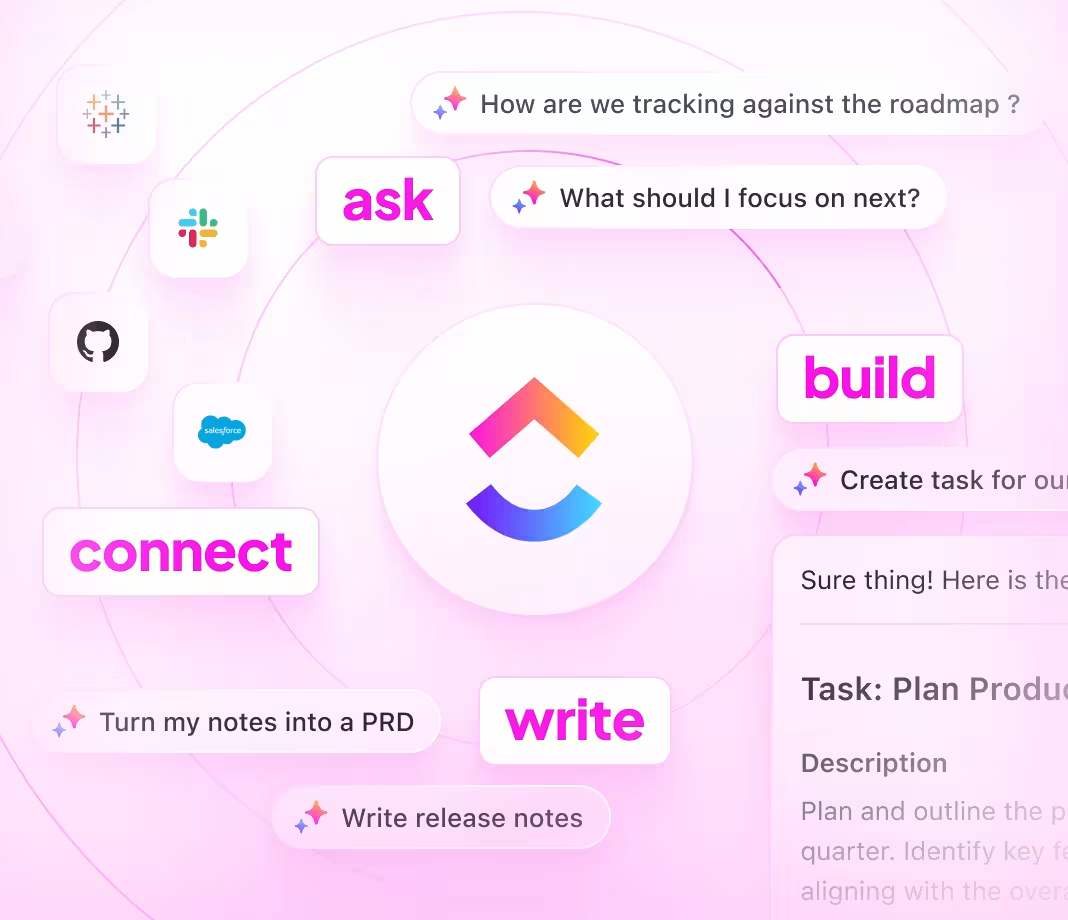
How ClickUp empowers your container security knowledge base
Keep your security documentation structured, assigned, and synchronized with every deployment and incident.
Structured Security Documentation with ClickUp Docs
- Segments for Policies, Vulnerabilities, Compliance, Incidents
- Table of contents with organized subpages for clarity
- Consistent templates for vulnerability and incident reporting
Why it matters: Teams find critical security information faster, reducing response times and errors.

Clear Ownership and Accountability Tracking
- Convert knowledge gaps into actionable tasks
- Assign document owners, set review cycles, and deadlines
- Monitor documentation progress alongside security workflows
Why it matters: Your knowledge base remains accurate because responsibility is embedded into daily operations.

Connected Documentation Across Security Workflows
- Link docs to container deployment updates, patches, and incident reports
- Tie bugs, security alerts, and postmortems to relevant knowledge entries
- Incorporate feedback loops from security teams and compliance officers
Why it matters: Documentation evolves in real time with your container security posture.

Common Questions About Container Security Documentation






