Build a Dynamic Knowledge Base for Churn Classification Rules
Create a centralized, searchable repository for churn criteria, data signals, classification logic, and updates—so your team always accesses the most accurate churn insights.
 25,000+ reviews from
Why Choose ClickUp for Your Churn Classification Knowledge Base
Develop a unified platform that evolves with your analytics and retention strategies.
With traditional tools
- Churn rules scattered across spreadsheets and docs, causing version conflicts
- Manual updates prone to delays and errors
- Disconnected from live customer data and retention workflows
- Limited permissions complicate collaboration across teams
- Entirely manual process slows iteration and responsiveness
With ClickUp
- Integrate churn knowledge with active projects (Docs, tasks, and comments)
- Automatically assign and track updates with ClickUp Brain AI
- Link classification rules directly to customer data pipelines and alerts
- Granular access controls for data scientists, marketers, and executives
- AI-assisted drafting and summarization accelerates maintenance
How to establish a knowledge base for churn classification rules
Follow this 6-step framework to maintain clarity, accuracy, and agility in churn insights.
1. Identify stakeholders and churn analysis objectives
- Define who uses the churn rules (analysts, retention teams, executives)
- Clarify the business goals behind churn classification
- Assign owners responsible for upkeep and accuracy
2. Design a clear, scalable knowledge base structure
- Organize sections for data sources, rule definitions, thresholds, and decision logic
- Include documentation of related signals and metrics
- Ensure easy navigation with tables of contents and subpages
3. Standardize churn rule documentation for consistency
- Use uniform templates outlining rule purpose, inputs, conditions, and outputs
- Document assumptions, data refresh cadence, and performance metrics
- Capture edge cases and exceptions to reduce ambiguity
4. Incorporate practical guides and troubleshooting protocols
- Provide step-by-step instructions for rule updates and validation
- Document common classification errors and remediation steps
- Include case studies and retention action triggers
5. Sync knowledge base updates with churn model releases
- Link documentation changes to model deployment tasks and data pipeline updates
- Treat knowledge base maintenance as part of the release workflow
- Keep content current as churn logic evolves
6. Manage access and continuously improve the knowledge base
- Set role-based permissions for sensitive data and rule editing
- Collect feedback and schedule periodic reviews
- Leverage ClickUp Brain Max AI to analyze usage and suggest enhancements
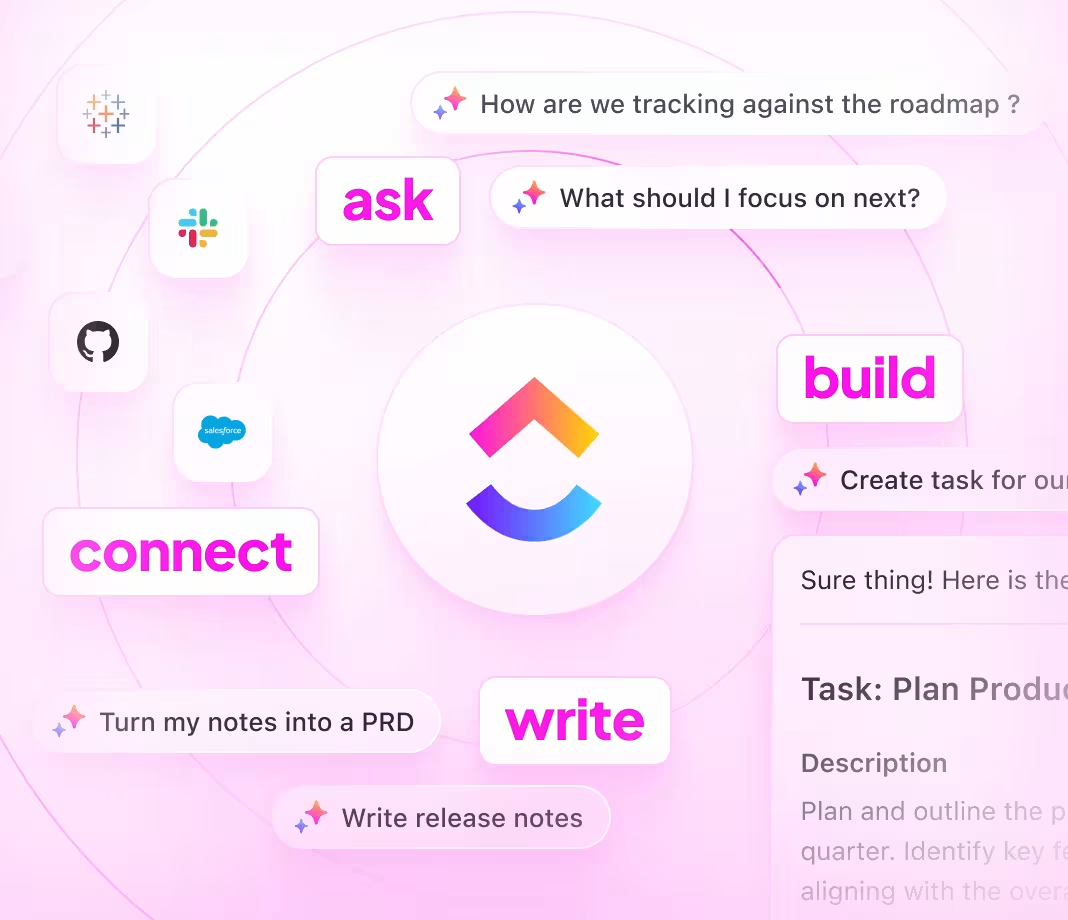
How ClickUp supports creating a churn classification knowledge base
Harness ClickUp Brain, ClickUp 4.0, and Brain Max to centralize and streamline churn rule management.
Structured Documentation with ClickUp Docs
- Sections for data inputs, rule definitions, thresholds, and exceptions
- Navigable tables of contents with nested subpages
- Consistent templates for documenting each churn classification rule
Why it matters: Teams find and understand churn rules quickly, reducing misinterpretation and delays.

Accountability with Trackable Ownership
- Convert documentation gaps into actionable tasks
- Assign owners with clear due dates and review cycles
- Monitor updates alongside churn model development
Why it matters: Ensures churn classification rules remain precise and current, minimizing risk of outdated logic.

Documentation Linked to Model Releases
- Connect churn rule docs to model deployment and data refresh tasks
- Associate updates with incident reports and performance reviews
- Capture feedback loops from retention teams and data scientists
Why it matters: Keeps classification logic aligned with evolving data and business needs.

Your Questions Answered






