Knowledge Base for Big Data Analytics
Streamline Your Big Data Analytics Knowledge Hub
Create a centralized, searchable repository for datasets, algorithms, processing workflows, and analytics insights—empowering your data teams with the most up-to-date information at their fingertips.
 25,000+ reviews from
Trusted by the best
ClickUp vs Traditional Big Data Tools
Elevate Your Big Data Knowledge Base Beyond Conventional Methods
Unify data insights and analytics workflows in a scalable platform.
Traditional Big Data Knowledge Management
- Data documentation scattered across disconnected systems
- Manual updates lead to stale or inconsistent information
- Lack of integration between data processing and knowledge
- Access controls often limit sharing or cause duplication
- Time-intensive maintenance slows analytics progress
Using ClickUp for Big Data Knowledge
- Integrate knowledge with analytics tasks, comments, and workflows
- Automatically assign updates and track documentation gaps
- Connect knowledge base to data pipelines, models, and reports
- Granular permissions for internal teams, partners, and stakeholders
- AI-powered drafting, summarization, and troubleshooting accelerate accuracy
Building Your Big Data Knowledge Base
How to create a knowledge base for big data analytics?
Follow this 6-step framework to organize and maintain your analytics knowledge effectively.
1. Identify your analytics audience and knowledge needs
- Define roles: data engineers, analysts, data scientists
- Outline key processes: data ingestion, transformation, analysis, visualization
- Assign ownership for content accuracy and maintenance
2. Design a clear structure for your knowledge repository
- Centralize sections like data sources, processing workflows, models, dashboards, and alerts
- Use intuitive navigation and hierarchies for ease of access
- Include changelogs and version histories prominently
3. Standardize documentation templates for datasets and processes
- Consistently document schema, data quality checks, transformation logic, and dependencies
- Provide examples and edge case handling to reduce errors
- Harmonize format across data assets for quick comprehension
4. Incorporate practical guides and troubleshooting resources
- Develop how-to content for common analytics workflows and tools
- Document troubleshooting steps for frequent data errors and pipeline failures
- Capture best practices for data governance and compliance
5. Connect knowledge updates directly to data releases and deployments
- Link documentation changes to pipeline updates, model retraining, and dashboard releases
- Treat knowledge maintenance as part of your analytics lifecycle
- Ensure information stays current with evolving data environments
6. Manage access and sustain your knowledge base quality
- Set permissions for internal teams, external partners, and stakeholders
- Regularly review and refresh content based on feedback and audits
- Monitor usage to identify gaps and opportunities for improvement
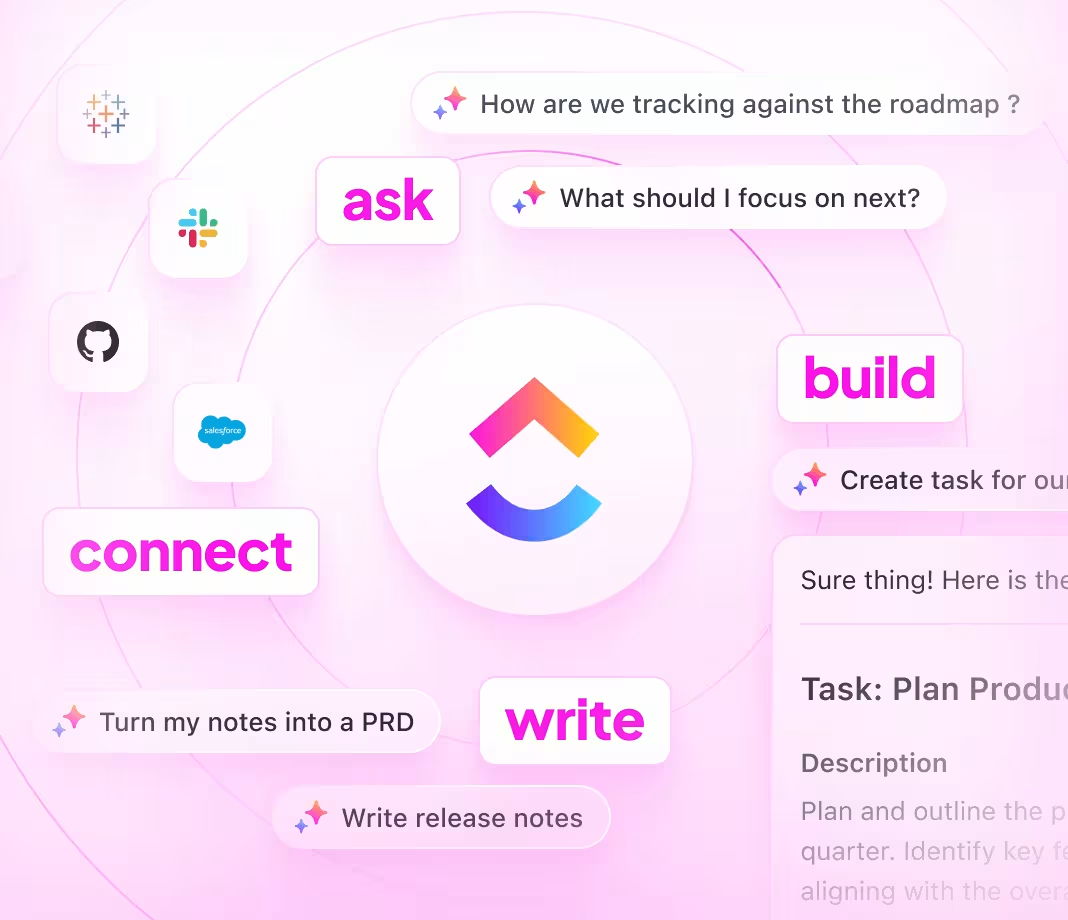
Empowering Analytics Teams
Unlock Big Data Insights with ClickUp's Knowledge Base
Ensure your big data documentation is accurate, accessible, and evolves with every pipeline iteration.
Organize
Structured Big Data Documentation with ClickUp Docs
- Data sources, processing steps, models, dashboards, alerts
- Table of contents with nested subpages for easy exploration
- Consistent templates for dataset and workflow documentation
Why it matters: Teams find critical data insights faster, reducing analytic bottlenecks.

Manage
Trackable Ownership for Analytics Knowledge
- Convert knowledge gaps into assigned tasks with deadlines
- Designate content owners and establish review cycles
- Monitor documentation progress alongside analytics projects
Why it matters: Documentation remains reliable and up-to-date through clear accountability.

Integrate
Documentation Linked to Data Releases and Models
- Connect knowledge base updates to pipeline deployments and model updates
- Link incidents, bug fixes, and performance reports to relevant docs
- Incorporate feedback loops from data users and stakeholders
Why it matters: Your knowledge base adapts dynamically as data environments evolve.

ClickUp Knowledge Base for Big Data Analytics
Common Questions Answered




SOC 2
CERTIFIED

ISO 27001
CERTIFIED

GDPR
COMPLIANT

HIPAA
COMPLIANT