
Streamline Your Knowledge Base for Backward Compatibility Standards
Create a centralized, searchable repository for backward compatibility guidelines, versioning protocols, deprecation notices, and troubleshooting—so your team always accesses the authoritative reference.
 25,000+ reviews from
Why ClickUp Excels for Backward Compatibility Standards Management
Consolidate knowledge and workflows in one adaptable platform.
With traditional tools
- Documentation scattered across multiple platforms causing version conflicts
- Manual updates prone to errors and delays
- Limited integration with development workflows
- Restricted access controls leading to duplicated content
- Time-consuming maintenance and review cycles
With ClickUp
- Unified knowledge base integrated with tasks and communication
- Automated updates powered by ClickUp Brain and AI tools
- Seamless linkage between documentation and development releases
- Granular permissions for internal teams and external partners
- Accelerated collaboration and continuous knowledge evolution
How to Develop a Backward Compatibility Standards Knowledge Base
Follow this 6-step framework to organize, maintain, and scale your standards documentation effectively.
1. Identify stakeholders and define documentation objectives
- Determine who relies on backward compatibility standards (developers, QA, support)
- Outline key compliance and compatibility goals
- Assign roles to maintain clear ownership and accountability
2. Design a logical and accessible knowledge base structure
- Create a centralized hub with intuitive navigation for versioning policies, deprecation procedures, and compatibility matrices
- Include sections for legacy support, migration strategies, and changelogs
3. Standardize document templates for consistency
- Employ uniform formats for compatibility checklists, API version documentation, and impact assessments
- Cover compatibility criteria, testing protocols, and rollback plans
4. Incorporate practical guides and troubleshooting resources
- Develop step-by-step compatibility validation processes
- Document common compatibility issues and resolutions
- Centralize incident reports and mitigation tactics
5. Link documentation directly to product releases and updates
- Connect standards updates to version releases and change management workflows
- Use ClickUp 4.0 to synchronize documentation with development cycles
- Ensure knowledge base evolves alongside your product
6. Manage access and continuous improvement
- Set precise permissions for internal teams, partners, and clients
- Use Brain Max to analyze feedback and identify knowledge gaps
- Schedule regular reviews to keep standards current
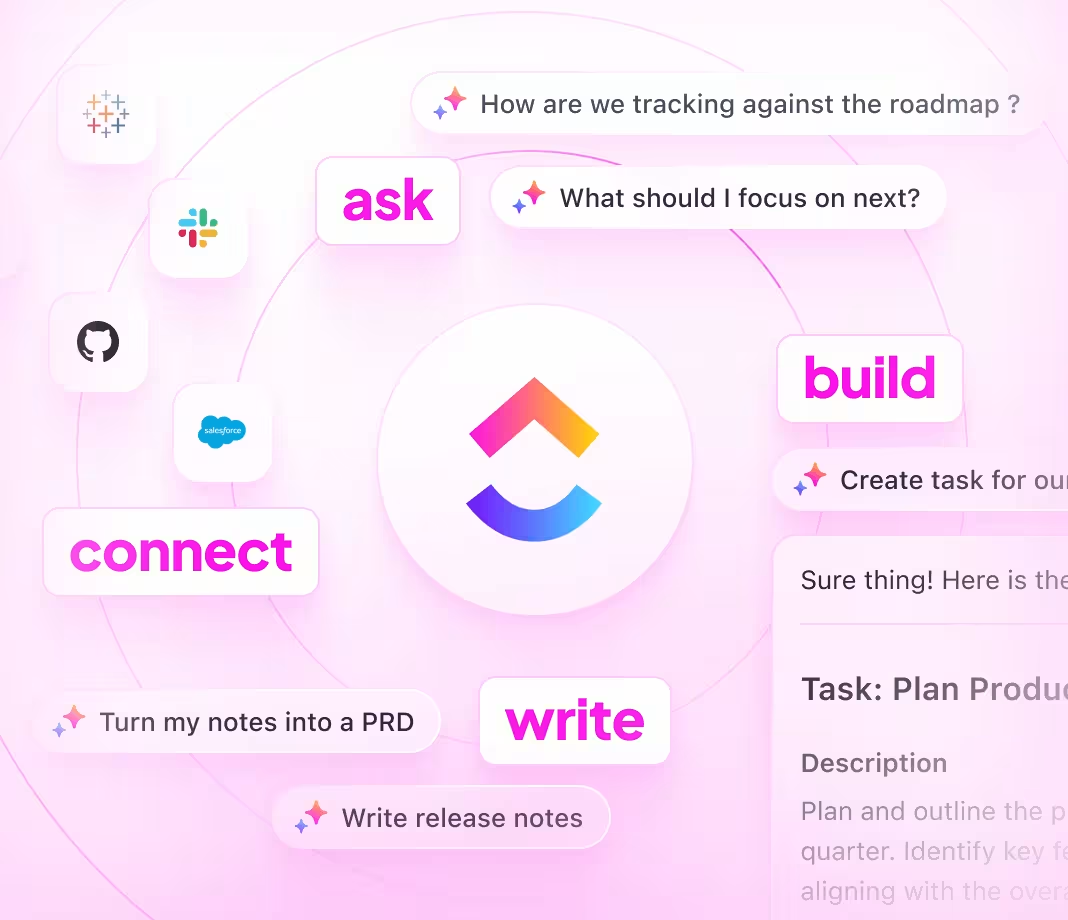
Unlock the Power of ClickUp for Backward Compatibility Knowledge
Leverage ClickUp Brain, ClickUp 4.0, and Brain Max to build a dynamic, connected knowledge base that evolves with your standards.
Structured Documentation with ClickUp Docs
- Version control policies, Compatibility matrices, Deprecation schedules
- Nested pages and tables of contents for streamlined navigation
- Consistent templates for uniform documentation
Why it matters: Teams find precise compatibility guidance quickly, reducing integration risks.

Transparent Ownership and Tracking
- Convert documentation gaps into trackable tasks
- Assign clear owners, deadlines, and review cycles
- Manage documentation as an integral part of your development workflow
Why it matters: Continuous updates and accountability prevent knowledge decay.

Link Documentation to Releases Seamlessly
- Associate standards updates with product releases and change logs
- Connect incident reports and compatibility testing directly to documentation
- Use ClickUp 4.0 to maintain real-time synchronization
Why it matters: Documentation evolves alongside product changes, ensuring up-to-date guidance.

Frequently Asked Questions




