Action Item Ownership Rules Knowledge Base
Build a Centralized Knowledge Base for Action Item Ownership Rules
Create a unified, searchable resource for defining ownership protocols, assignment criteria, escalation paths, and audit trails—so your team always enforces clear responsibility.
 25,000+ reviews from
Trusted by the best
ClickUp vs Traditional Tools
Why ClickUp Excels for Action Item Ownership Rules Management
Unify knowledge and execution for effective ownership governance.
Traditional Tools Limitations
- Ownership guidelines scattered across emails and docs, causing confusion
- Manual updates lead to outdated or inconsistent rules
- Lack of integration with task management delays enforcement
- Permissions force multiple versions for different teams
- Documentation upkeep is time-consuming and prone to errors
ClickUp Advantages
- Combine ownership rules with actionable tasks and comments
- Automatically generate tasks from gaps in ownership documentation
- Link rules directly to workflows, audits, and compliance checks
- Granular access controls for internal and external stakeholders
- AI-powered drafting and summarization accelerate knowledge base maintenance
Building Your Knowledge Base
How to Create a Knowledge Base for Action Item Ownership Rules
Follow this 6-step framework to develop clear, maintainable, and enforceable ownership guidelines.
1. Identify stakeholders and define ownership objectives
- Clarify who owns what actions across teams
- Outline responsibilities and escalation procedures
- Assign accountability to maintain clarity over time
2. Design a structured knowledge base framework
- Create a centralized hub with intuitive navigation
- Include key sections like rule definitions, workflows, exceptions, and audits
- Ensure easy access to version history and updates
3. Standardize rule templates for consistency
- Use uniform formats for ownership criteria and assignment logic
- Document triggers, roles, and conditions clearly
- Address edge cases to minimize ambiguity
4. Incorporate practical guides and troubleshooting protocols
- Develop step-by-step procedures for common scenarios
- Include resolution paths for conflicts or unclear ownership
- Centralize escalation contacts and support resources
5. Keep your knowledge base in sync with operational changes
- Link ownership rules to project updates, policy changes, and audits
- Treat updates as part of ongoing process improvements
- Maintain accuracy as organizational roles evolve
6. Manage permissions and continuous review cycles
- Control access for cross-functional teams and external partners
- Schedule regular reviews and gather feedback
- Use analytics to monitor knowledge base usage and gaps
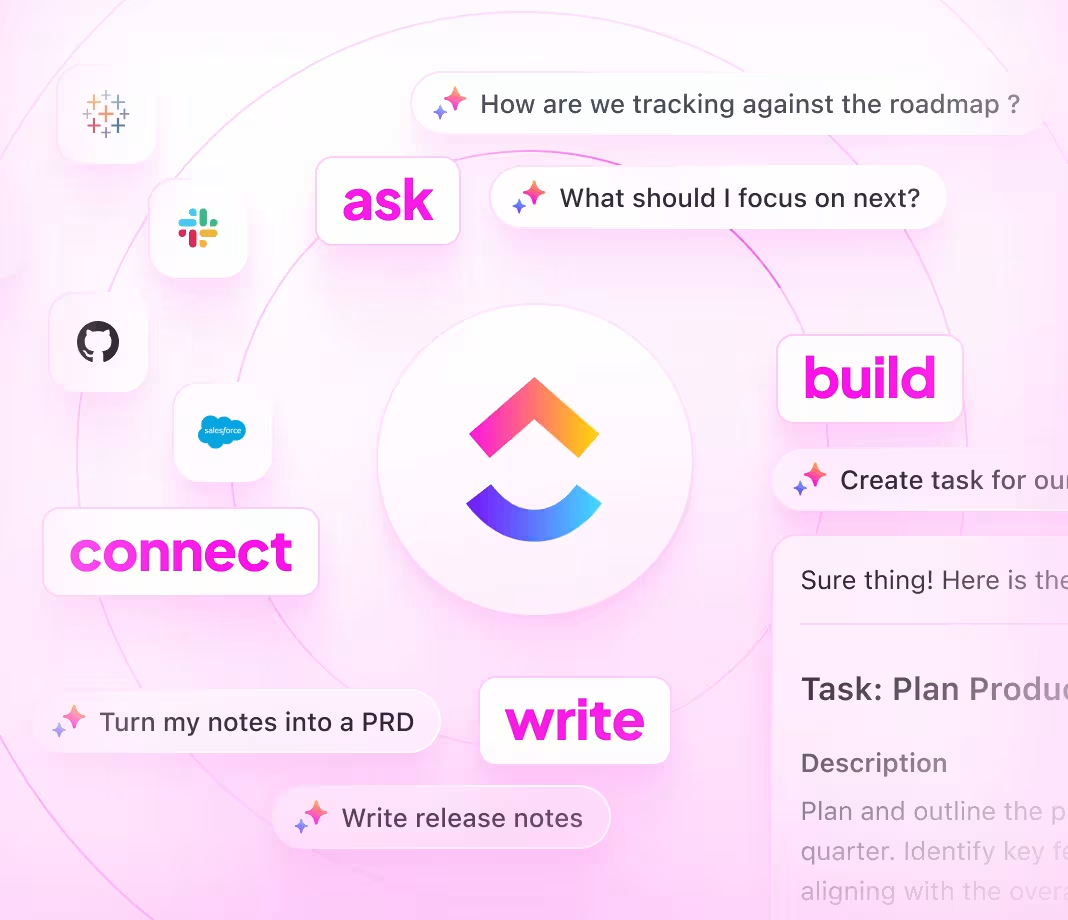
Leverage ClickUp’s Features for Effective Rule Management
How ClickUp Supports Your Ownership Rules Knowledge Base
Combine clarity, accountability, and agility in your ownership policies, powered by ClickUp Brain, ClickUp 4.0, and Brain Max.
Organize
Structured Ownership Rules with ClickUp Docs
- Define roles, responsibilities, and escalation workflows
- Use nested Docs and tables of contents for easy navigation
- Apply consistent templates for rule clarity
Why it matters: Teams quickly understand who owns what, reducing task ambiguity.

Assign
Trackable Ownership and Accountability
- Convert rule gaps into actionable tasks with owners and deadlines
- Set recurring reviews and updates to maintain accuracy
- Monitor compliance through integrated task tracking
Why it matters: Accountability is embedded, ensuring rules remain current and enforced.

Connect
Integration with Workflows and Audits
- Link ownership rules directly to tasks, projects, and audits
- Capture feedback and incidents tied to ownership clarity
- Use AI insights to identify and resolve ownership conflicts
Why it matters: Your knowledge base evolves with your processes, maintaining relevance and effectiveness.

Ownership Rules Knowledge Base FAQs
Frequently Asked Questions




SOC 2
CERTIFIED

ISO 27001
CERTIFIED

GDPR
COMPLIANT

HIPAA
COMPLIANT