
ClickUp CRM for Knowledge Managers
Elevate Your Knowledge Management with ClickUp CRM
Coordinate contributors, streamline communications, catalog insights, and oversee knowledge projects with ease — all without drowning in scattered notes.
 25,000+ reviews from
Trusted by the best
Why CRM
Why Knowledge Managers Benefit from CRM Solutions
Managing knowledge without a CRM is like piecing together a puzzle with missing parts — vital information slips through the cracks.
Common pitfalls without a CRM include:
- Stakeholder confusion — unclear responsibilities and lost follow-up commitments.
- Fragmented knowledge bases — disconnected notes and outdated data.
- Communication breakdowns — scattered messages across platforms without context.
- Missed deadlines on knowledge updates — no centralized schedule or reminders.
- Inefficient onboarding — lacking historical insights to bring new team members up to speed.
- Difficulty tracking content revisions — no clear version control or feedback loops.
- Limited visibility into knowledge workflows — making progress hard to monitor.
- Overwhelmed by manual tracking — relying on memory or disjointed tools.
Traditional vs ClickUp
Why Conventional Knowledge Management Falls Short Compared to ClickUp CRM
Discover how ClickUp CRM brings clarity and control that spreadsheets and notes simply can't provide.
Traditional Methods
- Notes stored in multiple apps and documents
- No centralized communication logs
- Manual tracking of knowledge updates
- Limited visibility on content lifecycle
- Disconnected feedback from stakeholders
- No automated reminders for tasks
- Difficult cross-team collaboration
- Version control challenges
ClickUp CRM
- Centralize all knowledge stakeholders and interactions
- Automatically log communications and document changes
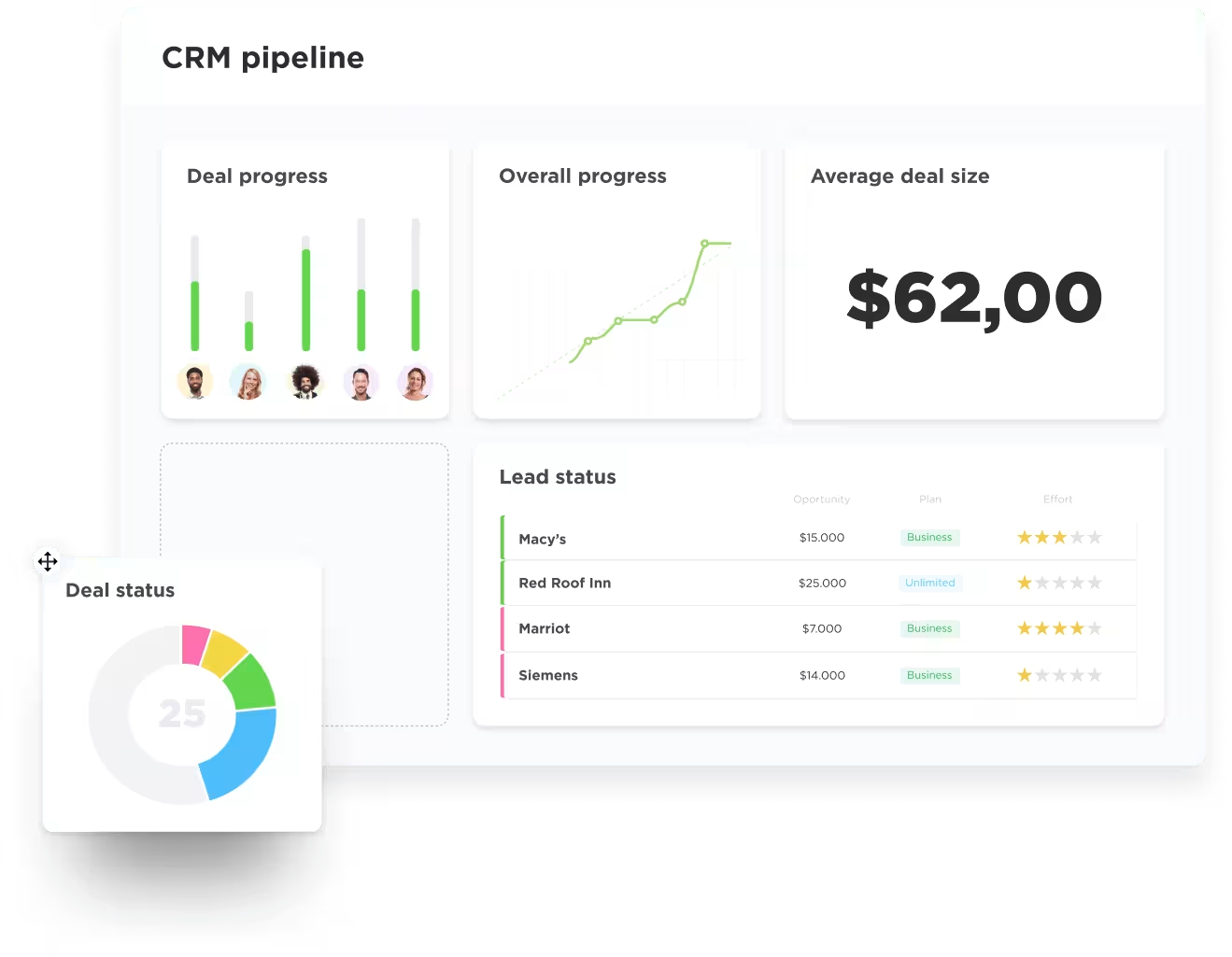
- Visualize knowledge workflows with pipelines and dashboards
- Automate updates, reminders, and follow-ups
- Link feedback directly to content and tasks
- Enable real-time collaboration across teams
- Maintain clear version histories and audit trails
- Harness ClickUp Brain and Brain Max for AI-driven insights
Use cases
Unlocking CRM Potential for Knowledge Managers
A robust CRM transforms knowledge management from chaotic to coordinated and actionable.
#UseCase1
Centralizing Contributors and Knowledge Assets
Use ClickUp CRM to organize all contributors, subject matter experts, and knowledge items in one place, so you always know who’s responsible and what’s current.
#UseCase2
Overseeing Content Lifecycle and Updates
Track the progress of knowledge articles, revisions, and approvals through customizable pipelines with automated alerts.
#UseCase3
Streamlining Feedback and Review Cycles
Capture stakeholder comments, link feedback to specific content, and assign follow-up tasks seamlessly within ClickUp.
#UseCase4
Coordinating Cross-Functional Teams
Manage collaborations across departments and locations with centralized communication and shared knowledge workflows.
#UseCase5
Enhancing Onboarding with Historical Context
Leverage ClickUp Brain to provide new team members with instant access to past decisions, documents, and discussions.
#UseCase6
Tracking Knowledge Gaps and Opportunities
Identify missing knowledge areas, assign research tasks, and monitor progress all within the CRM environment.
#UseCase7
Automating Routine Knowledge Tasks
Use ClickUp automations and Brain Max insights to reduce manual updates and prioritize high-impact content revisions.
#UseCase8
Monitoring Stakeholder Engagement
Keep tabs on communication frequency and responsiveness to ensure active participation across knowledge initiatives.
#UseCase9
Integrating Meeting Notes with Knowledge Records
Attach detailed meeting summaries directly to relevant knowledge items, turning conversations into clear action plans.
Beneficiaries
Who Thrives Using ClickUp CRM for Knowledge Management
Ideal for knowledge managers juggling contributors, content updates, and stakeholder communications.
If You’re a Knowledge Manager in a Distributed Organization
ClickUp CRM bridges teams across locations and time zones, creating a centralized hub for knowledge sharing and collaboration.

If You Manage a Content-Rich Knowledge Base
Organize contributors, track document versions, and automate updates to maintain accuracy and relevance.

If You’re Leading Knowledge Transfer Initiatives
Ensure smooth onboarding, preserve institutional knowledge, and coordinate training materials effortlessly with ClickUp CRM.
Benefits
How ClickUp CRM Empowers Knowledge Managers
Unify contacts, automate workflows, and maintain complete visibility over your knowledge assets.
Create a Single Source of Truth for Knowledge Stakeholders
Consolidate all contributors, reviewers, and subject experts with detailed activity logs and custom attributes.
Visualize Knowledge Workflows Clearly
Use pipelines and dashboards to monitor content statuses, review cycles, and update schedules.
Maintain Comprehensive Communication Records
Automatically log emails, comments, and decisions linked to knowledge items for full traceability.
Turn Feedback Into Actionable Tasks
Convert reviews and suggestions into tasks with owners, deadlines, and automated reminders.
Attach Documents and Notes Seamlessly
Keep policies, manuals, research, and meeting notes connected directly to relevant knowledge records.
Stay Ahead with Timely Alerts and Insights
Leverage ClickUp Brain Max to receive smart notifications, predict bottlenecks, and prioritize updates.
FAQs on CRM for Knowledge Management


SOC 2
CERTIFIED

ISO 27001
CERTIFIED

GDPR
COMPLIANT

HIPAA
COMPLIANT