Empower Your Care Coordination with the Leading CRM Solution
 25,000+ reviews from
Why Disability Support Workers Benefit from Dedicated CRM Software
Managing multiple clients, care schedules, and communication without a CRM is like navigating a maze blindfolded.
Here’s how traditional methods typically fall short for disability support workers:
- Client information gets scattered — vital details lost across notes, calls, and emails.
- Care schedules become inconsistent — missed visits, overlapping appointments, and unclear responsibilities.
- Communication gaps widen — difficulty tracking conversations with clients, families, and care teams.
- Documentation is cumbersome — forms, reports, and updates spread across multiple platforms.
- Compliance risks increase — hard to maintain audit trails and meet regulatory requirements.
- Onboarding new staff is inefficient — lack of centralized records slows training and handovers.
- Resource allocation is unclear — no clear oversight on staff availability and client needs.
- Follow-ups and task tracking get lost — leading to delays and reduced care quality.
Why Traditional Methods Can’t Compete with ClickUp CRM for Disability Support
Traditional Approaches
- Client info scattered in notebooks and emails
- No central schedule to track visits
- Communication fragmented across calls and messages
- Paper-based or multiple apps for documentation
- Difficult to ensure compliance and audits
- Manual task and follow-up tracking
- Limited visibility into team workloads
- Onboarding relies on verbal handovers
ClickUp CRM
- Centralized client profiles with all details in one place
- Visual calendars for scheduling and reminders
- Unified communication logs with clients and families
- Digital forms, notes, and reports attached per client
- Built-in compliance tracking and audit histories
- Automated task assignments and follow-up alerts
- Dashboards showing staff availability and client needs
- Easy onboarding with accessible client and process histories
How CRM Software Elevates Disability Support Operations
Unify Client and Family Communications
Simplify Scheduling and Visit Tracking
Streamline Care Plan Documentation
Maintain Compliance with Audit Trails
Coordinate Team Tasks Efficiently
Onboard and Train New Support Workers Easily
Monitor Resource Availability in Real-Time
Integrate with ClickUp Brain and Brain Max
Turn Meetings Into Actionable Tasks
Record care team meetings, link notes to client records, and create follow-up tasks with deadlines and owners.
Who Gains the Most from ClickUp CRM in Disability Support?
Care Coordinators Managing Multiple Clients

Disability Support Workers in Field Roles

Service Managers Overseeing Teams
How ClickUp CRM Enhances Disability Support Workflows
Create a Single Source of Truth for Client Records
Store client profiles, family contacts, support plans, and communication histories in one accessible CRM.
Visualize Care Schedules and Tasks
Track appointments, visit statuses, and staff assignments with customizable views and reminders.
Maintain Detailed Communication Logs
Log calls, messages, and notes to keep context intact and improve team collaboration.
Automate Follow-Up Tasks
Turn care updates and meeting notes into actionable tasks with deadlines and responsible team members.
Attach Essential Documents Effortlessly
Keep care plans, consent forms, incident reports, and evaluations linked directly to client records.
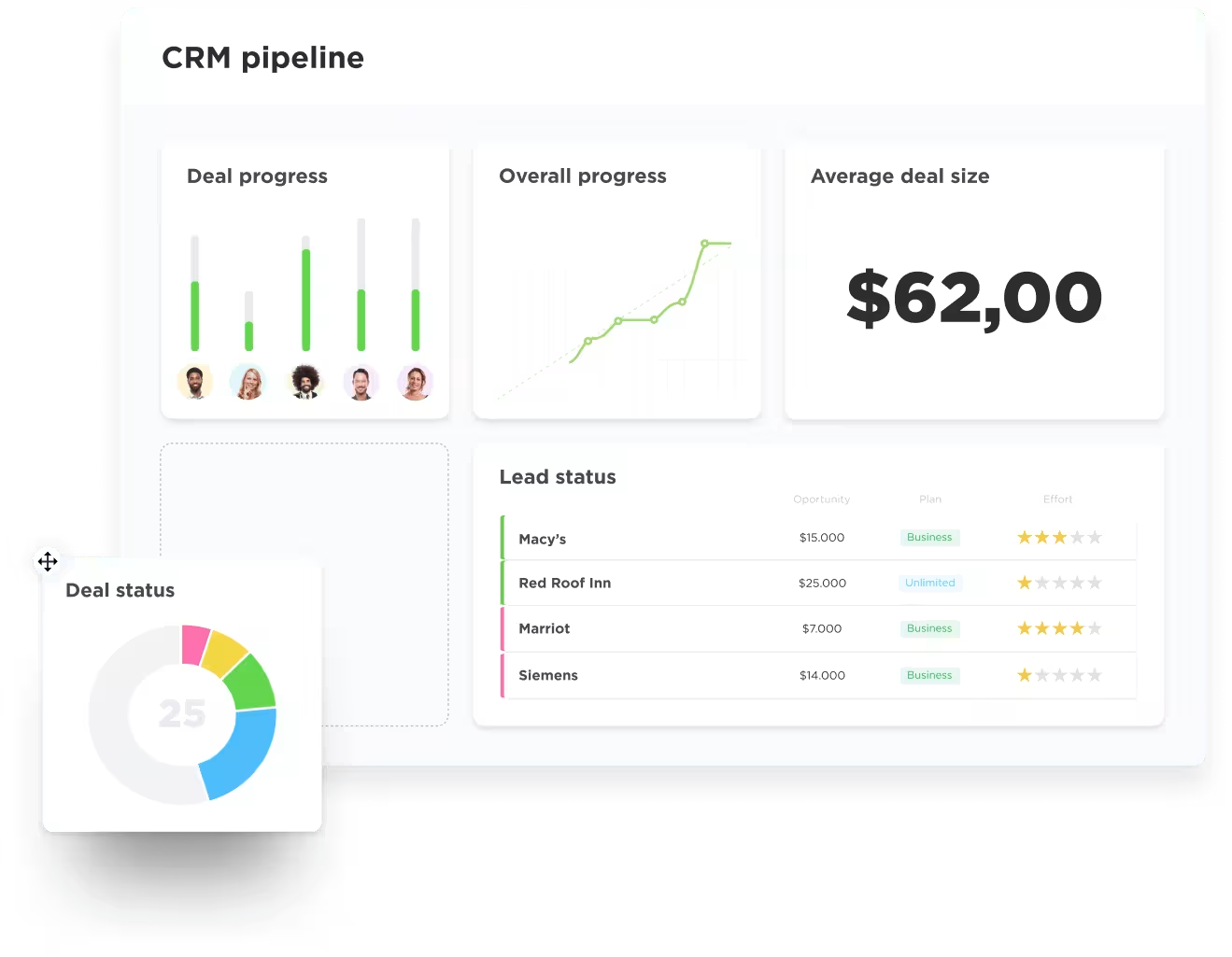
Gain Real-Time Insights with Dashboards
Use AI-enhanced dashboards to monitor care delivery, staff availability, and compliance status at a glance.
Common Questions About ClickUp CRM for Disability Support